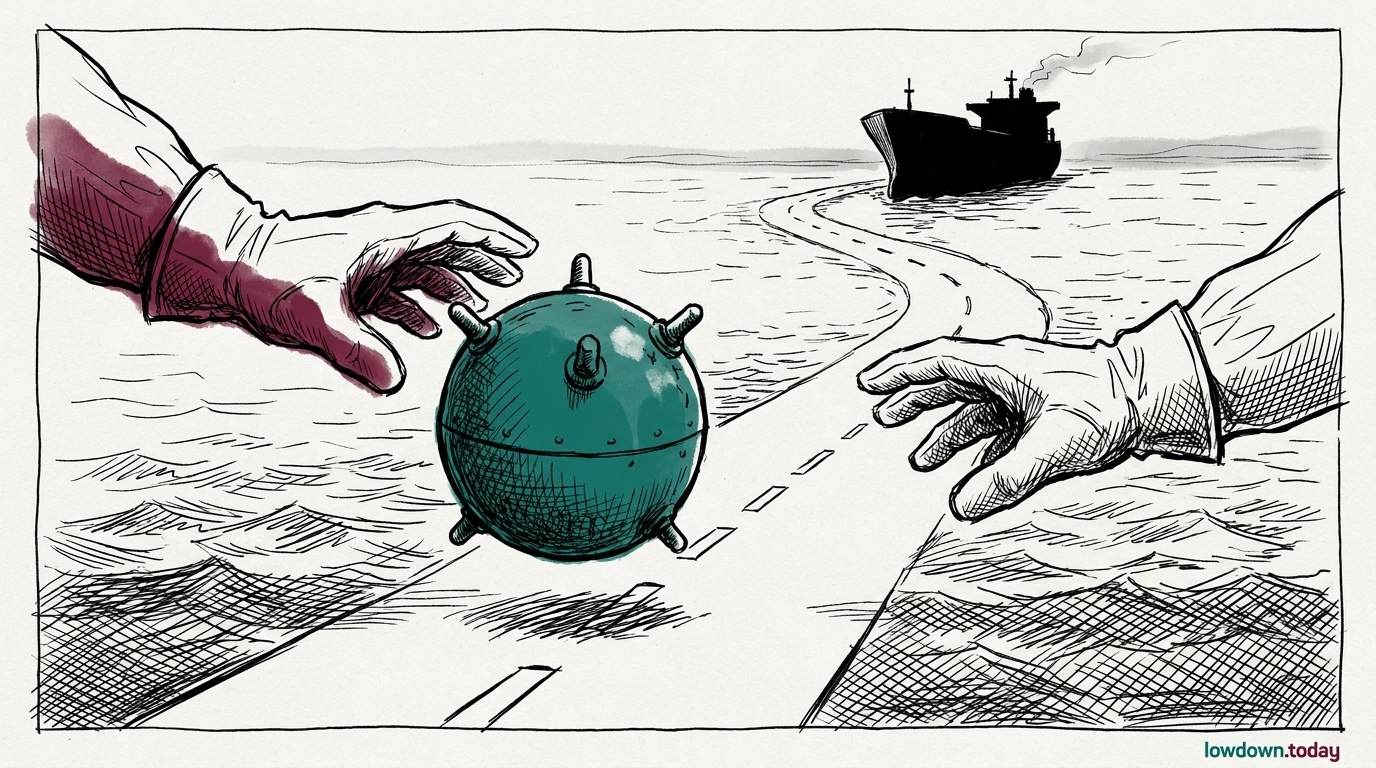
Energy Secretary Chris Wright told CNBC on Wednesday 2 September that more than 17 million barrels of oil crossed the strait of Hormuz by ship on Monday 31 August, which he called a record for the war1. Samir Madani of TankerTrackers.com, an independent tanker-tracking service, put the volume exiting the Arabian Sea that day at about 9.14 million barrels, then 6.81 million on 1 September and 4.63 million on 2 September2.
The two men may not be counting the same water. Wright counts ship transits of the strait itself, and separately adds 4 to 5 million barrels a day of Saudi and Emirati pipeline volume that bypasses it altogether. Madani counts cargo leaving the Arabian Sea, a wider gate much further out, which loses vessels running dark and gains cargoes that never crossed Hormuz at all. Neither published the vessel-level data that would let anyone else check, so the difference cannot be attributed to error rather than to method.
The American figures do not reconcile among themselves either. Two unnamed US officials gave Axios a corridor of about 10 million barrels a day on 19 August. CENTCOM's spokesman, Captain Tim Hawkins, put the escorted total at 660 million barrels since early May in a statement dated 20 August, implying roughly 6 to 7 million a day. Cooper's figure of about 750 million barrels on 28 August adds around 90 million barrels in eight days, or about 11 million a day3. No source explains the acceleration, and no announced change in escort capacity accompanies it.
Commercial trackers could not agree on the count for a single day either, back when Kpler and S&P Global published transit totals that sat nowhere near each other, . Wright's record claim extends a documented problem rather than opening a new one. The traffic through this strait has been unauditable in every direction for three weeks, which leaves congressional oversight of the escort mission without an agreed denominator for the cost of a barrel escorted.



