Skip to content
You can now search across every topic, entity and event.What's new
Iran Conflict 2026
20AUG

One ship or five? Hormuz counts split

2 min read
16:36UTC

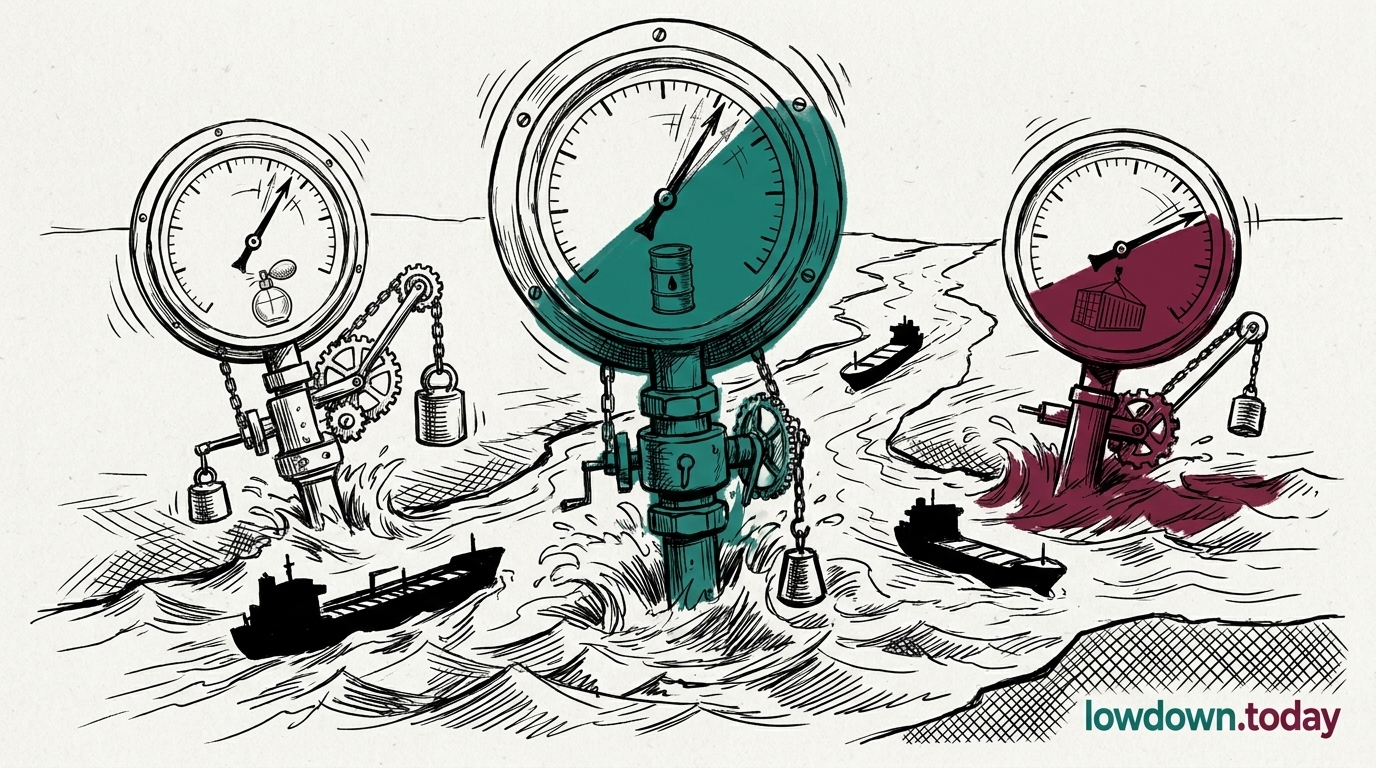
S&P Global logged a single vessel through Hormuz on 16 August and called it a record low. Kpler counted five the same day, and only one of the two has published what it counts.

ConflictDeveloping
Key takeaway

Two providers gave the same day counts of one and five; only Kpler discloses its universe.

S&P Global Commodity Insights counted one vessel crossing the Strait of Hormuz on 16 August, described the figure as a record low, and put the previous day at eight 1. Our own record already carried a different number for that date. Kpler, which tracks commodity vessels, meaning tankers and bulk carriers rather than all shipping, counted five crossings in the same water on the same day .

Kpler's later readings continue the series. It put 18 August at six crossings, against nine on 17 August and a ten-day daily average of eleven 2. That is 45 per cent below its own average, an arithmetic step we have taken on Kpler's two published figures rather than a percentage Kpler states.

One and five are not the same count of the same strait on the same day. The S&P Global page would not open on four separate fetch routes, so the vessel universe behind its figure cannot be laid against Kpler's. Of the names attached to Hormuz numbers this week, only Kpler has published what it counts. Windward is not a third tally at all: it measures how many ships have stopped transmitting, which is the mechanism rather than the count.

The divergence has a precedent two months old. US Central Command (CENTCOM, the American military command covering the Middle East) counted 55 merchant ships through the strait on 22 June against Kpler's 12, a 43-ship gap our energy desk traced to vessels hugging the Omani shoreline with their transponders switched off . June's version sat between a navy and a commercial tracker, an easy difference to explain away. This week's sits between two commercial providers selling to the same customers.

A war-risk underwriter prices a Hormuz voyage against the number of movements that actually occur. Hand that underwriter two incompatible denominators and the premium drifts towards the worst plausible reading rather than the measured one. The charterer pays that difference, and pays it whether the true figure is one ship or five.

Deep Analysis

In plain English

Companies that track ships crossing the Strait of Hormuz publish daily counts so traders and insurers can judge how risky the route is. On 16 August, S&P Global Commodity Insights said only one ship crossed, calling it a record low. But another firm's count for the same day gave a different number, and neither company explains exactly how it counts ships or which vessels it includes. That disagreement matters because these counts get used to set the cost of shipping and insuring cargo through the strait. If the real number is unclear, nobody outside the tracking firms can be certain how dangerous the route currently is.

Deep Analysis
Root Causes

Commodity data providers compete commercially on the accuracy of their vessel counts, which gives each an incentive to keep its underlying methodology proprietary rather than publish it for cross-checking. That commercial secrecy is what makes today's divergence between S&P Global's figure and the existing commodity-vessel count for 16 August unresolvable from public information.

Vessels that go AIS-dark, turning off their tracking transponders, are invisible to any counting method built on that signal , so every tracker's number understates true crossings by an amount neither firm can quantify.

What could happen next?
  • Risk

    Traders and insurers who rely on a single provider's Hormuz transit count risk misjudging how open the strait actually is, since S&P Global's figure and the existing commodity-vessel count for 16 August do not agree.

First Reported In

Update #172 · The strait nobody can count, insure or pay

S&P Global Commodity Insights· 19 Aug 2026
Read original
Causes and effects
This Event
One ship or five? Hormuz counts split
Underwriters, charterers and governments are all pricing a chokepoint whose traffic nobody can independently verify.
Different Perspectives
UK Maritime Trade Operations
UKMTO logged six armed men boarding a tanker 136 nautical miles east of Al Mukalla on 20 August and redirecting it toward Somalia. A vessel steered toward the Somali coast reads as an attempted seizure, a distinct hazard from the stand-off strikes the same lane has seen before.
Mohammad Bagher Ghalibaf
Iran's Majlis speaker received Iraq's Hormuz carve-out request in Baghdad on 19 August, a request that treats passage as Tehran's to grant. Ghalibaf's authority over that grant sits alongside the Revolutionary Guard's separate transit rules, which have moved independently of Iran's foreign ministry before.
Haibat al-Halbousi
Haibat al-Halbousi
Iraq's parliament speaker asked Iran for special consideration on Iraqi Hormuz oil exports during Ghalibaf's 19 August Baghdad visit. Iraq presses the request from a weak position: Iran's central bank is simultaneously demanding Baghdad release Iranian reserves parked in Iraqi accounts.
Federal Department of Economic Affairs, Education and Research
Switzerland's economics ministry updated the Article 21 forms governing lawful Iran money transfers on 19 August, with only the revised forms accepted from 26 August. Bern operates one of the few remaining legal Iran payment channels and has just set a hard cutover on its control point.
Motegi Toshimitsu
Motegi Toshimitsu
Japan's foreign minister said in Muscat on 20 August that Tokyo wants closer coordination with Oman on safe Hormuz and Bab el-Mandeb passage. Japan has no naval presence of its own in the strait, so it is routing the ask through the state negotiating with Iran instead.
Badr bin Hamad Al Busaidi
Oman's foreign minister joined Japan's in Muscat on 20 August to call for intensified coordination on Hormuz and Bab el-Mandeb navigation. Oman also runs the mediation track with Tehran, so the appeal travels through the same channel as the negotiation.