Skip to content
You can now search across every topic, entity and event.What's new
Iran Conflict 2026
19AUG

No Nowruz address from Supreme Leader

3 min read
18:42UTC

For the first time since 1979, no Supreme Leader has addressed the nation on the Persian New Year. Mojtaba Khamenei has not been seen or heard since taking power three weeks ago.

ConflictDeveloping
Key takeaway

Khamenei's Nowruz silence may signal Iran is operating without a functioning head of state.

Today is Nowruz, the Persian New Year. Every Supreme Leader since 1979 — Ruhollah Khomeini for a decade, Ali Khamenei for 35 years — has delivered a televised address on this day. No message has come from Mojtaba Khamenei 1.

His status has been uncertain since 28 February, when — per a leaked recording verified by The Telegraph — missiles struck his home, killing his wife and son . Hegseth claimed he is "wounded and likely disfigured." Euronews reported, citing unnamed sources, a possible transfer to Moscow for medical treatment 2. No verified image or recording of him has surfaced since the Assembly of Experts installed him. The IDF has publicly named him as an assassination target .

NPR's latest dispatch from inside the country describes deserted streets, teenage Basij paramilitaries at checkpoints, and a telecommunications blackout now in its third week 3. One woman told NPR: "I will celebrate Chaharshanbe Suri and in the final battle, I will burn every single one of these psychopathic murderers." Iran's 90 million people are marking their new year under bombardment, paramilitary control, and silence from their leader.

Ali Khamenei used the Nowruz address annually to set the year's political frame — naming themes, directing national priorities, projecting the state into every household. The total absence of any communication means either Khamenei cannot speak or Iran's remaining command structure has judged that any statement risks exposing the scale of the damage. DNI Gabbard told the Senate Intelligence Committee three days earlier that the government "appears to be intact but largely degraded" . A government that cannot produce a Nowruz address from its Supreme Leader — on the one day the entire nation expects to hear him — has moved from degraded to functionally inoperative.

Deep Analysis

In plain English

In Iran's political system, the Supreme Leader is not merely a head of state. He holds supreme authority over the military, judiciary, foreign policy, and religious institutions simultaneously — an office combining the roles of president, commander-in-chief, and constitutional court in a single person. Every Supreme Leader since the 1979 revolution delivered a televised Nowruz address without exception, because the Persian New Year transcends politics and religion — it is the most important cultural moment in the Iranian calendar. Silence on this day is not a procedural absence. It is a break with 47 years of unbroken practice that any leader capable of speaking would have a powerful incentive to maintain.

Deep Analysis
Synthesis

The Nowruz silence operates on two simultaneous registers. Domestically, it may accelerate civilian disengagement from the regime — deserted streets and teenage Basij paramilitaries already suggest social compliance is at a minimum, and a leaderless symbolic moment deepens that rupture. Externally, it creates a verification problem for any ceasefire interlocutor: who holds the authority to negotiate binding terms on Iran's behalf? This ambiguity structurally benefits hardliners, who can continue operations without political authorisation while blocking any negotiated exit that requires a supreme authority to sign.

Root Causes

Iran's constitution deliberately concentrated supreme authority in a single unelected office with no formal deputy and no interim mechanism. The Assembly of Experts holds succession authority but has never exercised it under military pressure or in wartime. Its procedures assume deliberative peacetime selection with no external constraint on timing or process.

Escalation

A leaderless or incapacitated Iranian command creates divergent escalation vectors. IRGC commanders with independent operational authority may exceed what a functioning political leadership would sanction, given their demonstrated capacity for simultaneous four-country strikes. Conversely, the absence of a political decision-making authority could produce a paralytic pause: operations continue on pre-authorised orders but no new strategic direction — including any authorised ceasefire — is possible.

What could happen next?
1 meaning2 risk1 consequence1 precedent
  • Meaning

    The first Nowruz without a Supreme Leader address since 1979 is the clearest observable signal yet that Iranian apex political authority may be non-functional.

    Immediate · Assessed
  • Risk

    IRGC command operating without Supreme Leader political oversight increases the probability of autonomous escalatory action outside civilian authorisation.

    Short term · Suggested
  • Risk

    The absence of a recognised Iranian decision-making authority creates a structural barrier to ceasefire negotiations, even if military pressure produces Iranian willingness to negotiate.

    Short term · Assessed
  • Consequence

    If Russia is sheltering Khamenei in Moscow, this constitutes a deepened Iran-Russia strategic entanglement with direct implications for any post-war settlement framework.

    Medium term · Suggested
  • Precedent

    An incapacitated Supreme Leader in wartime has no constitutional precedent in the Islamic Republic; any succession process would occur under conditions the system was not designed to handle.

    Medium term · Assessed
First Reported In

Update #42 · Iran hits four countries; Brent at $119

NPR· 20 Mar 2026
Read original
Causes and effects
This Event
No Nowruz address from Supreme Leader
The absence of any Nowruz communication — video, audio, or text — from the Supreme Leader on the one day all 90 million Iranians expect to hear from him indicates either physical incapacitation or a command structure that cannot risk exposure. It breaks a tradition spanning every year of the Islamic Republic.
Different Perspectives
UK Maritime Trade Operations
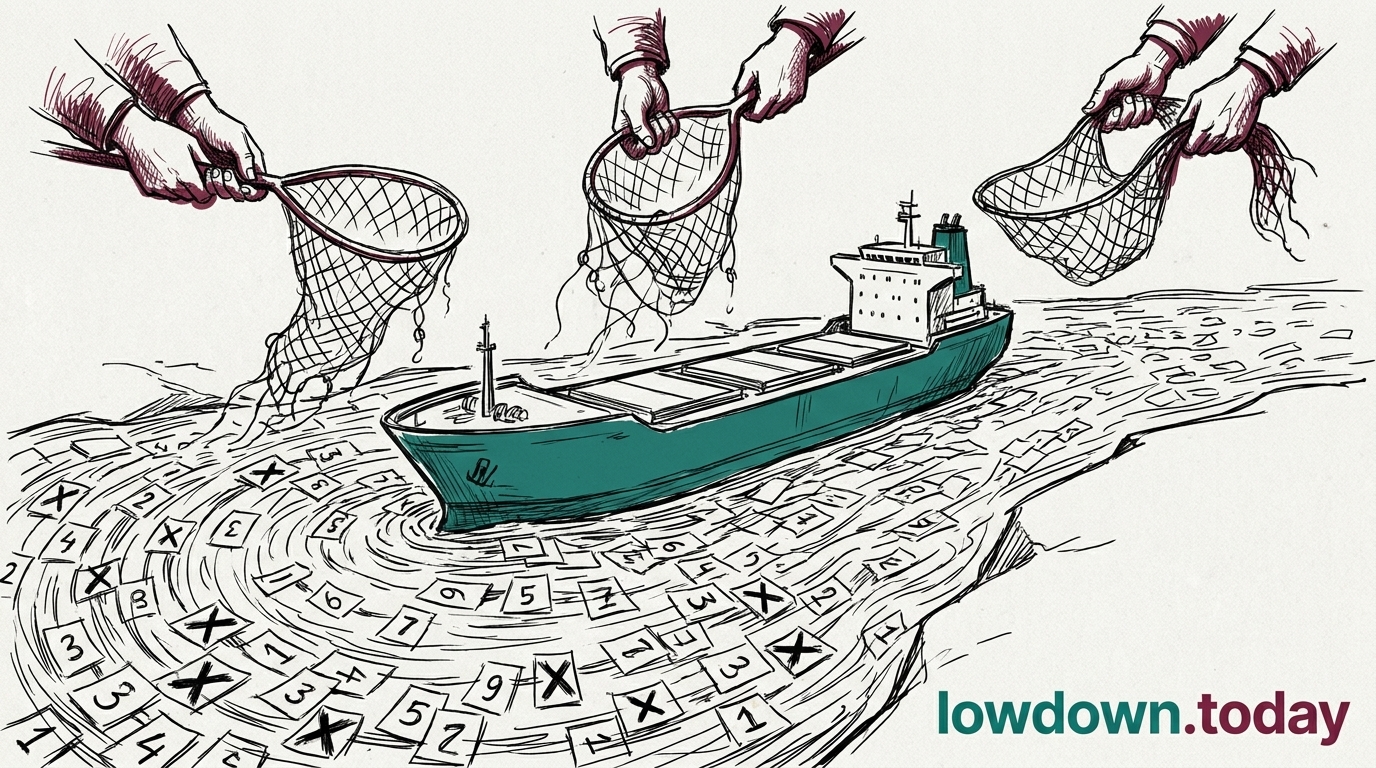
UKMTO logged six armed men boarding a tanker 136 nautical miles east of Al Mukalla on 20 August and redirecting it toward Somalia. A vessel steered toward the Somali coast reads as an attempted seizure, a distinct hazard from the stand-off strikes the same lane has seen before.
Mohammad Bagher Ghalibaf
Iran's Majlis speaker received Iraq's Hormuz carve-out request in Baghdad on 19 August, a request that treats passage as Tehran's to grant. Ghalibaf's authority over that grant sits alongside the Revolutionary Guard's separate transit rules, which have moved independently of Iran's foreign ministry before.
Haibat al-Halbousi
Haibat al-Halbousi
Iraq's parliament speaker asked Iran for special consideration on Iraqi Hormuz oil exports during Ghalibaf's 19 August Baghdad visit. Iraq presses the request from a weak position: Iran's central bank is simultaneously demanding Baghdad release Iranian reserves parked in Iraqi accounts.
Federal Department of Economic Affairs, Education and Research
Switzerland's economics ministry updated the Article 21 forms governing lawful Iran money transfers on 19 August, with only the revised forms accepted from 26 August. Bern operates one of the few remaining legal Iran payment channels and has just set a hard cutover on its control point.
Motegi Toshimitsu
Motegi Toshimitsu
Japan's foreign minister said in Muscat on 20 August that Tokyo wants closer coordination with Oman on safe Hormuz and Bab el-Mandeb passage. Japan has no naval presence of its own in the strait, so it is routing the ask through the state negotiating with Iran instead.
Badr bin Hamad Al Busaidi
Oman's foreign minister joined Japan's in Muscat on 20 August to call for intensified coordination on Hormuz and Bab el-Mandeb navigation. Oman also runs the mediation track with Tehran, so the appeal travels through the same channel as the negotiation.