Skip to content
Welcome, thoughtbot's Giant Robots listeners!Start here
Iran Conflict 2026
7AUG

OFAC names four in Zanjani network

3 min read
12:08UTC

OFAC named four individuals, the DotOne cluster of Tehran holding companies and three Gulf payment firms on 24 July, every node tied to oil-smuggling financier Babak Zanjani.

ConflictDeveloping
Key takeaway

Treasury sanctioned Zanjani's airline, rail, barter and gold arms together on 24 July.

The Office of Foreign Assets Control (OFAC), the US Treasury bureau that administers sanctions, designated a fresh network on 24 July under Executive Order 13902, the order aimed at Iran's petroleum, petrochemical and metals trade⁠1. Every node is tied to Babak Zanjani, the oil-smuggling financier Washington sanctioned years ago and whom an Iranian court sentenced to death in 2016 over embezzlement. Designation freezes any US-reachable assets and bars Americans from dealing with those named.

The listing names Bahareh Morteza Zanjani, Solmaz Bani, Sukhrob Oimakhmadov and Mehdi Rezazadeh, a cluster of Tehran holding companies trading as DotOne across airline, rail, barter, gold and travel arms, and the payment and exchange firms ZedX DMCC and BZ Diamond DMCC, both registered at the Dubai Multi Commodities Centre, alongside ZedPay in the UAE and Turkey⁠2. Several DotOne entities carry a secondary-sanctions flag, meaning a bank in Istanbul or Dubai risks its own dollar clearing by processing their payments.

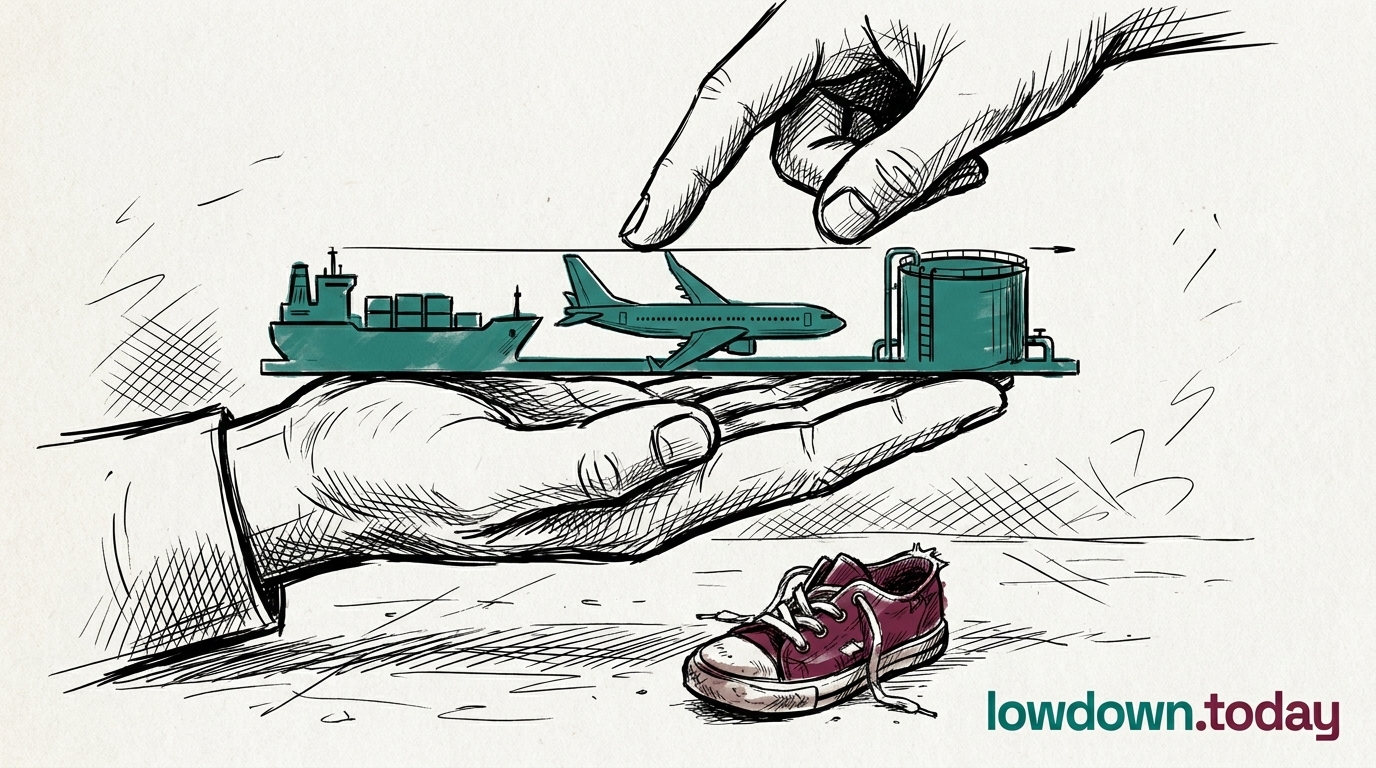
Read as a diagram, the list shows what evasion looks like once a state loses its banks. An airline moves people and cargo, a railway moves freight overland, a barter arm swaps goods for goods with no money changing hands, and a gold-backed token settles whatever balance remains. Designating all four limbs on one day, rather than the trading company alone, closes the substitution routes the network would otherwise use to reconstitute itself under new paperwork within weeks.

This is the second Iran action of the quarter and it runs on a different legal track from the last. OFAC designated twelve individuals and entities on 15 May under Executive Order 13224, Washington's counter-terrorism sanctions authority. Executive Order 13902 reaches commercial sectors rather than the terrorism-financing conduct 13224 targets, so the two actions cover different conduct and different people, and the choice of authority signals which part of the Iranian economy Treasury is working on at any given moment.

Deep Analysis

In plain English

OFAC (the Office of Foreign Assets Control) is the part of the US Treasury that decides which people and companies are banned from using the US financial system because of sanctions. On 24 July it added a new batch of people and businesses to that list, all connected to Babak Zanjani, an Iranian businessman previously sentenced to death in Iran for financial crimes, who has built a network of companies to help Iran sell oil despite sanctions. The new list includes some of his relatives and associates, plus a cluster of Tehran-based companies and payment firms based in Dubai and Turkey. It shows the US is still actively working to block Iran's sanctions-evasion networks even while the shooting war continues elsewhere.

Deep Analysis
Root Causes

Babak Zanjani built his sanctions-evasion network around a structure of nominally independent holding companies and exchange firms registered across Iran, the UAE and Turkey, a jurisdictional spread that lets the network route payments through whichever entity is not yet on a sanctions list at any given time; Treasury's practice of designating individual new entities as they surface, rather than the underlying ownership structure, is why the same network keeps reappearing under new names years after its founder's initial listing.

Dubai's role as host to several of the newly designated payment firms reflects the UAE's position as a financial hub where dirham-denominated exchange and payment services can operate with fewer restrictions on Iran-linked transactions than most Western jurisdictions permit, making it a structurally convenient base for sanctions-evasion vehicles regardless of any individual firm's specific ownership.

What could happen next?
  • Consequence

    Firms designated with secondary-sanctions exposure risk losing access to correspondent banking relationships with any institution that continues dealing with them.

  • Precedent

    Targeting relatives and newly formed holding companies rather than only the original sanctioned individual sets a template for how Treasury pursues networks that reconstitute themselves after each round of designations.

First Reported In

Update #161 · Bahrain and Kuwait struck Iran, WSJ reports

US Department of the Treasury· 25 Jul 2026
Read original →
Different Perspectives
Office for Budget Responsibility
The OBR's 28 October forecast assumed $82 oil for 2026 and 2027, from market prices for the ten working days to 19 August, and blamed dearer wholesale energy on the war without naming Iran. It expects CPI inflation close to 4% in early 2027 even at that price.
Hengaw, Kurdish rights group
Hengaw reported the 3 November hangings of Amirhossein Maleki and Amirhossein Ebrahimi in Isfahan, saying Ebrahimi was tortured into confessing and that nine of 12 people sentenced to death in the case have now been hanged. Iran's judiciary holds that the defendants killed members of the security forces.
FINTRAC, Canada's financial intelligence unit
FINTRAC worked with the US Treasury on the 6 November designation of eight money services businesses in British Columbia, Ontario and Quebec. Treasury says the businesses still operate, some under new names, so closing them falls to Ottawa.
Abdul Qadir al-Dakhil, Governor of Nineveh
Al-Dakhil cancelled three Mosul International Airport contracts on 7 November over alleged links to armed groups, after meeting Prime Minister Ali al-Zaidi in Baghdad. He named no group or company, and said the contracts will go to international companies.
Kuwait
Kuwait
Kuwait condemned the Houthi missile fired towards the Madinah region on 5 November and restated its support for Saudi Arabia, the Qatar News Agency reported. Its state tanker company, Kuwait Oil Tankers Company, is among the Gulf state fleets on Iran's expanded Hormuz list.
Scott Bessent, US Treasury Secretary
Treasury designated an alleged Chandigarh false-flag network on 4 November and eight Canadian exchangers on 6 November, while State sanctioned alleged MANPADS intermediaries. None of the actions touches an oil buyer; they target the paper, cash and procurement around Iran's trade.

Written with AI from Lowdown's published reporting. Not individually reviewed by an editor. Editorial standards.
