Skip to content
You can now search across every topic, entity and event.What's new
Iran Conflict 2026
31JUL

$200bn war bill not yet sent to Congress

2 min read
09:24UTC

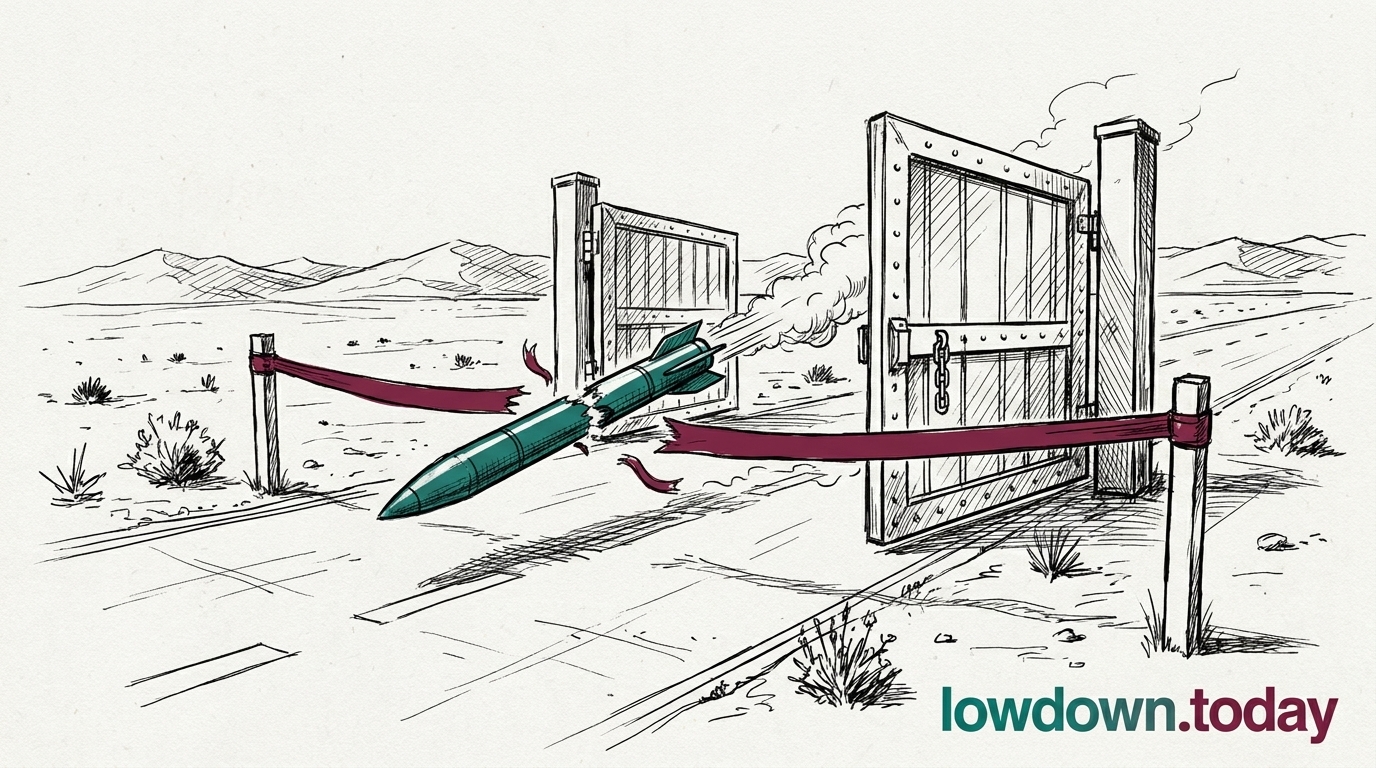
At $800 million per day, the Iran war is burning through money Congress has not authorised and may not approve.

ConflictDeveloping
Key takeaway

Military operations are expanding while Congress refuses to pay for them.

Pentagon officials confirmed on 31 March that their $200 billion Iran war supplemental has not been formally submitted to Congress. 1 Republican leaders told the Washington Post they lack the votes within their own party. The US spent roughly $15 billion in the first 19 days, nearly $800 million per day, more than the entire annual budget of the US Coast Guard.

The funding gap matters operationally. The 82nd Airborne's Devil Brigade is deploying to Kuwait . The USS Tripoli arrived with 3,500 Marines. Three Pentagon sources confirmed planning for "weeks of ground operations" including an amphibious seizure of Kharg Island. All of this requires money Congress has not authorised. Defence Secretary Pete Hegseth confirmed a forthcoming request but said the figure "could move." Heritage Foundation president Kevin Roberts endorsed the Republican resistance.


Deep Analysis

In plain English

The US military has been spending roughly $800 million every day on this war. To keep going, the Pentagon needs Congress to approve a special $200 billion funding package on top of the normal defence budget. That package has not been submitted to Congress yet. Republican leaders, from the president's own party, have said they do not have enough votes to pass it. The Heritage Foundation, a conservative think tank that helped write Trump's policy agenda, is backing the resistance. The practical problem is that the US has already committed ground troops to Kuwait and is planning to seize an Iranian oil island. All of that requires money Congress has not authorised.

What could happen next?
  • Risk

    Without supplemental authorisation, ground force deployments and Kharg Island planning may outpace available funding, creating a legal and operational crisis simultaneously.

    Short term · 0.75
  • Consequence

    Republican resistance from within the president's own party removes the political safety net that a bipartisan supplemental would normally provide.

    Immediate · 0.85
  • Opportunity

    The funding gap creates domestic leverage for a negotiated settlement: if the war cannot be funded at current scale, a deal becomes financially necessary regardless of military preference.

    Short term · 0.7
First Reported In

Update #53 · Trump drops Hormuz goal; toll becomes law

Washington Post· 31 Mar 2026
Read original
Causes and effects
This Event
$200bn war bill not yet sent to Congress
Without the $200 billion supplemental, the military expansion (ground troops, amphibious planning, interceptor replenishment) lacks financial authorisation.
Different Perspectives
Shipping and insurance underwriters
Underwriters can price Houthi strikes because the group announces its targets, but an unclaimed drone at Damietta and a mandatory Iranian insurance scheme both deny them a pattern to price against. War-risk premiums are increasingly being set by the absence of a claimant, not the scale of the damage.
Jordan
Jordan
Azraq absorbed its fourth Iranian strike in seven weeks, again drawing no direct Jordanian retaliation, only an American one. Amman's exposure, hosting US basing without the Patriot density of Gulf allies, has not changed even as the war around it widens.
Houthi movement
Houthi movement
The Houthis' 20 July blockade of Saudi-linked shipping is the injury Riyadh's new 43-nation coalition directly answers, yet the group itself was never asked to join and remains outside every proposal on the table. Sanaa-aligned commentators call the coalition a paper reassurance for insurers rather than a deployable force.
Egypt's Cabinet
Egypt's Cabinet
Egypt confirmed the Damietta blaze was an attack, not an accident, on soil the war had never touched before. Cairo now faces an unclaimed threat to a facility supplying roughly 7% of its domestic gas, with no author to hold accountable and no pattern yet to defend against.
Oman
Oman
Muscat is running the only channel Iran will use, a voluntary Hormuz fee modelled on Malacca, but stayed out of Saudi Arabia's new naval coalition entirely. Oman's mediating leverage depends on treating Hormuz as shared and non-exclusive, the opposite of what Tehran is now demanding of it.
Iraq's Prime Minister
Al-Zaidi cancelled his first official Riyadh visit and convened the Coordination Framework, the coalition that keeps him in power and whose factions sit inside the PMF that Saudi jets just struck. He is caught between a five-year Saudi investment relationship and armed groups inside his own state he does not fully control.



