Skip to content
You can now search across every topic, entity and event.What's new
Iran Conflict 2026
31JUL

IRGC adopts one-tonne minimum warhead

2 min read
09:24UTC

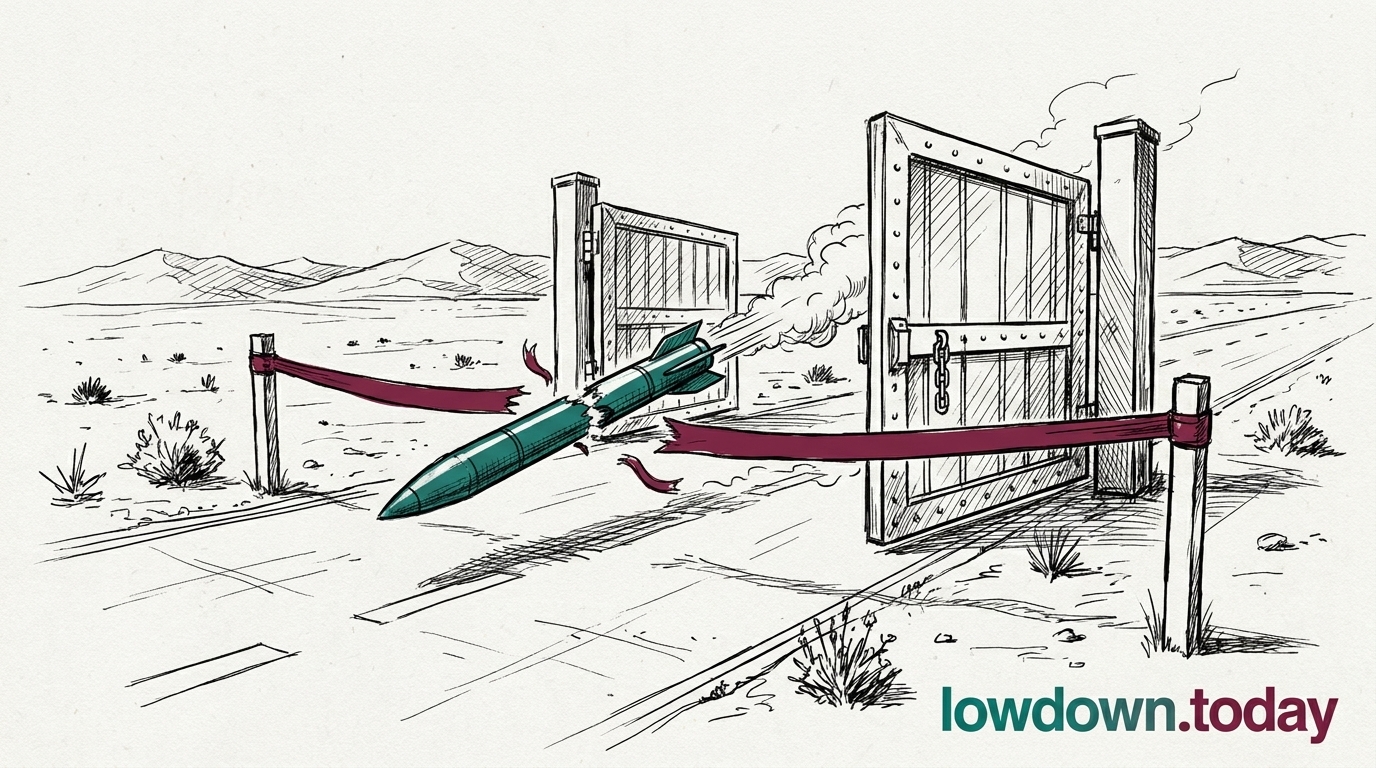
The IRGC announced it will fire only missiles carrying 1,000kg-plus warheads — a doctrinal shift from overwhelming volume to concentrated destructive power, made hours after Israel struck its command headquarters.

ConflictDeveloping

Majid Mousavi, IRGC Air and Space Force commander, declared that Iran will no longer launch missiles with warheads under one tonne. All future strikes will carry 1,000kg-plus warheads, with increased "intensity and frequency" of fire. Iran followed the announcement with its first missile wave under Mojtaba Khamenei's authority, claiming launches of one-tonne warheads at Ben Gurion Airport.

The shift from saturation to concentration is Iran's answer to CENTCOM's claimed 90% reduction in ballistic missile strikes from Day 1 . Fewer launches, more destructive energy per strike. The doctrine change reflects both strategic adaptation and material constraint: Israeli strikes on 50 ammunition storage shelters across Iran on the same day, combined with ten days of sustained bombing of launch infrastructure, have depleted lighter missile stockpiles. The 109 drones and 9 ballistic missiles Iran launched at the UAE on Friday alone demonstrated that dispersed capacity survived the destruction of Central Command — but lighter munitions are finite, and the burn rate has been extraordinary.

Heavier warheads present a different problem for Israel's layered air defences. Arrow-3 and David's Sling intercept at altitude, where trajectory prediction is most reliable. A 1,000kg warhead carries greater kinetic energy on terminal descent, narrowing the interception window for lower-tier systems and increasing damage if interception fails. Whether the shift translates to greater impact depends on a variable the announcement cannot address: inventory. Iran's Kheibarshekan and Emad missiles can carry payloads in this range, but the number of one-tonne warheads available is unknown outside Tehran's planning cells. If stocks are deep, the doctrine functions as escalation. If they are shallow, the announcement dresses a final expenditure as strategy.

The IRGC Aerospace Force headquarters and drone command centre in Tehran were struck by the IDF hours before the announcement. That Iran could declare a new warhead doctrine and execute its first launches under it on the same day means either the shift was pre-planned before the headquarters fell, or the IRGC's devolution to 31 autonomous provincial commands provides sufficient redundant command capacity to absorb the loss of central headquarters and escalate simultaneously. The IRGC's pledge of "complete obedience" to Mojtaba Khamenei came the day before; this doctrine is the first operational expression of that pledge.


First Reported In

Update #31 · Iran moves to heavy warheads; China deploys

JFeed· 10 Mar 2026
Read original
Different Perspectives
Shipping and insurance underwriters
Underwriters can price Houthi strikes because the group announces its targets, but an unclaimed drone at Damietta and a mandatory Iranian insurance scheme both deny them a pattern to price against. War-risk premiums are increasingly being set by the absence of a claimant, not the scale of the damage.
Jordan
Jordan
Azraq absorbed its fourth Iranian strike in seven weeks, again drawing no direct Jordanian retaliation, only an American one. Amman's exposure, hosting US basing without the Patriot density of Gulf allies, has not changed even as the war around it widens.
Houthi movement
Houthi movement
The Houthis' 20 July blockade of Saudi-linked shipping is the injury Riyadh's new 43-nation coalition directly answers, yet the group itself was never asked to join and remains outside every proposal on the table. Sanaa-aligned commentators call the coalition a paper reassurance for insurers rather than a deployable force.
Egypt's Cabinet
Egypt's Cabinet
Egypt confirmed the Damietta blaze was an attack, not an accident, on soil the war had never touched before. Cairo now faces an unclaimed threat to a facility supplying roughly 7% of its domestic gas, with no author to hold accountable and no pattern yet to defend against.
Oman
Oman
Muscat is running the only channel Iran will use, a voluntary Hormuz fee modelled on Malacca, but stayed out of Saudi Arabia's new naval coalition entirely. Oman's mediating leverage depends on treating Hormuz as shared and non-exclusive, the opposite of what Tehran is now demanding of it.
Iraq's Prime Minister
Al-Zaidi cancelled his first official Riyadh visit and convened the Coordination Framework, the coalition that keeps him in power and whose factions sit inside the PMF that Saudi jets just struck. He is caught between a five-year Saudi investment relationship and armed groups inside his own state he does not fully control.



