Skip to content
You can now search across every topic, entity and event.What's new
Iran Conflict 2026
31JUL

Germany set to miss its own gas target

4 min read
09:24UTC

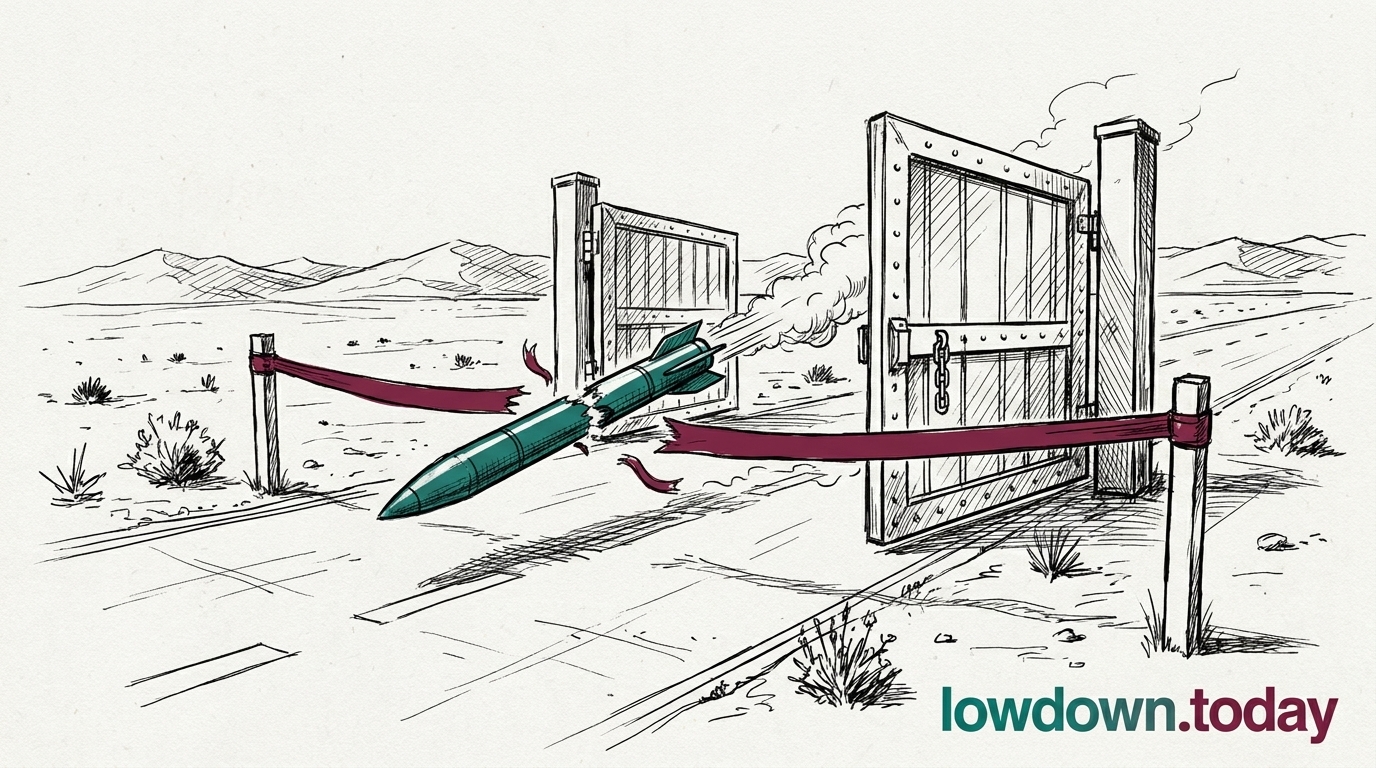
German fill reached 46.54% on the 29 July gas day at an eight-day mean injection rate of 313.7 GWh/day. Carry that pace forward and the caverns arrive at 1 November 21 points short of a target Berlin had already cut for itself.

ConflictAssessed
Key takeaway

At the current pace German caverns reach 58.5% by 1 November against an 80% requirement.

German gas storage stood at 46.54% full on the 29 July gas day, filling at an eight-day mean rate of 313.7 GWh/day 1. Ninety-four days separate that reading from 1 November. German working capacity of 246.5 TWh makes one percentage point worth 2,465 GWh. Carry the observed pace forward unchanged and the caverns reach 58.5% on 1 November.

Getting to 80% instead requires 877 GWh/day on every one of those 94 days. That is 2.8 times the current rate, and 62% above the strongest single gas day of the restart window. The arithmetic is the desk's own, worked from published AGSI+ inputs rather than taken from a market forecast, so a reader can reproduce it.

The 80% is Germany's own number and it binds. The Gasspeicherfüllstandsverordnung (GasSpFüllstV), the gas storage filling level ordinance approved by cabinet on 30 April 2025, in force from 5 May 2025 and running to 31 March 2027, requires most German storage facilities to hold 80% on 1 November. Berlin wrote that itself, and wrote it downward: the ordinance cut the country's own requirement from 90%. The caverns are on a pace to miss a bar Germany had already lowered for them, which is a different proposition from missing an obligation imposed from Brussels.

Two qualifications belong on the 21 points. The same ordinance sets a reduced 45% requirement for six named pore-storage sites (Bad Lauchstädt, Frankenthal, Hähnlein, Rehden, Stockstadt and Uelsen), with four Bavarian facilities (Bierwang, Breitbrunn, Inzenham-West and Wolfersberg) exempted from the reduction. The 46.54% is a national aggregate while the duty falls per facility, so the aggregate national requirement sits somewhat below 80% and 21 points is an upper bound rather than an exact gap. The EU instrument above it moved the other way: Regulation (EU) 2025/1733, adopted 18 July 2025 and in force from 11 September 2025, holds the bloc target at 90% but replaced the fixed 1 November deadline with a 1 October to 1 December window, downgraded the intermediate trajectory from binding to indicative, and opened deviation tiers reaching a 70% floor. Brussels loosened. Berlin's number did not move.

The counter deserves stating. Ninety-four days is a long runway, injection is not linear, and an eight-day mean is a thin base for a November projection. Germany imports through interconnectors all winter, so a sub-80% cavern position is not by itself a shortage. But linear extrapolation flatters this trajectory rather than damning it, because injection rates normally decay into autumn as temperatures fall and heating load returns. Nor is the gap new: the one genuine burst of European injection this summer, 3,721 GWh/day across the EU on 27 June , came and went before the German pace settled where it now sits.


Deep Analysis

In plain English

Germany has a law requiring its gas storage caverns to be 80% full by 1 November each year, to make sure there is enough gas for winter. That target used to be 90%, but the government lowered it in 2025 because the higher bar was proving too expensive to hit reliably. Now, even the lower 80% target looks out of reach: at the current pace of filling the caverns, Germany would only reach about 58.5% by 1 November, well short, unless the daily injection rate roughly triples from here.

Deep Analysis
Root Causes

Germany's own decision to cut its target from 90% to 80% is itself the evidence of what the higher bar would have cost: the Gasspeicherfüllstandsverordnung was approved by cabinet in April 2025 specifically to relax an obligation that operators were struggling to meet economically, not because the underlying security case for 90% had weakened .

The deeper structural cause is that Germany's caverns are commercially operated assets with no injection-pace mandate, only a single fill-level check on 1 November. That leaves the entire refill trajectory to spread economics, so a target set in the abstract, whether 90% or 80%, has no enforcement mechanism strong enough to override an unfavourable spread in the months before the deadline.

What could happen next?
  • Consequence

    Germany missing its own reduced storage target would likely widen the winter TTF strip against summer prices as the market reprices the refill shortfall.

  • Precedent

    A second downward revision of Germany's own storage target, following the 2022 to 2025 cut, would signal that the country treats the requirement as adjustable rather than a fixed security floor.

First Reported In

Update #31 · Caverns restart, 21 points short of November

GIE AGSI+· 31 Jul 2026
Read original
Different Perspectives
Shipping and insurance underwriters
Underwriters can price Houthi strikes because the group announces its targets, but an unclaimed drone at Damietta and a mandatory Iranian insurance scheme both deny them a pattern to price against. War-risk premiums are increasingly being set by the absence of a claimant, not the scale of the damage.
Jordan
Jordan
Azraq absorbed its fourth Iranian strike in seven weeks, again drawing no direct Jordanian retaliation, only an American one. Amman's exposure, hosting US basing without the Patriot density of Gulf allies, has not changed even as the war around it widens.
Houthi movement
Houthi movement
The Houthis' 20 July blockade of Saudi-linked shipping is the injury Riyadh's new 43-nation coalition directly answers, yet the group itself was never asked to join and remains outside every proposal on the table. Sanaa-aligned commentators call the coalition a paper reassurance for insurers rather than a deployable force.
Egypt's Cabinet
Egypt's Cabinet
Egypt confirmed the Damietta blaze was an attack, not an accident, on soil the war had never touched before. Cairo now faces an unclaimed threat to a facility supplying roughly 7% of its domestic gas, with no author to hold accountable and no pattern yet to defend against.
Oman
Oman
Muscat is running the only channel Iran will use, a voluntary Hormuz fee modelled on Malacca, but stayed out of Saudi Arabia's new naval coalition entirely. Oman's mediating leverage depends on treating Hormuz as shared and non-exclusive, the opposite of what Tehran is now demanding of it.
Iraq's Prime Minister
Al-Zaidi cancelled his first official Riyadh visit and convened the Coordination Framework, the coalition that keeps him in power and whose factions sit inside the PMF that Saudi jets just struck. He is caught between a five-year Saudi investment relationship and armed groups inside his own state he does not fully control.



