Skip to content
You can now search across every topic, entity and event.What's new
Iran Conflict 2026
28JUL

German CCGT shut-in is the demand depressant

5 min read
09:28UTC

German day-ahead cleared near EUR 74/MWh on 15 June, taking the clean spark spread to roughly -EUR 44/MWh and shutting gas plants in. StromVKG, the capacity-payment fix, sits in committee.

ConflictAssessed

German day-ahead power cleared near EUR 74/MWh on 15 June, down from roughly EUR 124 on Monday 8 June , a fall that took the clean spark spread to approximately -EUR 44/MWh on a spread calc at the day's prints 1. The clean spark spread is the margin a gas plant earns after fuel and carbon. With the gas benchmark through its floor, EUA carbon near EUR 78/tCO2 and German day-ahead near EUR 74, a standard combined-cycle plant (CCGT) at mid-merit efficiency runs variable costs near EUR 119/MWh against a EUR 74 clear, leaving it roughly EUR 44 out of the money 2.

The spread had been EUR -8 to -9 at the start of June; it widened this sharply because day-ahead fell faster than the gas-price drop cut fuel cost. The cheaper gas did not rescue CCGT economics, because the power-price collapse outran it. Germany abolished its gas storage levy on 1 January 2026 with no replacement , leaving plants to clear on market terms alone against a renewables-and-carbon stack that pushes them off-merit. CCGT load factors collapse at that margin, gas-for-power demand falls, and that demand destruction is why the prompt is selling off.

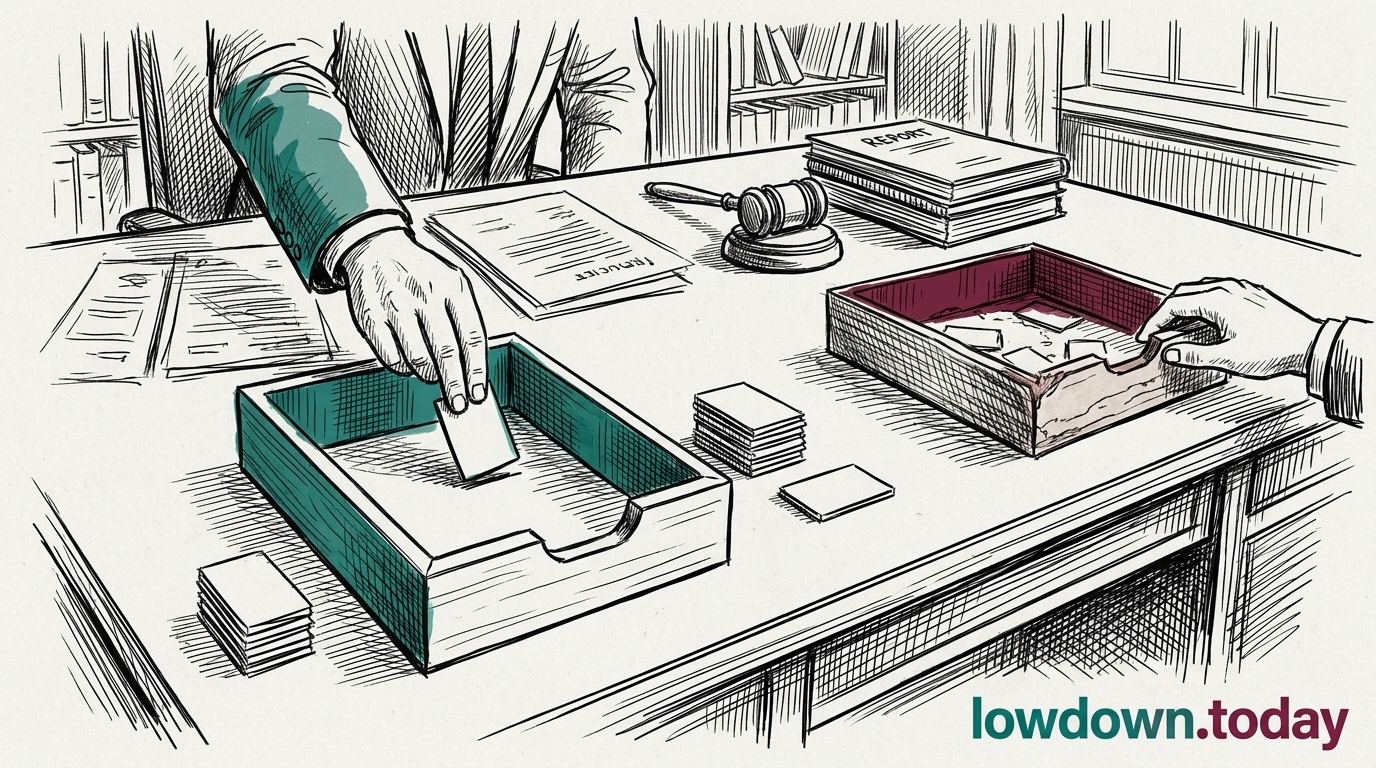
StromVKG, the capacity-payment bill, is Berlin's answer to exactly this problem. It cleared its Bundestag first reading on 11 June and now sits in the Wirtschaftsausschuss, the economics and energy committee, where the Greens have tabled an amendment demanding a credible hydrogen-conversion pathway for any plant winning a capacity contract . The bill pays plants to exist for security-of-supply rather than to run for margin.

The legislation is the admission that a grid clearing at EUR 74 with CCGTs EUR 44 out of the money cannot finance firm gas capacity on market terms. The Greens' hydrogen condition adds a state-aid timing risk: binding H2 criteria attached in committee could delay the September capacity auction the bill is meant to enable, which is the one downstream hinge a power desk should watch on this file.


Deep Analysis

In plain English

Germany relies on gas-fired power stations to back up renewable energy when the wind drops or the sun doesn't shine. These stations burn natural gas to make electricity. On 15 June 2026, the electricity market paid EUR 74 per megawatt-hour, but generating it required approximately EUR 119-128 per megawatt-hour once gas costs and carbon taxes were added. Most plants have simply stopped running because generating at that loss makes no financial sense. The German parliament is trying to fix this with a new law called StromVKG. Instead of paying power stations to generate electricity, the idea is to pay them just to exist and be ready to switch on when needed. That way, the plant owners keep their equipment running and their staff employed, even when it doesn't make economic sense to generate. The debate in parliament is about whether any plant that gets this subsidy must also commit to switching to hydrogen fuel by 2030.

Deep Analysis
Root Causes

German CCGTs carry a three-input cost structure: fuel (TTF), carbon (EUA), and the day-ahead power clearing price that determines revenue. At EUR 43.8 TTF, EUR 78 EUA, and EUR 74 day-ahead, the arithmetic produces a variable cost of approximately EUR 128/MWh against EUR 74 revenue. Germany abolished its storage levy on 1 January 2026, removing the administrative backstop that had previously created injection demand even when the spark spread was negative.

The EUA carbon cost is the structural differentiator between June 2026 and prior CCGT shut-in episodes. At EUR 78/tCO2, a 50%-efficient CCGT adds approximately EUR 40.6/MWh of carbon cost on top of the fuel cost. In previous European gas demand destruction periods (2019, 2020), EUA averaged EUR 25-30/tCO2, adding roughly EUR 13-16/MWh.

The post-2023 ETS cap-tightening under Fit-for-55 has permanently elevated the carbon stack for gas plant, meaning spark spread recovery now requires a larger TTF fall or power price rise than historical precedent suggests.

StromVKG, referred to the Wirtschaftsausschuss after passing its first Bundestag reading on 11 June, represents the legislative response to a market failure the German government recognised in 2024: no new dispatchable capacity will be built commercially at structurally negative spark spreads, and existing CCGTs will eventually retire rather than run at losses.

What could happen next?
  • Risk

    The Greens' hydrogen-conversion amendment to StromVKG, if accepted in the Wirtschaftsausschuss, may deter Uniper and RWE from bidding in the September 2026 capacity auction, leaving the first tranche undersubscribed and the CCGT shut-in extending through winter.

  • Consequence

    Extended CCGT shut-in removes approximately 800-1,200 mcm/month of German gas-for-power demand from the summer injection window, preventing the commercial demand signal that would otherwise support TTF recovery toward the EUR 46-47 floor.

First Reported In

Update #18 · TTF breaks the floor into the import ban

Lowdown Data Desk· 15 Jun 2026
Read original
Causes and effects
This Event
German CCGT shut-in is the demand depressant
The collapse in CCGT margins is the structural reason gas-for-power demand is falling, the demand-side force driving the prompt down independent of the ban or Iran.
Different Perspectives
Iran's Supreme Leader's office and Iranian households
A letter published through state media named Lebanon's territorial integrity and an end to Israeli operations there as the war's ending condition; the same week, spokesperson Mohajerani cut the subsidised petrol ration from 70 to 50 litres a month. Iranian agencies still disagree on who inside the office signed the letter.
Oman
Oman
Muscat proposed a voluntary-funded coalition to police Hormuz, the corridor its own coastline gives it standing to manage, while Iran wants control and toll rights over shipping and Washington insists on free navigation. Oman's remit stops at the strait; it has no comparable claim over Iraq, the Caspian, or Lebanon.
Kyiv
Kyiv
President Volodymyr Zelenskyy confirmed the Caspian strike on an Iranian vessel carrying military cargo from Russia's Astrakhan region, opening a front that ties Iran's war to its supply relationship with Moscow rather than to anything the Gulf mediators are discussing.
Riyadh
Riyadh
Maj Gen Turki Al Malki named Iraq as the launch point for drones intercepted over the Eastern Province and Riyadh, the first time this war has reached Saudi Arabia from that direction rather than from Yemen. Nothing landed, but a second launch geography aimed at Saudi oil now exists alongside the Houthi front.
Baghdad
Baghdad
Iraq's Foreign Ministry summoned its own ambassador in Riyadh after Saudi Arabia's Defence Ministry said the drones came from Iraqi territory, while the same day drones struck Iranian-Kurdish opposition camps inside Iraq. Baghdad is disowning attacks it did not launch from territory it does not fully control.
The Pentagon and Congress
Acting press secretary Joel Valdez attributed the toll's reversal to site anomalies, the same explanation the department gave for the opposite cut on 24 July; Representative Thomas Massie called the category change an absurd ruse designed to reset the war's legal clock. Neither side agrees on which explanation, or which war, is real.



