Skip to content
You can now search across every topic, entity and event.What's new
Iran Conflict 2026
28JUL

Four dead Americans put back on the list

2 min read
09:28UTC

The Department of War restored its Iran war death toll to 18 on 26 July, four days after cutting it to 14, and moved the wounded count from 420 back to 624.

ConflictDeveloping
Key takeaway

The Pentagon restored 18 dead and 624 wounded on 26 July, citing unspecified site anomalies.

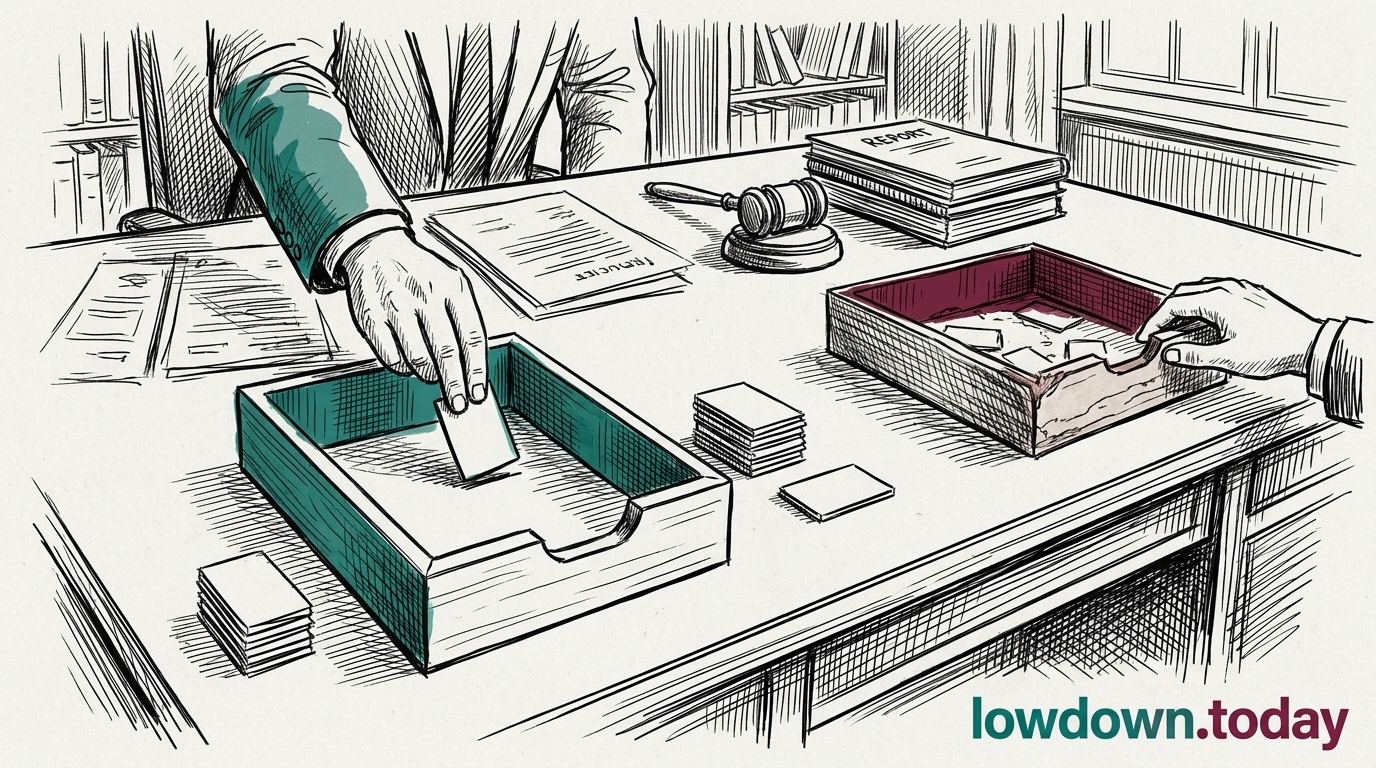
The Department of War put the US death toll for the Iran war back at 18 on Sunday 26 July, reversing the cut to 14 it had made two days earlier 1. The wounded figure moved the same way: 624 since the fighting began in February, against the 420 the same system published on 24 July 2. Of that total, 207 were hurt since 7 July. No cutoff rule accompanied either revision.

The figures live in the Defense Casualty Analysis System, the Pentagon's public database of US military dead and wounded, which is where reporters, veterans' organisations and congressional staff go for a number nobody has to be briefed on. Acting press secretary Joel Valdez offered one sentence about how it had moved: "site anomalies are currently being resolved in coordination with the military services"3.

The four names taken off last week belonged to service members the Pentagon had itself named and honoured, killed at Muwaffaq Salti Air Base in Jordan on 17 July. A database that removes a dead airman and then returns him has told two contradictory things to the same family in the space of four days, and neither statement came with a signature.

Restoring the count also restores the arithmetic Congress works from. Every casualty-linked entitlement, from hostile-fire pay to Department of Veterans Affairs casework, keys off a published figure attached to a named operation, so a number that oscillates is not merely embarrassing bookkeeping. It leaves the claimant carrying the burden of proving which version applied on the day.


Deep Analysis

In plain English

The Department of War, the Pentagon's own name for the US defence department, keeps a running count of American troops killed and wounded in the Iran war. On 24 July it quietly lowered that count. Two days later it put the number back up, plus 624 wounded, higher than before the cut. Nobody has explained the four dead by name or said what happened to them. For a war Congress never formally declared, this running number is one of the few concrete measures the public has of how costly it has become, so seeing it move up and down without explanation matters.

Deep Analysis
Root Causes

The Defense Casualty Analysis System pulls figures from separate Army, Navy, Air Force and Marine reporting chains, each with its own lag between a death occurring and its classification moving from duty-status-unknown through confirmed killed-in-action.

Sergeant Angel Rampersad's status changed from Duty Status Whereabouts Unknown to believed deceased four days after his 17 July attack, the same kind of reclassification lag that can make a cumulative total jump or drop without any new incident behind it.

The four names cut on 24 July and restored on 26 July died after Trump's late-April ceasefire declaration, according to three military officials cited by the New York Times, meaning their inclusion or exclusion depends on where the Pentagon draws the line between the declared end of major operations and the unofficial fighting reflected in later strikes.

What could happen next?
  • Meaning

    A public casualty count that moves without explanation twice in a week signals the Pentagon's own accounting system, not just the war, is under strain.

  • Risk

    Continued unexplained revisions give critics grounds to challenge the administration's public narrative about the war's cost, regardless of the true cause.

First Reported In

Update #163 · Pentagon puts four dead back, renames war

ABC News· 28 Jul 2026
Read original
Causes and effects
This Event
Four dead Americans put back on the list
Four families watched a federal database carry their relatives into the war, out of it, and back in again inside a fortnight, with one sentence of explanation.
Different Perspectives
Iran's Supreme Leader's office and Iranian households
A letter published through state media named Lebanon's territorial integrity and an end to Israeli operations there as the war's ending condition; the same week, spokesperson Mohajerani cut the subsidised petrol ration from 70 to 50 litres a month. Iranian agencies still disagree on who inside the office signed the letter.
Oman
Oman
Muscat proposed a voluntary-funded coalition to police Hormuz, the corridor its own coastline gives it standing to manage, while Iran wants control and toll rights over shipping and Washington insists on free navigation. Oman's remit stops at the strait; it has no comparable claim over Iraq, the Caspian, or Lebanon.
Kyiv
Kyiv
President Volodymyr Zelenskyy confirmed the Caspian strike on an Iranian vessel carrying military cargo from Russia's Astrakhan region, opening a front that ties Iran's war to its supply relationship with Moscow rather than to anything the Gulf mediators are discussing.
Riyadh
Riyadh
Maj Gen Turki Al Malki named Iraq as the launch point for drones intercepted over the Eastern Province and Riyadh, the first time this war has reached Saudi Arabia from that direction rather than from Yemen. Nothing landed, but a second launch geography aimed at Saudi oil now exists alongside the Houthi front.
Baghdad
Baghdad
Iraq's Foreign Ministry summoned its own ambassador in Riyadh after Saudi Arabia's Defence Ministry said the drones came from Iraqi territory, while the same day drones struck Iranian-Kurdish opposition camps inside Iraq. Baghdad is disowning attacks it did not launch from territory it does not fully control.
The Pentagon and Congress
Acting press secretary Joel Valdez attributed the toll's reversal to site anomalies, the same explanation the department gave for the opposite cut on 24 July; Representative Thomas Massie called the category change an absurd ruse designed to reset the war's legal clock. Neither side agrees on which explanation, or which war, is real.



