Skip to content
You can now search across every topic, entity and event.What's new
Iran Conflict 2026
26JUL

$200bn war bill not yet sent to Congress

2 min read
12:01UTC

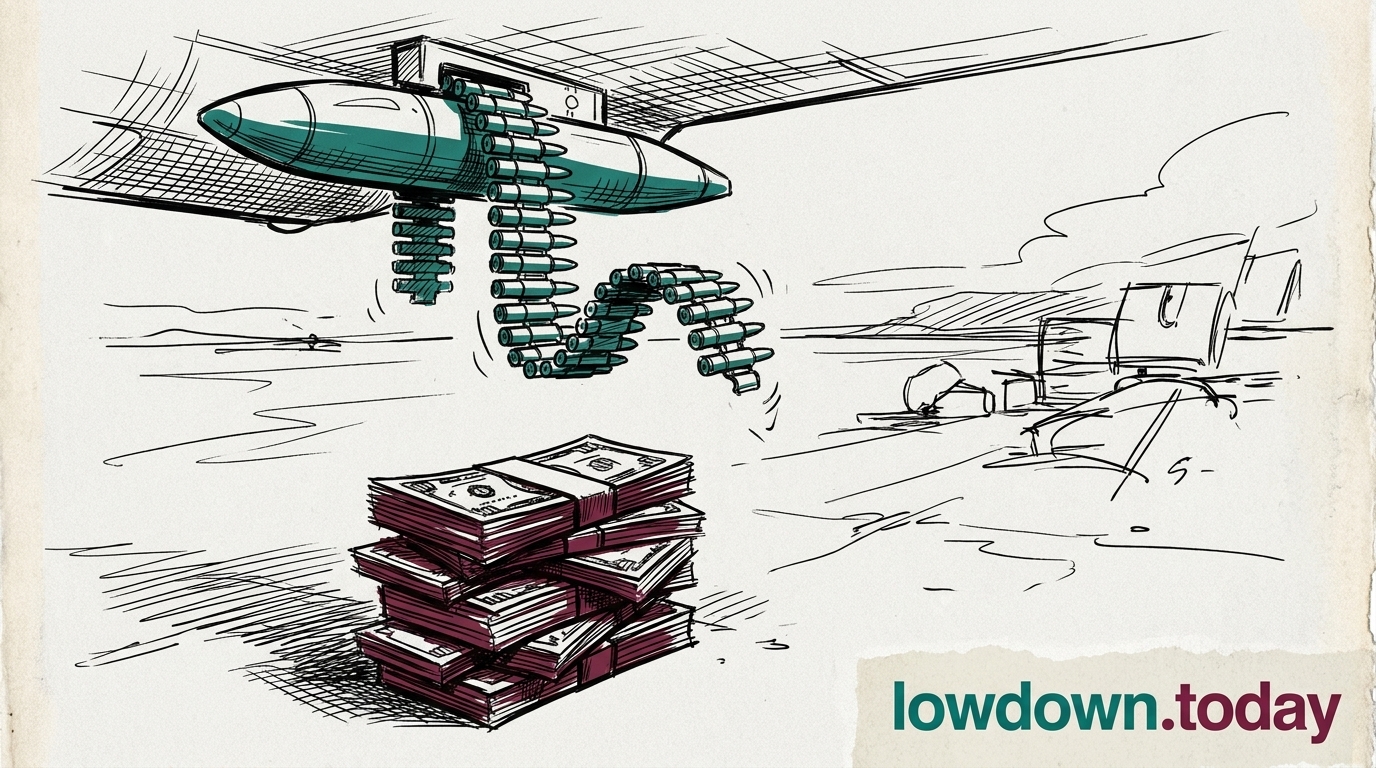
At $800 million per day, the Iran war is burning through money Congress has not authorised and may not approve.

ConflictDeveloping
Key takeaway

Military operations are expanding while Congress refuses to pay for them.

Pentagon officials confirmed on 31 March that their $200 billion Iran war supplemental has not been formally submitted to Congress. 1 Republican leaders told the Washington Post they lack the votes within their own party. The US spent roughly $15 billion in the first 19 days, nearly $800 million per day, more than the entire annual budget of the US Coast Guard.

The funding gap matters operationally. The 82nd Airborne's Devil Brigade is deploying to Kuwait . The USS Tripoli arrived with 3,500 Marines. Three Pentagon sources confirmed planning for "weeks of ground operations" including an amphibious seizure of Kharg Island. All of this requires money Congress has not authorised. Defence Secretary Pete Hegseth confirmed a forthcoming request but said the figure "could move." Heritage Foundation president Kevin Roberts endorsed the Republican resistance.


Deep Analysis

In plain English

The US military has been spending roughly $800 million every day on this war. To keep going, the Pentagon needs Congress to approve a special $200 billion funding package on top of the normal defence budget. That package has not been submitted to Congress yet. Republican leaders, from the president's own party, have said they do not have enough votes to pass it. The Heritage Foundation, a conservative think tank that helped write Trump's policy agenda, is backing the resistance. The practical problem is that the US has already committed ground troops to Kuwait and is planning to seize an Iranian oil island. All of that requires money Congress has not authorised.

What could happen next?
  • Risk

    Without supplemental authorisation, ground force deployments and Kharg Island planning may outpace available funding, creating a legal and operational crisis simultaneously.

    Short term · 0.75
  • Consequence

    Republican resistance from within the president's own party removes the political safety net that a bipartisan supplemental would normally provide.

    Immediate · 0.85
  • Opportunity

    The funding gap creates domestic leverage for a negotiated settlement: if the war cannot be funded at current scale, a deal becomes financially necessary regardless of military preference.

    Short term · 0.7
First Reported In

Update #53 · Trump drops Hormuz goal; toll becomes law

Washington Post· 31 Mar 2026
Read original
Causes and effects
This Event
$200bn war bill not yet sent to Congress
Without the $200 billion supplemental, the military expansion (ground troops, amphibious planning, interceptor replenishment) lacks financial authorisation.
Different Perspectives
Hormuz shipping and insurance market
Kpler, Lloyd's List and S&P Global each independently put Strait of Hormuz transits at a seventh to a sixth of pre-war levels, against CENTCOM's own position that the strait remains open for transit. War-risk premiums rose from 0.25% to 3-10% of hull value in mid-July and have held steady since.
Pakistan (with China)
Iran's interior minister met Pakistan's army chief in Islamabad on 25 July, his second visit in ten days, with China separately pushing the same track; Islamabad's stated precondition, a halt to Gulf attacks, broke within hours when the Houthis struck Yanbu and Jazan. The channel inherits Baghdad's opening without yet fixing what broke it.
Saudi Arabia
Saudi Arabia
Saudi Arabia absorbed Houthi strikes on Aramco-linked sites at Jazan and Yanbu on 25 July without confirming them, while holding a 30-year civil nuclear agreement Trump made conditional on joining the Abraham Accords two days after signing it. Riyadh is fighting on one front while being asked to concede on another.
Iran (state security leadership)
Iran's security chief said strikes continue until the enemy's "total surrender", and no IRNA, Tasnim or Fars report carries any stand-down language to match Washington's pause. Tehran reads the halt as "strategic decision-making fatigue", not a restraint it needs to reciprocate.
Washington (Pentagon and White House)
A Defense Department source called the bombing halt "on a hold", Pentagon spokesman Sean Parnell insisted the US "retains a deep arsenal of capabilities", and the White House credited "successful sanctions" and thirteen days of strikes for the same pause. Three explanations from one government suggest none of them is the whole one.
Oil traders
Oil traders
Sent Brent down 2.29 per cent to $98.38 a barrel on reports that mediation was reviving, moving the price on CENTCOM's quiet night rather than on Trump's same-day promise of a bigger operation with no deadline attached.



