Skip to content
You can now search across every topic, entity and event.What's new
Iran Conflict 2026
23JUL

Pentagon: Iran missile rate declining

3 min read
19:27UTC

Joint Chiefs Chairman General Dan Caine says Iran is firing fewer missiles than at the war's start — but whether that reflects US strikes or Iranian strategy is an open question.

ConflictDeveloping
Key takeaway

General Caine's public attribution of declining Iranian salvo rates to US strikes serves to validate campaign success domestically and before the Senate, but the causal claim is unverifiable and the three competing explanations carry radically different strategic implications.

Joint Chiefs Chairman General Dan Caine stated Wednesday that Iran is "firing fewer missiles than at war's start," attributing the decline directly to US strikes on launch infrastructure and missile stockpiles. The assessment came during the same Pentagon briefing where Defence Secretary Hegseth announced a second massive air assault was imminent.

The decline itself is observable. The UAE and Kuwait released cumulative intercept figures earlier this week — 165 ballistic missiles and 541 drones for the UAE alone, 97 ballistic missiles and 283 drones for Kuwait — volumes that implied early-conflict salvo rates exceeding most open-source projections of Iran's sustained capacity. By Wednesday, IRGC wave 17 comprised "more than 40 missiles." The drop from hundreds per wave to dozens is roughly 80 per cent or greater.

Caine's explanation — attrition through strikes — has supporting evidence. US forces have hit more than 1,000 targets including missile batteries and IRGC command centres since Saturday , with B-2 bombers deploying GBU-31 general-purpose munitions against hardened underground facilities . But it omits a competing explanation. Iran shifted from massed salvos to constant-rate strikes across dispersed targets earlier this week , a pattern the IRGC may have adopted deliberately to extend the operational life of remaining stocks. A force that knows its resupply lines are under bombardment has every reason to husband what it has left.

The International Institute for Strategic Studies estimated Iran's pre-war Ballistic missile inventory at between 3,000 and 4,000 missiles of various ranges. Seventeen numbered waves in five days, with early waves in the hundreds, suggests a substantial fraction has been expended regardless of cause. Whether US strikes have reached Iran's distributed production facilities — at Parchin, Isfahan, and elsewhere — determines whether the decline is a temporary dip or a trajectory toward exhaustion. Caine did not address production.

Deep Analysis

In plain English

The top US military officer says Iran is firing fewer missiles because American strikes have destroyed the facilities Iran uses to launch them. That may be true. But it could equally mean Iran is deliberately saving its best remaining missiles for one decisive strike later — or that Iranian missile crews have become more cautious after seeing how many were shot down. These are three very different situations. A genuinely depleted Iran and a conserving Iran look identical from the outside until the moment Iran chooses to fire its reserved weapons.

Deep Analysis
Synthesis

Caine's public attribution performs two simultaneous functions: it supports the campaign success narrative and provides justification for the imminent second assault. The circularity — we are succeeding kinetically, therefore we should intensify — is not supported by open-source evidence and structurally bypasses the conservation and degraded-confidence explanations that would argue for a different operational response. The public statement also reaches the Senate ahead of its 16:00 ET war powers vote, which is not incidental.

Escalation

The declining salvo rate, if driven by conservation rather than attrition, implies Iran retains significant residual strike capability for use at a moment of its own choosing — potentially against Gulf energy infrastructure or population centres at a time of Iranian political decision rather than US military pressure. The second assault being planned on an attrition assumption could accelerate Iranian use of reserved stocks rather than preventing it.

What could happen next?
  • Risk

    If the decline reflects conservation, Iran retains a mass-strike capability to be employed at a strategically chosen moment — potentially after a pause that US planners misread as defeat.

    Short term · Assessed
  • Meaning

    Caine's public causal attribution serves domestic and legislative audiences ahead of the Senate war powers vote, introducing motivated reasoning into what should be a purely operational assessment.

    Immediate · Assessed
  • Precedent

    The challenge of distinguishing real-time attrition from conservation will shape post-conflict doctrine on air power's role in degrading missile capabilities — a debate that will run for years in defence studies.

    Long term · Suggested
First Reported In

Update #19 · First US torpedo kill since 1945

CBS News· 4 Mar 2026
Read original
Causes and effects
This Event
Pentagon: Iran missile rate declining
The attribution matters more than the observation. If Iranian fire is declining because launch infrastructure has been destroyed, the second assault Hegseth announced will face weakened opposition. If Iran is conserving remaining stocks, those missiles become either a deterrent or a final concentrated salvo — and the Pentagon's framing of the decline as evidence of success may prove premature.
Different Perspectives
India
India
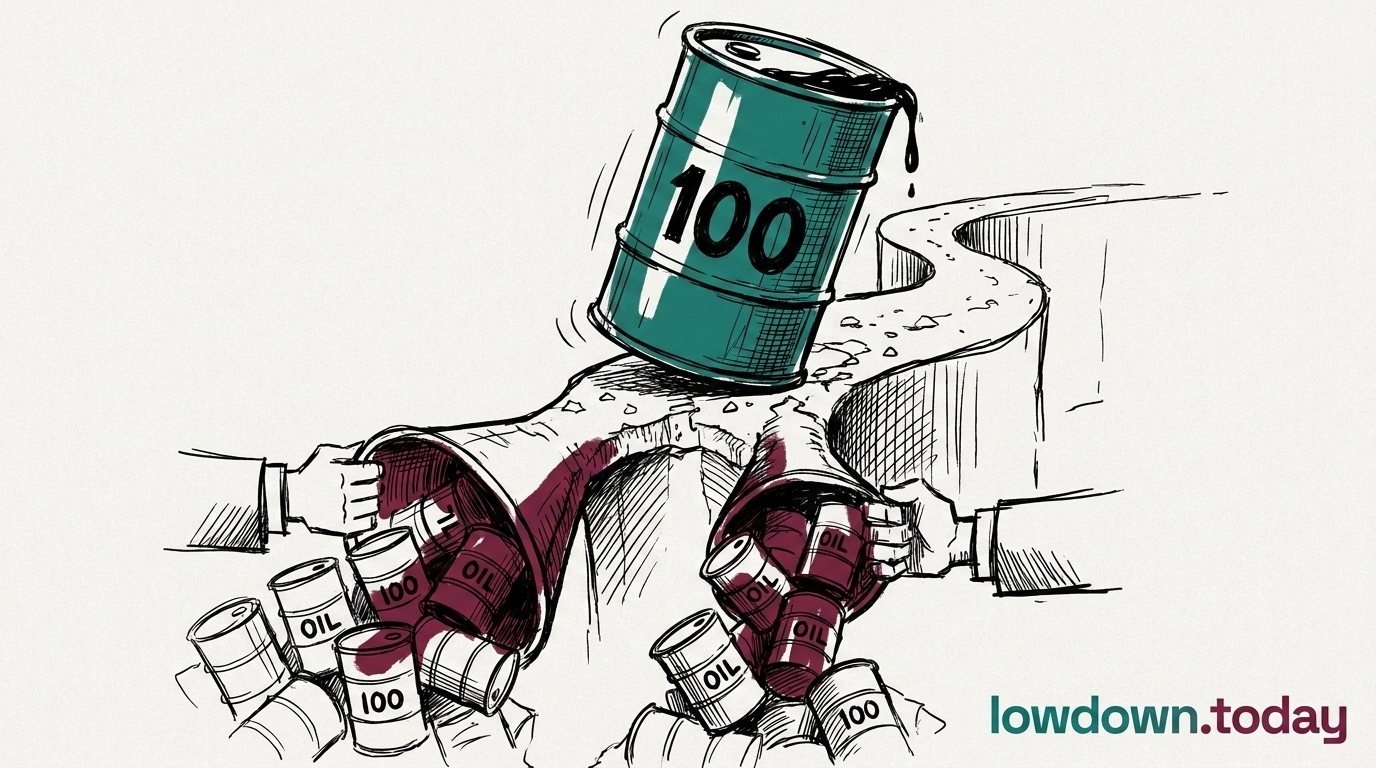
India buys more Saudi crude than any other country and has 2.5 million nationals working in the kingdom, so a $100 Brent and a live strike on Saudi tankers reach New Delhi through both fuel bills and remittance risk. Neither channel has an alternative route the way Saudi Arabia's own pipeline does.
Qatar
Qatar
Qatar co-authored the four-mediator ten-day ceasefire proposal alongside Egypt, Pakistan and Oman, centred on resuming Hormuz navigation, while separately pursuing its dated compensation claim against Iran at the UN Security Council filed on 21 July. Doha is mediating and litigating in the same week.
Israel
Israel
Israeli intelligence, reported by the Wall Street Journal, assesses Iran moved thousands of centrifuges and part of its roughly 440kg enriched-uranium stock into Pickaxe Mountain after the June 2025 strikes on its three main nuclear sites. Some of the US refuelling aircraft now deploying to the region are bound for Israeli bases and Ramon Airport.
Houthis
Houthis
Yahya Saree announced the missile and drone strikes on the Encelia and Layla on 22 July as enforcement of the embargo his forces had declared by radio warning alone two days earlier. Six vessels already turned back on the broadcast; the strike shows Houthi forces will use weapons once warnings stop working.
Saudi Arabia
Saudi Arabia
Saudi Arabia's state news agency confirmed only a fire on the Encelia's bow, with the crew safe; the Layla strike remains unconfirmed by Riyadh. The kingdom built its Petroline pipeline specifically to bypass Hormuz through the Red Sea, so the tanker fire lands on the route Riyadh had already spent billions escaping.
United States
United States
Washington is weighing both ten-day proposals but wants a longer truce than either offers, and moved F-16 and F-35 jets plus refuelling aircraft into the region while it decides. That deployment, not Trump's Pickaxe Mountain remarks, is the measurable US action, buying options for the day talks fail rather than betting on them.