Skip to content
You can now search across every topic, entity and event.What's new
Iran Conflict 2026
23JUL

Iran fires on 7 countries in retaliation

1 min read
19:27UTC

Iran fired dozens of ballistic missiles at Israel and at US military installations across seven countries on 28 February 2026 — the widest geographic spread of Iranian offensive missile use in history.

ConflictDeveloping
Key takeaway

Iran's direct ballistic missile response across seven countries ends proxy-mediated deterrence as Iran's default posture and creates immediate US political obligations to respond.

Iran's decision to retaliate directly — rather than routing its response entirely through proxy forces — marks a change from the posture Tehran maintained through 2024 and early 2025, when Hezbollah, the Houthis, and Iraqi militias were used to maintain plausible deniability. Direct ballistic missile strikes on US military bases across seven countries remove that deniability entirely and signal that Iran has concluded the era of calibrated, deniable escalation is over.

The seven-country targeting demonstrates a pre-positioned strike capability that had been mapped and planned well in advance of 28 February. Iran's ballistic missile arsenal — including Fattah, Kheibar Shekan, and Emad variants — has sufficient range to reach US bases across the Gulf and the Levant. The simultaneous nature of the strikes suggests launch windows were coordinated to prevent interception assets in one country from being redirected to defend another.

Direct Iranian retaliation also forecloses certain de-escalation paths that proxies left open. When Iran uses proxies, it retains the option of claiming non-involvement and negotiating a pause. A direct ballistic missile attack on US military installations in seven countries creates a legal and political obligation on the United States to respond, regardless of damage levels. The strike's geographic breadth makes any US non-response politically untenable.

Deep Analysis

Deep Analysis
Escalation

Seven-country targeting creates simultaneous political and military crises across the Gulf, Levant, and potentially wider region — each host country faces Iranian retaliation risk regardless of whether it sanctioned the original US strikes, generating pressure for US force withdrawal requests that would weaken US regional posture.

What could happen next?
  • Meaning

    Short term · Assessed
  • Meaning

    Short term · Assessed
  • Meaning

    Short term · Assessed
First Reported In

Update #2 · Five cities struck on opening night

Reuters· 28 Feb 2026
Read original
Different Perspectives
India
India
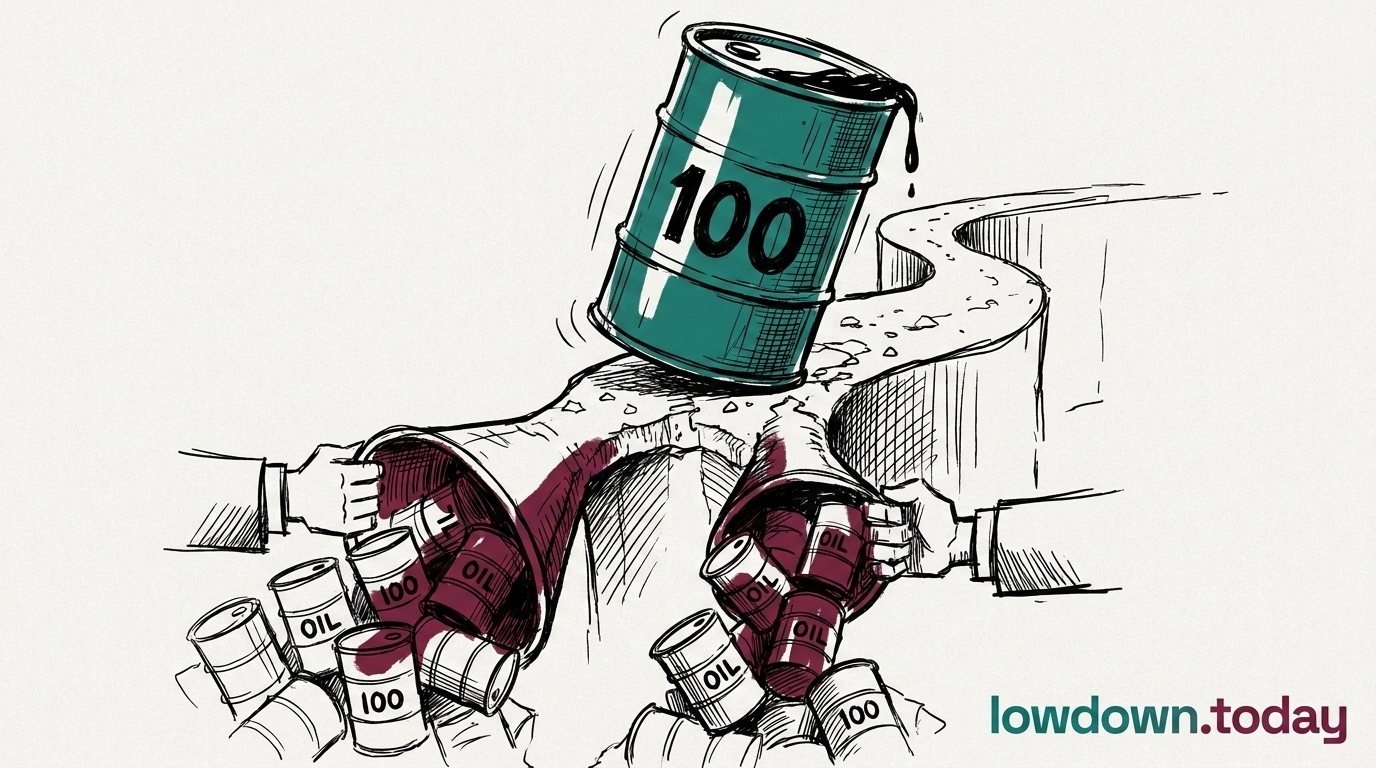
India buys more Saudi crude than any other country and has 2.5 million nationals working in the kingdom, so a $100 Brent and a live strike on Saudi tankers reach New Delhi through both fuel bills and remittance risk. Neither channel has an alternative route the way Saudi Arabia's own pipeline does.
Qatar
Qatar
Qatar co-authored the four-mediator ten-day ceasefire proposal alongside Egypt, Pakistan and Oman, centred on resuming Hormuz navigation, while separately pursuing its dated compensation claim against Iran at the UN Security Council filed on 21 July. Doha is mediating and litigating in the same week.
Israel
Israel
Israeli intelligence, reported by the Wall Street Journal, assesses Iran moved thousands of centrifuges and part of its roughly 440kg enriched-uranium stock into Pickaxe Mountain after the June 2025 strikes on its three main nuclear sites. Some of the US refuelling aircraft now deploying to the region are bound for Israeli bases and Ramon Airport.
Houthis
Houthis
Yahya Saree announced the missile and drone strikes on the Encelia and Layla on 22 July as enforcement of the embargo his forces had declared by radio warning alone two days earlier. Six vessels already turned back on the broadcast; the strike shows Houthi forces will use weapons once warnings stop working.
Saudi Arabia
Saudi Arabia
Saudi Arabia's state news agency confirmed only a fire on the Encelia's bow, with the crew safe; the Layla strike remains unconfirmed by Riyadh. The kingdom built its Petroline pipeline specifically to bypass Hormuz through the Red Sea, so the tanker fire lands on the route Riyadh had already spent billions escaping.
United States
United States
Washington is weighing both ten-day proposals but wants a longer truce than either offers, and moved F-16 and F-35 jets plus refuelling aircraft into the region while it decides. That deployment, not Trump's Pickaxe Mountain remarks, is the measurable US action, buying options for the day talks fail rather than betting on them.