Skip to content
You can now search across every topic, entity and event.What's new
Iran Conflict 2026
23JUL

Hawley signals AUMF at 60-day mark

3 min read
19:27UTC

Senator Josh Hawley told reporters on 15 April that Congress should vote on a military authorisation at the end of 60 days of Iran hostilities.

ConflictDeveloping
Key takeaway

The route to a signed Iran instrument in April 2026 now runs through the Senate, not the White House.

The Senate blocked a fourth War Powers Resolution (WPR) 47-52 on 15 April . Senator Josh Hawley (Republican of Missouri) told reporters afterwards: "at the end of 60 days, I think we need to vote on a military authorization" 1. Hawley added that Donald Trump "does have to come back to Congress" at the 60-day mark and either file a report or seek authorisation.

The WPR 60-day clock, triggered by the 28 February start of hostilities, runs out on Wednesday 29 April, eleven days from this briefing. The House came within one vote of ordering withdrawal on 16 April, failing 213-214 . Thomas Massie (R-KY) crossed to support withdrawal and three Democrats who had opposed the 12 April House version, Juan Vargas, Greg Landsman and Henry Cuellar, flipped to support this one. Members of both caucuses have moved in opposite directions on consecutive votes, which means the headline partisan alignment is churning, not hardening.

A Republican senator moving from blocking WPR withdrawals to signalling an authorisation vote opens a third path a Trump-aligned chamber can walk without defecting on headline partisanship. An Authorization for Use of Military Force (AUMF) vote on the floor would produce the first signed Iran instrument of the war, under maximally adversarial legislative conditions, and would collapse the verbal-track architecture every prior section of this briefing documents. Roll Call and NOTUS have placed Majority Leader John Thune on the record as working options. The historical comparison is February 2020, when an Iran WPR passed the Senate 55-45 with eight Republican crossovers; Trump vetoed and the override failed. The arithmetic on withdrawal runs closer in 2026, but the two-thirds veto geometry has not moved.

Deep Analysis

In plain English

The US Senate blocked a vote on ending the Iran war for the fourth time, 47 votes to 52. Senator Josh Hawley then said Congress should vote on formally authorising the war by 29 April, the 60-day legal deadline set by the War Powers Resolution (a law that says the President cannot keep troops in combat without Congress's approval for more than 60 days). Such a vote would produce the first written legal basis for the war that anyone has published.

What could happen next?
  • Meaning

    An AUMF floor vote before 29 April would be the first signed Iran instrument of the war, produced under maximum legislative pressure rather than executive initiative, giving it a different political character than any instrument the White House might draft.

    Short term · Assessed
  • Meaning

    Senate Republicans moving from 'block withdrawal' to 'debate authorisation' removes the WPR from the field as a threat mechanism without requiring any senator to defect on the headline partisan vote.

    Short term · Assessed
  • Meaning

    The procedural question of whether AUMF needs 60 votes (cloture) or 51 (simple majority under Rule XIV) is the technical hinge that Thune's 'working options' are likely targeting.

    Short term · Assessed
  • Meaning

    House proximity to withdrawal (213-214 on 16 April) means an AUMF that passes the Senate would face a House floor that is within one vote of the opposite position.

    Short term · Assessed
First Reported In

Update #72 · Hormuz opens and closes in 24 hours

Roll Call· 18 Apr 2026
Read original
Different Perspectives
India
India
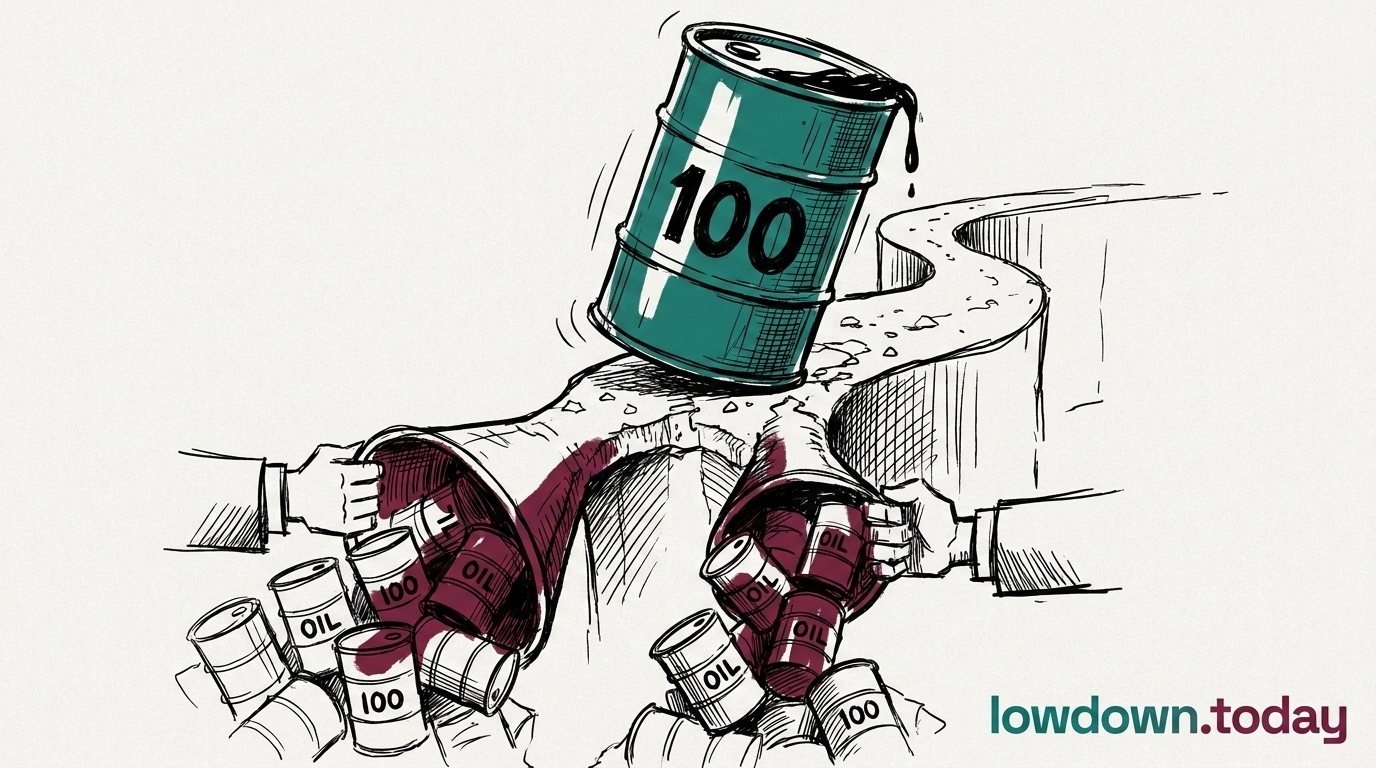
India buys more Saudi crude than any other country and has 2.5 million nationals working in the kingdom, so a $100 Brent and a live strike on Saudi tankers reach New Delhi through both fuel bills and remittance risk. Neither channel has an alternative route the way Saudi Arabia's own pipeline does.
Qatar
Qatar
Qatar co-authored the four-mediator ten-day ceasefire proposal alongside Egypt, Pakistan and Oman, centred on resuming Hormuz navigation, while separately pursuing its dated compensation claim against Iran at the UN Security Council filed on 21 July. Doha is mediating and litigating in the same week.
Israel
Israel
Israeli intelligence, reported by the Wall Street Journal, assesses Iran moved thousands of centrifuges and part of its roughly 440kg enriched-uranium stock into Pickaxe Mountain after the June 2025 strikes on its three main nuclear sites. Some of the US refuelling aircraft now deploying to the region are bound for Israeli bases and Ramon Airport.
Houthis
Houthis
Yahya Saree announced the missile and drone strikes on the Encelia and Layla on 22 July as enforcement of the embargo his forces had declared by radio warning alone two days earlier. Six vessels already turned back on the broadcast; the strike shows Houthi forces will use weapons once warnings stop working.
Saudi Arabia
Saudi Arabia
Saudi Arabia's state news agency confirmed only a fire on the Encelia's bow, with the crew safe; the Layla strike remains unconfirmed by Riyadh. The kingdom built its Petroline pipeline specifically to bypass Hormuz through the Red Sea, so the tanker fire lands on the route Riyadh had already spent billions escaping.
United States
United States
Washington is weighing both ten-day proposals but wants a longer truce than either offers, and moved F-16 and F-35 jets plus refuelling aircraft into the region while it decides. That deployment, not Trump's Pickaxe Mountain remarks, is the measurable US action, buying options for the day talks fail rather than betting on them.