Skip to content
You can now search across every topic, entity and event.What's new
Iran Conflict 2026
23JUL

EU cap fight turns on months, not price

2 min read
19:27UTC

EU foreign ministers vote on 13 July on the 21st sanctions package, two days before a deadline that would auto-lift the $44.10 Russian oil cap; Greece, Cyprus and Malta want a shorter freeze than Brussels.

ConflictDeveloping
Key takeaway

EU ministers vote 13 July on whether to freeze the Russian oil cap three months or to January 2027.

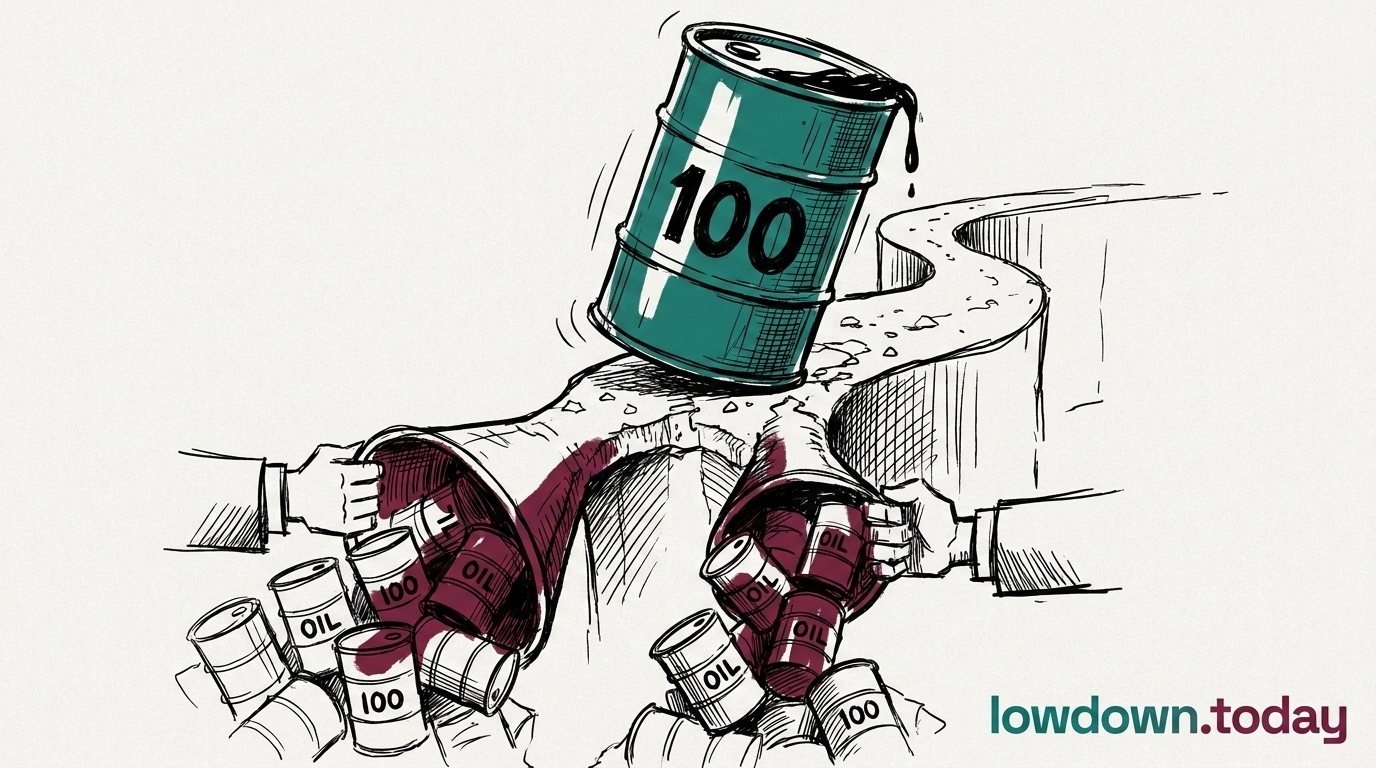
EU foreign ministers are set to vote on the bloc's 21st sanctions package on 13 July, two days before a 15 July deadline that would otherwise auto-lift the $44.10 cap on Russian oil. The Kyiv Independent reported the schedule, citing EU diplomats. 1 The cap bars Western insurers and shippers from servicing Russian crude sold above the set ceiling; letting it lapse would remove that ceiling and loosen the constraint on Moscow's barrels.

The package advances the proposal the Commission tabled in late June , but the fight has narrowed to duration. Greece, backed by Cyprus and Malta, is pushing a three-month freeze to be revisited in the autumn, against The Commission's plan to hold the cap to January 2027 . Both sides accept the level; they disagree only on how long to hold it.

A freeze to January 2027 locks the cap through the first quarter of next year; the three-month version reopens it for review around October. That is a materially shorter runway for any Urals-linked hedge than the desk has been pricing, and the outcome lands inside a week. Whichever way the vote goes, it resets how long traders can rely on the cap rather than the physical market to bound Russian barrels.

Deep Analysis

In plain English

The EU has capped the price other countries can pay for Russian oil at $44.10 a barrel since early 2026, to limit how much Moscow earns from oil exports. That cap is due to lift automatically on 15 July unless EU foreign ministers vote to freeze it first, and they are now set to vote on 13 July. Greece, Cyprus and Malta, all major shipping nations, want a shorter three-month freeze reviewed again in the autumn rather than dropping the cap itself. The European Commission wants the freeze locked until January 2027 instead. Whichever wins shapes how confidently traders can plan around Russian oil for the rest of the year.

Deep Analysis
Root Causes

Greece's and Malta's shipping registries carry a combined 37% of world merchant tonnage, roughly 20% Greek-flagged and 17% Maltese-flagged. Much of that fleet earns revenue carrying cargo, including sanctioned barrels, that a stricter or longer freeze could put at commercial risk.

That fleet economics, more than any view on Russia policy, explains why Athens and Valletta keep pushing the shorter compromise: a freeze reopened in the autumn gives their registries and insurers more frequent chances to reprice risk than one locked to January 2027.

What could happen next?
  • Precedent

    If Greece, Cyprus and Malta again force a shorter compromise, as they did on the 20th package's maritime ban, it confirms shipping-registry economics as a structural veto point on EU energy sanctions rather than a one-off objection.

First Reported In

Update #14 · Brent-WTI blows out as the hike lands priced

Kyiv Independent· 6 Jul 2026
Read original
Different Perspectives
India
India
India buys more Saudi crude than any other country and has 2.5 million nationals working in the kingdom, so a $100 Brent and a live strike on Saudi tankers reach New Delhi through both fuel bills and remittance risk. Neither channel has an alternative route the way Saudi Arabia's own pipeline does.
Qatar
Qatar
Qatar co-authored the four-mediator ten-day ceasefire proposal alongside Egypt, Pakistan and Oman, centred on resuming Hormuz navigation, while separately pursuing its dated compensation claim against Iran at the UN Security Council filed on 21 July. Doha is mediating and litigating in the same week.
Israel
Israel
Israeli intelligence, reported by the Wall Street Journal, assesses Iran moved thousands of centrifuges and part of its roughly 440kg enriched-uranium stock into Pickaxe Mountain after the June 2025 strikes on its three main nuclear sites. Some of the US refuelling aircraft now deploying to the region are bound for Israeli bases and Ramon Airport.
Houthis
Houthis
Yahya Saree announced the missile and drone strikes on the Encelia and Layla on 22 July as enforcement of the embargo his forces had declared by radio warning alone two days earlier. Six vessels already turned back on the broadcast; the strike shows Houthi forces will use weapons once warnings stop working.
Saudi Arabia
Saudi Arabia
Saudi Arabia's state news agency confirmed only a fire on the Encelia's bow, with the crew safe; the Layla strike remains unconfirmed by Riyadh. The kingdom built its Petroline pipeline specifically to bypass Hormuz through the Red Sea, so the tanker fire lands on the route Riyadh had already spent billions escaping.
United States
United States
Washington is weighing both ten-day proposals but wants a longer truce than either offers, and moved F-16 and F-35 jets plus refuelling aircraft into the region while it decides. That deployment, not Trump's Pickaxe Mountain remarks, is the measurable US action, buying options for the day talks fail rather than betting on them.