Skip to content
You can now search across every topic, entity and event.What's new
Iran Conflict 2026
23JUL

Brent hits conflict low, then rebounds

4 min read
19:27UTC

A single Iran TV broadcast knocked Brent crude below $95 a barrel on 27 May, a conflict low, before the White House denial dragged it back to about $96 within a day.

ConflictDeveloping
Key takeaway

Brent is pricing a deal that the Hormuz shipping data says has not started to happen.

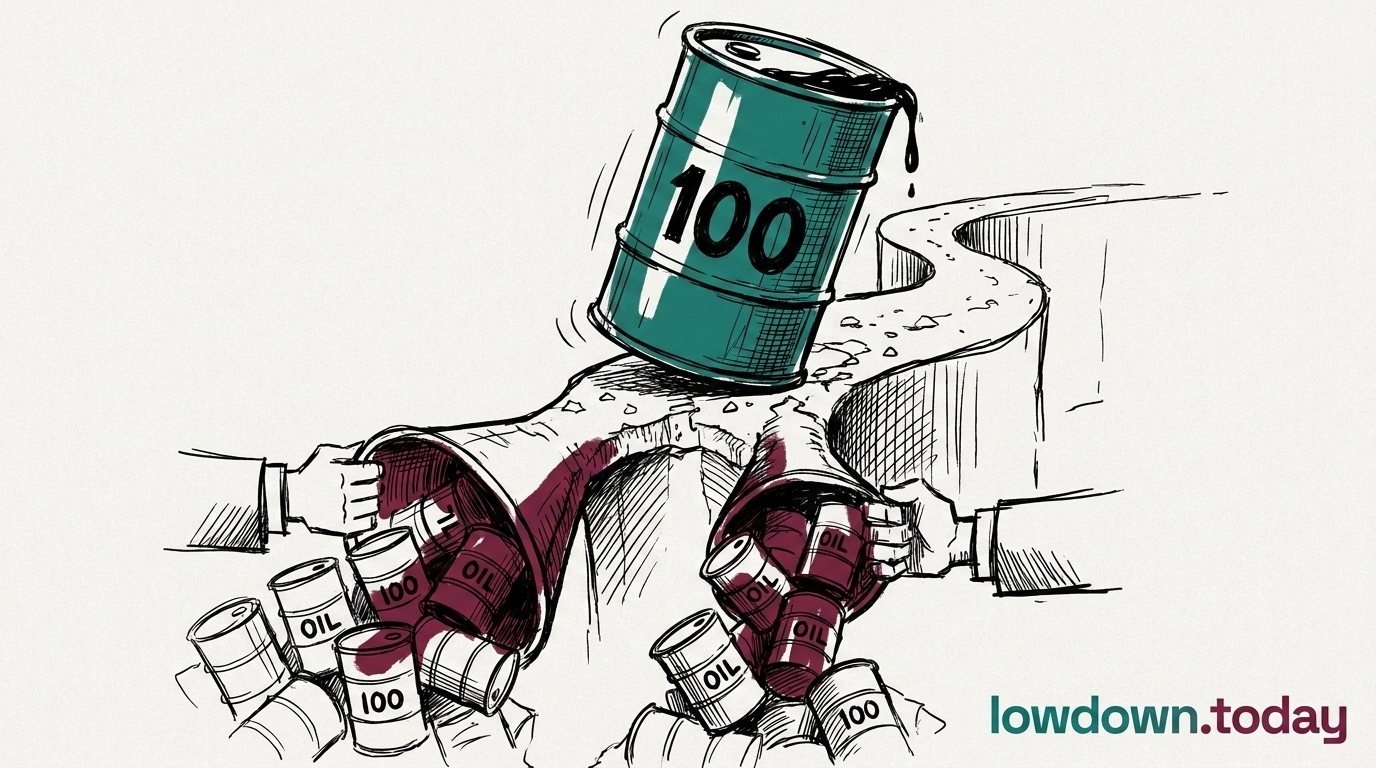
Brent Crude, the benchmark used to price most of the world's traded oil, fell more than 4.5% to below $95 a barrel on 27 May, a new low for the conflict, after Iran state TV signalled the strait of Hormuz could reopen 1. By 28 May it had crept back to around $96, near the $98.83 it had reached on 26 May , as The White House denial of those draft terms circulated and the talks stayed stuck. The swing fed off a verbal signal and reversed when no signed paper followed.

Across nine days the slide runs deeper than any single session shows. Brent hit a conflict high of $112.10 a barrel on 18 May , fell below $100 a week later , then shed more than $17 in total as each hopeful signal failed to produce a text. UK forecourt prices typically track these moves within a fortnight, so the fall should ease pump costs over the coming weeks unless the trend reverses.

The physical strait tells a darker story than the price. Bloomberg ship-tracking logged just two inbound vessels through Hormuz on 27 May, with one Chinese fuel tanker pausing midway through an outbound run 2. Two transits in a day leaves the chokepoint effectively shut to commercial traffic, a floor that has now held across several sessions.

Watch the gap between a falling benchmark and a near-closed strait. Brent is tracking the diplomatic headlines while the two-transit floor tracks the blockade, and when the two decouple this far the futures market is betting on a settlement the shipping data says has not begun. A collapse in the talks would reprice the war-risk premium upward fast, and any genuine reopening would first have to clear a backlog of stranded cargoes before supply normalised.

Deep Analysis

In plain English

When you buy petrol or pay an energy bill, part of what you are paying for is the cost of getting oil from producers to refineries. The Strait of Hormuz is the bottleneck: a narrow waterway through which roughly one in five barrels of the world's oil passes every day. Bloomberg counted just two ships passing through the strait on 27 May, against the normal figure of around 95 ships per day. The blockade has reduced commercial Hormuz traffic by roughly 98% from its pre-conflict baseline. Oil prices rose sharply when the conflict began in part because of that disruption. What happened on 27 May is that a single Iranian TV broadcast about a possible peace deal pushed oil prices down sharply, and then the US government denied it was true, so prices bounced back up again. All within a day. The takeaway is that these price swings are driven by guesses about whether the strait will reopen, not by any actual change in how much oil is flowing through it. Until ships can physically move again, the disruption to your energy costs continues.

Deep Analysis
Root Causes

The market's sensitivity to Iranian broadcast signals has two mechanical roots.

First, the absence of any verified physical measure of Hormuz reopening means price formation relies entirely on forward-looking political signals. Brent's war-risk premium layer correlates not with actual oil flows, which have been minimal since the blockade began, but with the probability distribution of how long the disruption lasts. Any signal that shifts that distribution, including a fabricated or contested one, will move the front-month futures price.

Second, Lloyd's war-risk designation creates a structural floor that futures cannot trade through on a sustained basis. The cover requirement for Hormuz transits is $10-14 million per voyage with no P&I coverage available outside Iran's bilateral arrangements.

At a Brent price below roughly $90, the economics of forced Hormuz routing become marginally negative for some charterers, creating a hard lower bound on what the market can price in as a 'reopening' scenario while the war-risk designation holds.

What could happen next?
  • Consequence

    The two-transit-per-day Hormuz floor has now held across multiple sessions and briefings. Shipping companies are treating it as the operational baseline rather than an anomaly.

    Immediate · Assessed
  • Risk

    Each media-driven Brent round-trip reduces traders' credibility premium for the next genuine reopening signal. If a real deal is reached, initial market pricing may undershoot because traders discount Iran's broadcast announcements.

    Short term · Reported
  • Risk

    IEA member state strategic petroleum reserves have absorbed several months of drawdown. If a reopening takes longer than another 60 days, reserve buffers drop below levels that the IEA considers adequate for emergency supply coordination.

    Medium term · Suggested
First Reported In

Update #110 · Trump vetoes Iran's only uranium exit

Bloomberg· 28 May 2026
Read original
Different Perspectives
India
India
India buys more Saudi crude than any other country and has 2.5 million nationals working in the kingdom, so a $100 Brent and a live strike on Saudi tankers reach New Delhi through both fuel bills and remittance risk. Neither channel has an alternative route the way Saudi Arabia's own pipeline does.
Qatar
Qatar
Qatar co-authored the four-mediator ten-day ceasefire proposal alongside Egypt, Pakistan and Oman, centred on resuming Hormuz navigation, while separately pursuing its dated compensation claim against Iran at the UN Security Council filed on 21 July. Doha is mediating and litigating in the same week.
Israel
Israel
Israeli intelligence, reported by the Wall Street Journal, assesses Iran moved thousands of centrifuges and part of its roughly 440kg enriched-uranium stock into Pickaxe Mountain after the June 2025 strikes on its three main nuclear sites. Some of the US refuelling aircraft now deploying to the region are bound for Israeli bases and Ramon Airport.
Houthis
Houthis
Yahya Saree announced the missile and drone strikes on the Encelia and Layla on 22 July as enforcement of the embargo his forces had declared by radio warning alone two days earlier. Six vessels already turned back on the broadcast; the strike shows Houthi forces will use weapons once warnings stop working.
Saudi Arabia
Saudi Arabia
Saudi Arabia's state news agency confirmed only a fire on the Encelia's bow, with the crew safe; the Layla strike remains unconfirmed by Riyadh. The kingdom built its Petroline pipeline specifically to bypass Hormuz through the Red Sea, so the tanker fire lands on the route Riyadh had already spent billions escaping.
United States
United States
Washington is weighing both ten-day proposals but wants a longer truce than either offers, and moved F-16 and F-35 jets plus refuelling aircraft into the region while it decides. That deployment, not Trump's Pickaxe Mountain remarks, is the measurable US action, buying options for the day talks fail rather than betting on them.