Skip to content
You can now search across every topic, entity and event.What's new
Iran Conflict 2026
23JUL

Brent clears $87 as Hormuz traffic thins

2 min read
19:27UTC

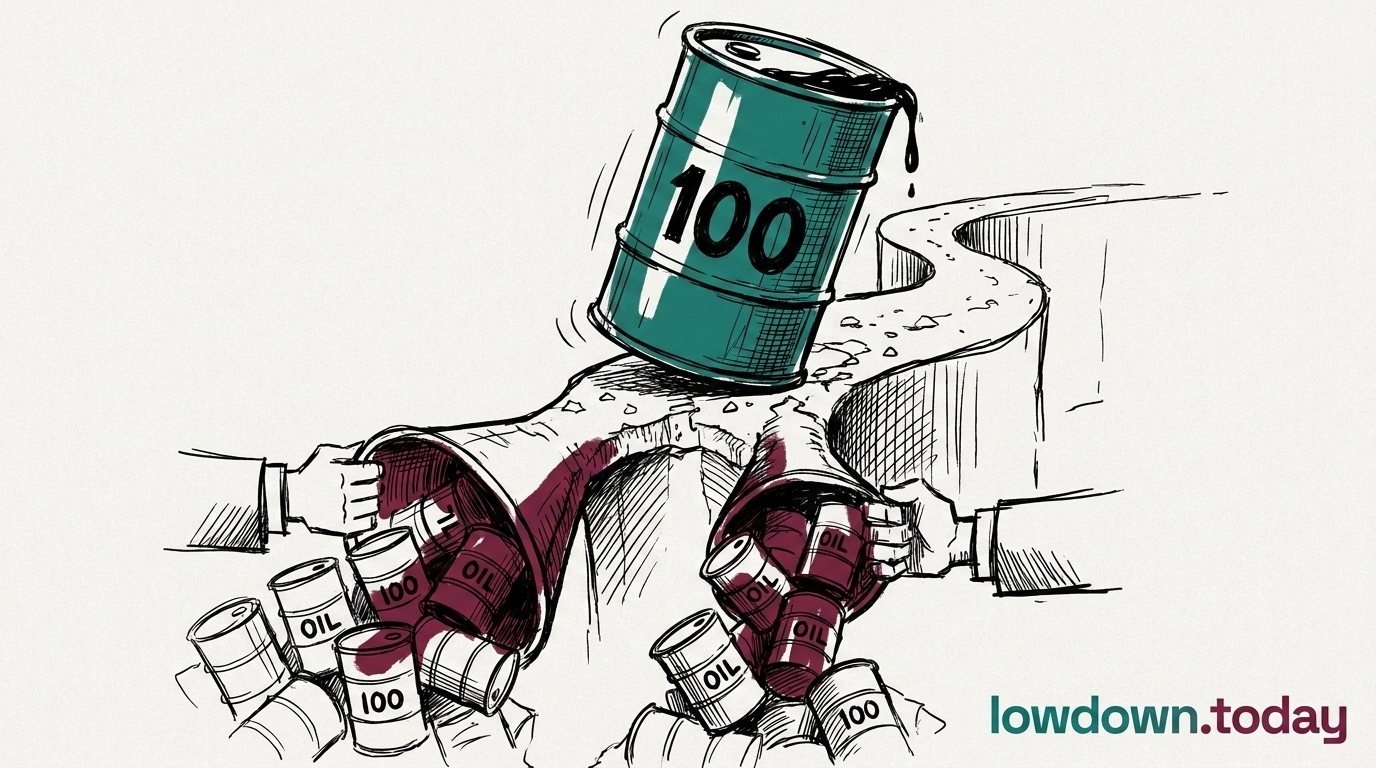
Brent crude traded above $87 a barrel on 17 July, up more than 14 per cent on the week, while transits through the Strait of Hormuz fell to eight vessels and war-risk premiums reached 3 to 10 per cent of hull value.

ConflictDeveloping
Key takeaway

Brent passed $87 as Hormuz transits fell to eight vessels and war-risk cover reached 10 per cent.

Brent Crude traded above $87 a barrel on Friday 17 July, a one-month high and a rise of more than 14 per cent on the week 1. Transits through the Strait of Hormuz fell to eight vessels on 16 July, down from 15 the day before and against a pre-war baseline above 100 2. Roughly a fifth of the world's seaborne oil normally passes through that channel.

War-risk premiums, the surcharge underwriters levy for sailing dangerous waters, now run at 3 to 10 per cent of hull value against 0.25 per cent before the war 3. An owner who paid $250,000 to insure a $100m hull through the strait is now quoted between $3m and $10m for the same passage, which exceeds what most single cargoes earn. No physical barrier has been placed across the water. the strait shuts on an underwriter's spreadsheet before it shuts on anything else, and the IRGC's mining claim of 18 July, which CENTCOM called false , moves that spreadsheet whether or not a single mine is ever recovered.

That asymmetry favours Tehran. Laying enough ordnance to physically close Hormuz is beyond what Iran can sustain under nightly bombardment; making insurers behave as though it might is not. Tehran can assert a minefield for the price of a broadcast, and the premium moves on the assertion.

Deep Analysis

In plain English

The price of oil jumped to its highest level in a month, and the number of ships passing through the Strait of Hormuz fell sharply, because insurance companies are charging shipowners far more to sail through the strait than they were before the war. That insurance surcharge, called a war risk premium, has gone from a quarter of one per cent of a ship's value to as much as 10 per cent, which on a $100 million ship can mean paying $10 million just to insure one voyage. Shipowners are choosing not to sail rather than pay that much, which is why fewer ships are passing through even though no one has physically blocked the strait.

Deep Analysis
Root Causes

The Joint War Committee's Listed Areas system exists because individual underwriters cannot each independently assess mine risk in real time; they delegate that judgement to a committee that reviews the area periodically rather than continuously.

That institutional lag is the actual mechanism Iran's unconfirmed mining claim exploits: the claim does not need to be true, it needs only to be plausible enough that the Committee does not remove Hormuz from its list, and removal happens on the Committee's schedule, not on a mine-clearance timetable.

What could happen next?
  • Meaning

    Iran can move global oil prices and shipping insurance by making a claim alone, without needing to sustain the physical capability to close the strait, so long as the claim is not immediately and conclusively disproven.

First Reported In

Update #156 · First American deaths in Jordan

Al Jazeera· 19 Jul 2026
Read original
Different Perspectives
India
India
India buys more Saudi crude than any other country and has 2.5 million nationals working in the kingdom, so a $100 Brent and a live strike on Saudi tankers reach New Delhi through both fuel bills and remittance risk. Neither channel has an alternative route the way Saudi Arabia's own pipeline does.
Qatar
Qatar
Qatar co-authored the four-mediator ten-day ceasefire proposal alongside Egypt, Pakistan and Oman, centred on resuming Hormuz navigation, while separately pursuing its dated compensation claim against Iran at the UN Security Council filed on 21 July. Doha is mediating and litigating in the same week.
Israel
Israel
Israeli intelligence, reported by the Wall Street Journal, assesses Iran moved thousands of centrifuges and part of its roughly 440kg enriched-uranium stock into Pickaxe Mountain after the June 2025 strikes on its three main nuclear sites. Some of the US refuelling aircraft now deploying to the region are bound for Israeli bases and Ramon Airport.
Houthis
Houthis
Yahya Saree announced the missile and drone strikes on the Encelia and Layla on 22 July as enforcement of the embargo his forces had declared by radio warning alone two days earlier. Six vessels already turned back on the broadcast; the strike shows Houthi forces will use weapons once warnings stop working.
Saudi Arabia
Saudi Arabia
Saudi Arabia's state news agency confirmed only a fire on the Encelia's bow, with the crew safe; the Layla strike remains unconfirmed by Riyadh. The kingdom built its Petroline pipeline specifically to bypass Hormuz through the Red Sea, so the tanker fire lands on the route Riyadh had already spent billions escaping.
United States
United States
Washington is weighing both ten-day proposals but wants a longer truce than either offers, and moved F-16 and F-35 jets plus refuelling aircraft into the region while it decides. That deployment, not Trump's Pickaxe Mountain remarks, is the measurable US action, buying options for the day talks fail rather than betting on them.