Skip to content
You can now search across every topic, entity and event.What's new
Iran Conflict 2026
21JUL

Iran claims it disabled two tankers

2 min read
10:16UTC

Iran said on Monday it had disabled two oil tankers crossing the Strait of Hormuz without its permission. No vessel was named and no independent authority has confirmed the claim.

ConflictDeveloping
Key takeaway

Iran says it disabled two tankers; no vessel has been named and nobody has corroborated it.

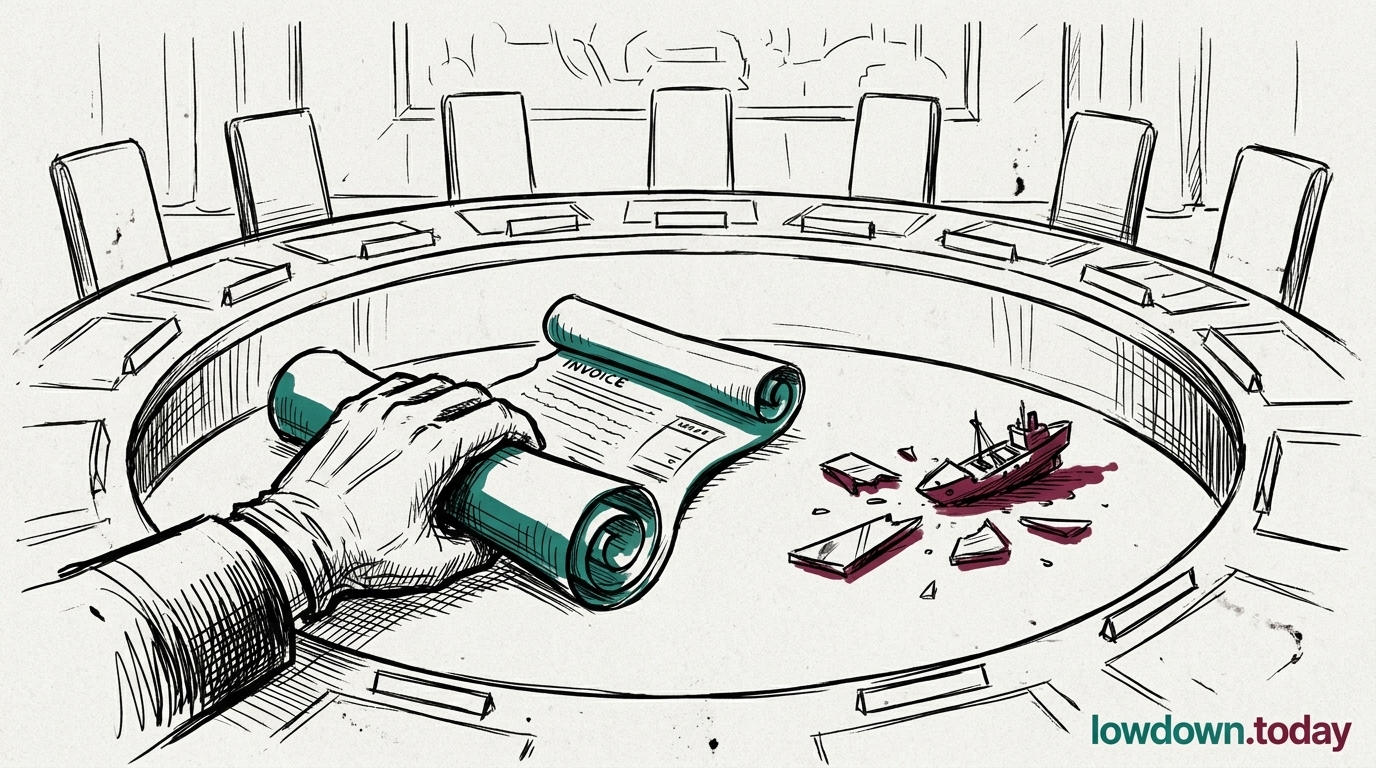
Iran said on Monday 20 July that it had disabled two oil tankers attempting to cross the Strait of Hormuz without its permission, NPR reported 1. Tehran named no vessel in the announcement, and no independent maritime authority has corroborated it.

CENTCOM (US Central Command) rejected a comparable Iranian tanker claim on Saturday 18 July . Neither denial arrived with evidence and neither claim arrived with a name, which leaves the shipping community holding two governments contradicting each other about what did or did not happen in the world's most closely watched waterway.

Tehran needs only to assert; Washington has to disprove, to an audience of underwriters whose premiums move on doubt long before they move on a verified casualty. Tehran built the claim around permission rather than around damage. Asserting a right to license passage through an international strait is a legal position rather than a naval one, and restating it costs Iran nothing whether or not a hull was ever touched.

Deep Analysis

In plain English

Iran said on Monday it stopped two oil tankers from passing through the Strait of Hormuz, the narrow waterway between Iran and Oman that a large share of the world's oil passes through, because they did not have Iran's permission to be there. Iran has made several similar claims this month. Just two days earlier, the US military's regional command, known as CENTCOM, publicly denied a similar Iranian claim about tankers in the same waterway. Neither Iran's latest claim nor CENTCOM's denial has been confirmed by an independent source, so it is not currently possible to say which, if either, is accurate.

Deep Analysis
Root Causes

Hormuz has no single, internationally recognised authority verifying vessel incidents in real time. Independent monitors such as UKMTO (UK Maritime Trade Operations) or commercial AIS tracking services can sometimes confirm a fire or a distress call, but confirming who disabled a vessel and why requires evidence (wreckage, intercepted communications, satellite imagery) that neither claimant in this exchange has published.

In that gap, Iran's claim and CENTCOM's denial function as competing public statements rather than verified reports, each serving its own signalling purpose: Iran demonstrating it can still act inside the strait, the US demonstrating that Iran's claims should not be taken as fact.

Escalation

Rhetorical rather than confirmed escalation: Iran's claim asserts an enforcement action, but without independent verification it cannot yet be treated as a confirmed new attack distinct from the pattern of contested claims already running through this month.

What could happen next?
  • Meaning

    A second unverified Iranian tanker claim inside a week, following CENTCOM's 18 July denial of a comparable claim, extends a pattern where public assertion is substituting for confirmable evidence on both sides.

First Reported In

Update #158 · Qatar bills Iran at the Security Council

CNBC· 21 Jul 2026
Read original
Different Perspectives
International Group of P&I Clubs
The Group has kept its Hormuz war-risk exclusion in force through the entire shipping recovery, even as London hull war-risk premiums fell to about 2% of vessel value. A burning LNG carrier off Limah is now the fresh case for holding that line, with mutual pooling meaning one hit reprices the strait for every owner at once.
Jordan
Jordan
Jordan's government said no threats existed at Aqaba hours before Iranian missiles landed there, and has not addressed the IRGC's claim that Jordanian civilians and soldiers supplied targeting intelligence for the strike. Amman hosts forces it does not command and is saying as little as it can.
United States (CENTCOM)
The Pentagon named two of the seventeen American dead, 1st Lieutenant Tyler Feehan and Private Isabella Gonzales, both killed at Jordan's Muwaffaq Salti Air Base, days after its Amman embassy had warned citizens away from Aqaba's airport and seaport. Washington is naming its own cost while flagging threats it declines to attribute publicly.
Iran
Iran
Iran said on Monday it disabled two oil tankers crossing the Strait of Hormuz without its permission, asserting a right to license passage through the strait it borders. Tehran named neither vessel, and CENTCOM had already denied a comparable Iranian claim on 18 July.
Qatar
Qatar
Qatar moved from summoning Iran's deputy ambassador on 8 July to a dated written claim at the UN Security Council thirteen days later, citing Resolution 2817 and reserving its Article 51 right of self-defence. Doha is building a permanent record while still hosting CENTCOM's forward headquarters and mediating with Tehran.
CENTCOM
CENTCOM
CENTCOM confirmed a third American service member died in northern Iraq on 19 July clearing unexploded ordnance from a downed Iranian drone, and recovered unidentified remains at Muwaffaq Salti Air Base in Jordan. The Pentagon has framed its Khuzestan strikes as degrading IRGC capacity, a rationale that stretches to explain a reactor foundation with no nuclear material in it.