Skip to content
Welcome, thoughtbot's Giant Robots listeners!Start here
Iran Conflict 2026
20JUL

Hengaw documents secret execution of aerospace researcher

4 min read
10:51UTC

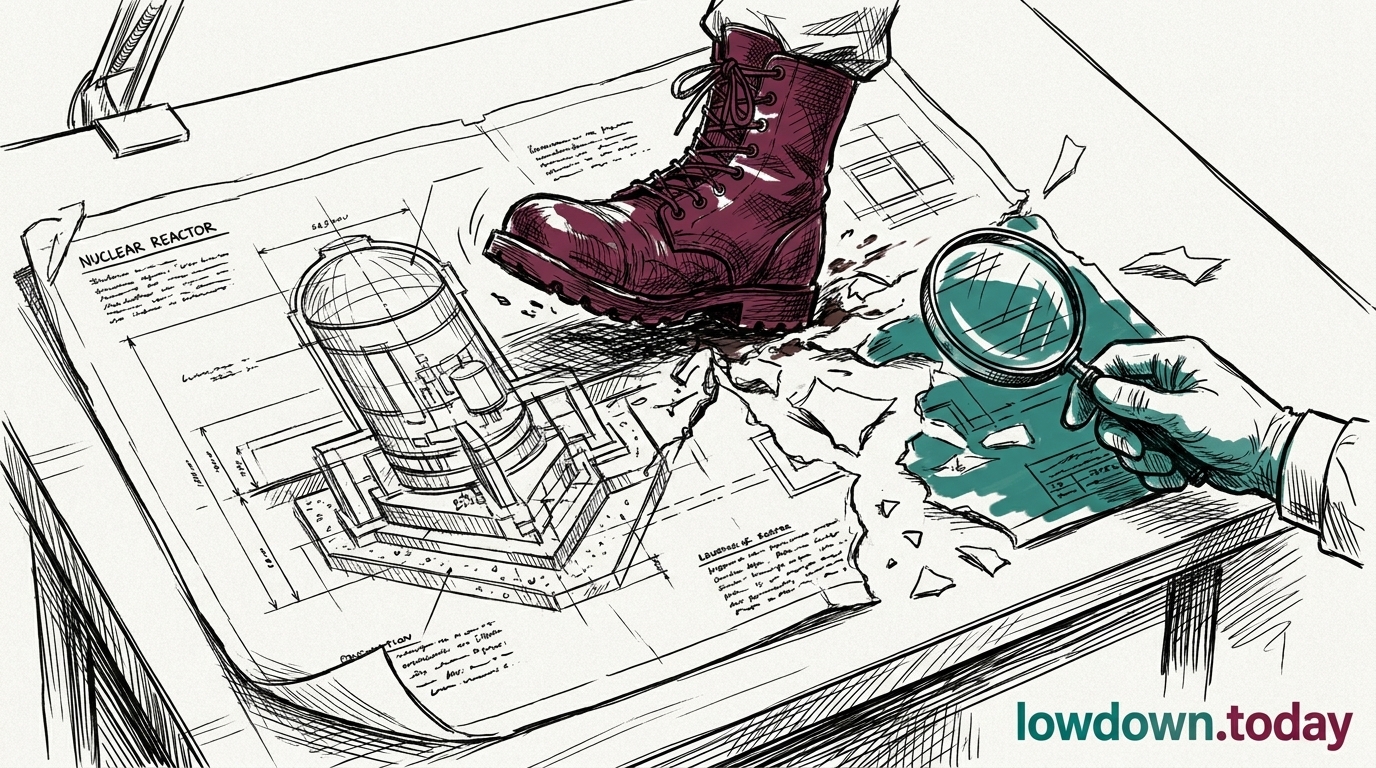
Hengaw documented the secret execution of Erfan Shakourzadeh, a 29-year-old aerospace researcher, at Qezel Hesar Prison in Karaj on or around 11 May on espionage charges following reported torture.

ConflictDeveloping
Key takeaway

A second technically-skilled defendant has been executed inside a fortnight on espionage charges Hengaw documented.

Hengaw, the Norway-based Kurdish human rights organisation that tracks judicial killings inside Iran, documented the secret execution of Erfan Shakourzadeh, a 29-year-old aerospace researcher, at Qezel Hesar Prison in Karaj on or around 11 May 2026 on espionage charges⁠1. The execution followed reported torture. Family notification preceded any public state announcement; the documentation cycle is the same one Hengaw has used through the conflict to surface judicial killings the Iranian state has not acknowledged in writing.

The case profile mirrors the Najmeh Amini moharebeh-and-Israel charge that Hengaw documented in Mashhad on 9 May. Two defendants in roughly forty-eight hours, both charged on Israel-linked espionage grounds, both technically skilled, both processed outside any public courtroom record. Shakourzadeh's aerospace specialism is what makes his case operationally distinct from earlier humanitarian cases Hengaw has documented. The state's charging template appears to be selecting researchers and technicians whose work intersects with military-relevant capability, rather than dissidents or protest figures, which is a different population from the demographics Hengaw was tracking when it documented the 56-prison hunger strike on 5 May and the Bakrzadeh and Karimpour executions earlier that week.

Hengaw's documentation is the only source for the execution; Iranian state media have not confirmed and no foreign mission has had consular access. The Kurdish-language network behind the monitor has been the most reliable source on Iranian judicial killings through 2026. Qezel Hesar is the same prison where Hengaw has documented multiple secret executions during the present conflict, which is a procedural pattern, not a coincidence. For families of dual-national or expatriate-linked researchers inside Iran, the case is the second data point inside a fortnight that the charging-and-execution loop can run in days rather than months.

For governments preparing diplomatic representations on consular access, the espionage-charge template is the legal mechanism that closes the door. Espionage convictions in Iran's revolutionary courts carry the death sentence and run without public proceedings, which is the procedural feature that lets a 29-year-old aerospace researcher be hanged before the documentation reaches Geneva.

Deep Analysis

In plain English

Erfan Shakourzadeh was a 29-year-old Iranian who worked in aerospace research, the kind of technical field that deals with rockets, drones, and aircraft engineering. He was secretly executed at a prison near Karaj, a city west of Tehran, on charges of spying. The Kurdish human rights group Hengaw, based in Norway, documented the case after monitoring Iranian prison transfers and family notifications. Hengaw recorded the execution as secret because Iran's judiciary published no charge sheet and no execution notice. Iran does not announce these executions. Families often find out only after the fact, and the public inside Iran cannot easily learn about them because the internet has been heavily restricted since the war began in February. Hengaw's job is to make these cases visible to the outside world. Shakourzadeh's case fits a pattern: Iran has been executing technically educated young people on espionage charges throughout the conflict, apparently targeting anyone whose professional knowledge might have been shared with an adversary.

Deep Analysis
Root Causes

Shakourzadeh's prosecution sits at the intersection of two wartime structural pressures on Iran's judiciary.

First, the IRGC's Decentralised Mosaic Defence doctrine, which devolved launch authority to 31 provincial units after the February 2026 decapitation strikes, created an institutional demand for counter-intelligence processing at scale.

Aerospace researchers with knowledge of UAV or missile systems represent a specific category of technical vulnerability under this doctrine: a researcher who could pass specifications, coordinates, or design parameters to an adversary potentially allows targeting of the decentralised units whose survivability depends on positional obscurity.

Second, the wartime internet blackout (operating at 1-4% connectivity since February 2026, ) creates the conditions for secret executions to proceed without the social-media amplification that slowed or complicated some post-2022 cases.

Hengaw's documentation of Shakourzadeh's execution on 11 May is itself evidence of the network's resilience, Kurdish civil society operates through offline contact chains that survive the blackout, but for the broader Iranian public, knowledge of the execution will not travel domestically in real time.

What could happen next?
  • Precedent

    The 'moharebeh and Israel' charge cluster now links professional technical knowledge to a capital offence in wartime, effectively creating a criminal liability for aerospace or defence researchers who had any international academic or professional contact, a chilling effect on Iran's postwar technical reconstruction capacity.

    Long term · 0.77
  • Consequence

    Hengaw's wartime documentation methodology, operating through offline Kurdish civil networks under the internet blackout, will form the primary evidential base for any future International Criminal Court or universal-jurisdiction prosecution of Iranian officials for secret executions.

    Long term · 0.71
  • Risk

    The accelerated judicial timeline in Shakourzadeh's case, bypassing the standard 18-36 month appeals cycle documented in 2022-24 cases, suggests Iranian wartime courts are processing a category of aerospace and technical researcher cases under military rather than civilian procedural rules, which may extend to other detained researchers not yet publicly identified.

    Short term · 0.69
First Reported In

Update #94 · Tehran writes, Trump tweets, Brent breaks

Hengaw· 11 May 2026
Read original →
Different Perspectives
International Energy Agency
G7 members agreed on 2 October to release up to 100 million barrels through the IEA over four months, front-loading diesel.
China
China
China signed the 15 October text reaffirming the Resolution 2216 arms embargo on the Houthis. The Wall Street Journal reported that Conflict Armament Research found Chinese parts in a Houthi copy of Iran's Kheibarshekan missile.
Russia
Russia
Russia joined the 15 October consensus condemning the Houthis, a month after vetoing a mandate for a UN panel of experts on Iran sanctions on 17 September. One Western official told Bloomberg that Moscow is providing Iran with missiles, and the White House rejected the assessment.
India
India
National Security Adviser Ajit Doval raised seafarer safety with Mohsen Rezaei on 12 October, after a drone hit the Petro Dolphin with 11 Indians aboard at Sohar. External Affairs Minister S. Jaishankar urged that attacks on commercial shipping and seafarers be avoided.
Lebanon
Lebanon
President Joseph Aoun met UN peacekeeping chief Jean-Pierre Lacroix in Beirut on 14 October as UNIFIL winds down before its mandate ends on 31 December. Two days later Qatar's prime minister pledged in Beirut to fund a solar plant for Lebanon.
Kataib Hezbollah
Kataib Hezbollah
The militia announced a halt to operations except against "hostile aircraft" and denied any disarmament deal with Prime Minister Ali al-Zaidi. A day later Quds Force chief Esmail Qaani urged eliminating "remaining traces of the US presence in other arenas".

Written with AI from Lowdown's published reporting. Not individually reviewed by an editor. Editorial standards.