Skip to content
You can now search across every topic, entity and event.What's new
Iran Conflict 2026
6JUL

Iran reframes $6bn of Qatar assets

3 min read
09:30UTC

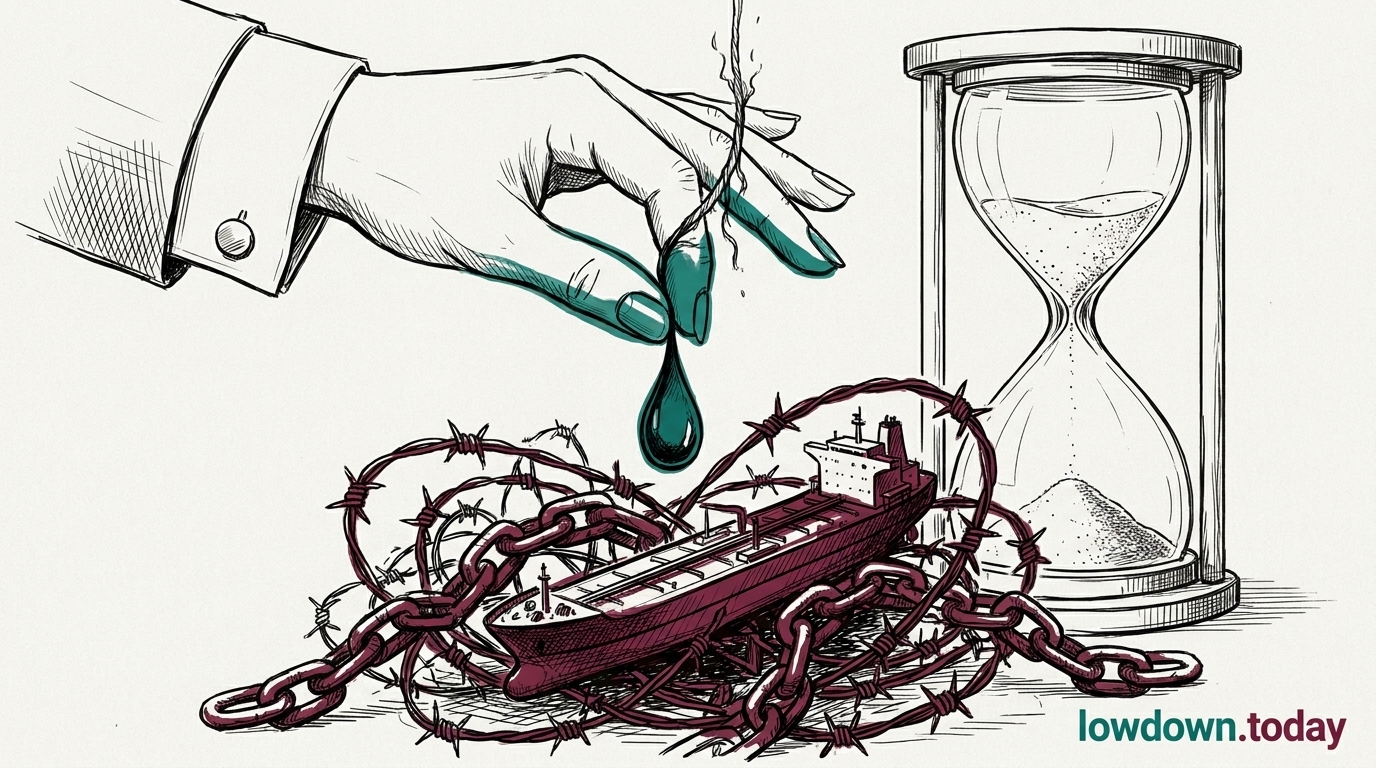
Iran's President Masoud Pezeshkian said $6 billion held in Qatar would be returned to Tehran, half the $12 billion Scott Bessent placed in a conditional escrow.

ConflictDeveloping
Key takeaway

Pezeshkian called $6bn in Qatar a return to Iran; Washington has not confirmed the figure or the terms.

Iran's president Masoud Pezeshkian said on 29 June that $6 billion of Iranian assets held in Qatar would be "returned to Tehran" 1. That is only half the $12 billion that Treasury Secretary Scott Bessent placed in a US-controlled Qatar escrow on 24 June, terms Iran had already rejected .

Bessent's structure was an escrow Iran could draw on only by meeting US conditions; Pezeshkian calls the same money a return, as though the conditions were gone and the funds simply Iran's. Accepting that reframing would let Iran spend the $6 billion on food, fuel and medicine imports without meeting a single term. Washington has not confirmed the figure or the framing 2.

Deep Analysis

In plain English

Iran's president, Masoud Pezeshkian, said on 29 June 2026 that $6 billion of Iranian money held in Qatar would be returned to Iran, with no conditions attached. The money belongs to Iran but has been frozen, meaning Iran cannot access it, because of international sanctions against the country. Washington has not confirmed Pezeshkian's $6 billion figure or his version of the terms. Just days earlier, on 24 June, Treasury Secretary Scott Bessent had announced that $12 billion of those same frozen funds would be placed in a special account in Qatar that Iran could only use to buy specific American goods, such as food and medicine. Iran had already rejected those restrictions. Pezeshkian described $6 billion, half of Bessent's figure, as a straightforward return of money without restrictions. That is a very different arrangement from what the US announced. And the US government has not confirmed Pezeshkian's number or his version of what was agreed.

First Reported In

Update #141 · Iran hits two US bases; Trump pulls back

GlobalSecurity.org· 30 Jun 2026
Read original
Different Perspectives
Oil market and P&I insurers
Brent cleared $87 intraday only once CENTCOM's blockade became physical rather than declared, even though P&I Clubs had already excluded Hormuz war risk a week earlier on 7 July: capital hedged ahead of enforcement, but prices moved only after it.
UAE reporting
UAE reporting
UAE reporting placed the Omani tanker deaths at one seafarer against the International Maritime Agency's count of two, the first time in this war that a Gulf state's casualty figures have diverged from an international monitor's.
Jordan
Jordan
Iranian strikes reached Jordan again on 14 July as part of the Gulf-wide retaliation for the Hormuz blockade, extending the conflict's geographic footprint to a state with no direct stake in the strait itself.
Bahrain
Bahrain
Bahrain sounded air-raid sirens on 14 July during Iran's Gulf-wide retaliation, the same day CENTCOM's blockade order and fourth night of strikes pushed the conflict's physical reach into the wider Gulf littoral.
Kuwait
Kuwait
Kuwait intercepted Iranian missiles and drones on 14 July as Tehran's blockade retaliation reached Gulf states beyond Iran's immediate shoreline, confirming Kuwaiti airspace now sits inside Iran's retaliatory envelope.
Oman
Oman
Oman absorbed the war's first tanker casualties in its own waters on 14 July, with two supertankers disabled and seafarers killed, putting the sultanate's shipping lanes directly in the path of the blockade fight for the first time.