Skip to content
You can now search across every topic, entity and event.What's new
Iran Conflict 2026
6JUL

EU Council opens Ukraine accession talks

2 min read
09:30UTC

EU Council conclusions on 18 June opened Ukraine's accession negotiations, called for a 21st sanctions package and confirmed the first disbursement of the €90 billion loan.

ConflictDeveloping
Key takeaway

Brussels answered Russia's peace offer by opening accession talks and tightening sanctions.

The European Union (EU) Council adopted conclusions on Ukraine on 18 June, opening the accession Intergovernmental Conference (the formal membership-negotiation track, the IGC), calling for a 21st sanctions package, and confirming the first disbursement of the €90 billion loan 1. The IGC is the body through which a candidate state negotiates the legal terms of joining; opening it moves Ukraine from applicant to active negotiator.

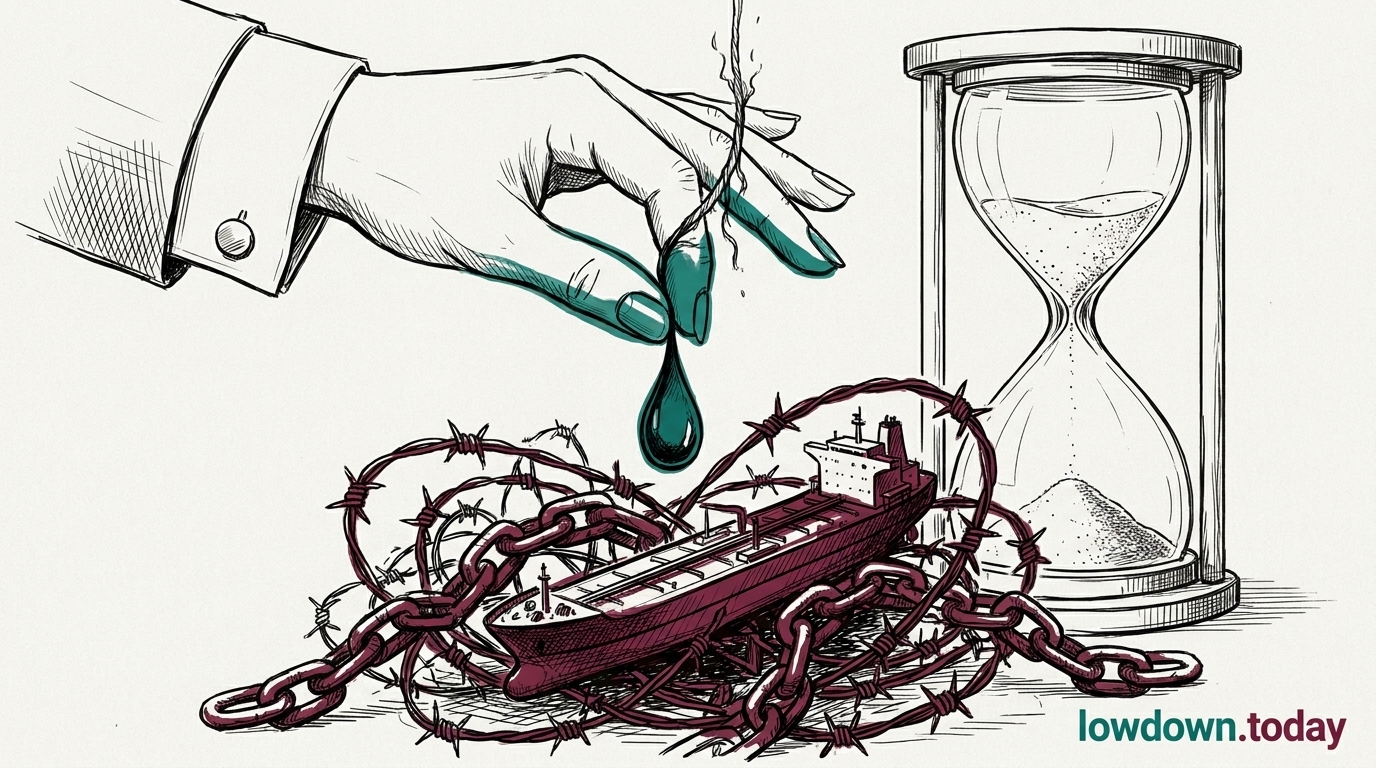
The conclusions called for a "whole of route" approach to Russia's shadow fleet, the ageing tankers Moscow uses to move crude outside Western insurance and inspection, and that phrasing is where the structural bite sits. Targeting the route rather than individual vessels aims at the chartering, port-call and insurance links the fleet depends on, the chokepoints that are harder to re-flag around than any single ship. That is a different instrument from a price cap, and a harder one to dodge.

The timing is the answer to Moscow's mediation offer . On the day Russia proposed the EU as a referee, the EU was changing the scoreboard: more sanctions, an open accession track, and the long-delayed first loan tranche finally cleared to disburse . Brussels is not picking up the whistle Russia handed it.


Deep Analysis

In plain English

The European Union held a summit on 18 June and agreed to several things at once: formally opening the legal process through which Ukraine could one day become an EU member, calling for a new round of sanctions against Russia, and confirming that €3.2 billion of a €90 billion loan to Ukraine would be paid out at a conference in Gdansk, Poland, on 25-26 June. Poland spent 10 years in accession talks before joining the EU in 2004; Romania and Bulgaria required 12. Ukraine's wartime status does not compress those timelines, which require harmonising roughly 35 policy chapters with EU law. Opening the formal negotiation track is a concrete political commitment from all 27 EU member states that locks in legal momentum the EU's own treaty rules make procedurally difficult to reverse.

What could happen next?
  • Consequence

    Opening Ukraine's accession Intergovernmental Conference creates institutional momentum within EU legal architecture that is procedurally difficult to reverse, even if political will weakens.

  • Opportunity

    The €3.2 billion Gdansk disbursement, combined with the broader €90 billion facility, provides Ukraine with substantial budget support that reduces pressure for near-term territorial concessions.

First Reported In

Update #21 · Ukraine's drones reach Russia's petrol pumps

Kyiv Independent· 24 Jun 2026
Read original
Different Perspectives
Oil market and P&I insurers
Brent cleared $87 intraday only once CENTCOM's blockade became physical rather than declared, even though P&I Clubs had already excluded Hormuz war risk a week earlier on 7 July: capital hedged ahead of enforcement, but prices moved only after it.
UAE reporting
UAE reporting
UAE reporting placed the Omani tanker deaths at one seafarer against the International Maritime Agency's count of two, the first time in this war that a Gulf state's casualty figures have diverged from an international monitor's.
Jordan
Jordan
Iranian strikes reached Jordan again on 14 July as part of the Gulf-wide retaliation for the Hormuz blockade, extending the conflict's geographic footprint to a state with no direct stake in the strait itself.
Bahrain
Bahrain
Bahrain sounded air-raid sirens on 14 July during Iran's Gulf-wide retaliation, the same day CENTCOM's blockade order and fourth night of strikes pushed the conflict's physical reach into the wider Gulf littoral.
Kuwait
Kuwait
Kuwait intercepted Iranian missiles and drones on 14 July as Tehran's blockade retaliation reached Gulf states beyond Iran's immediate shoreline, confirming Kuwaiti airspace now sits inside Iran's retaliatory envelope.
Oman
Oman
Oman absorbed the war's first tanker casualties in its own waters on 14 July, with two supertankers disabled and seafarers killed, putting the sultanate's shipping lanes directly in the path of the blockade fight for the first time.



