Skip to content
You can now search across every topic, entity and event.What's new
Iran Conflict 2026
23JUN

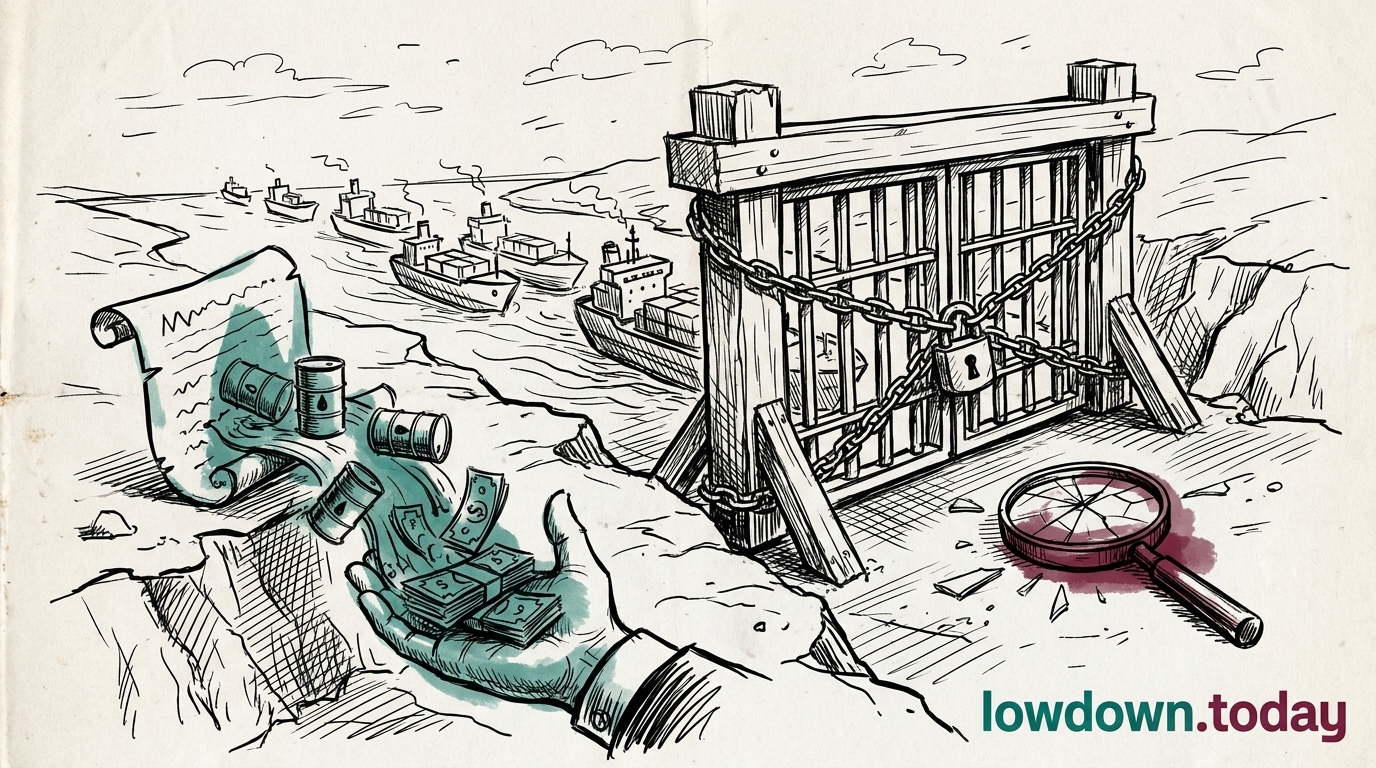
Cuba carve-out strands nine SDN cargoes

2 min read
11:42UTC

OFAC added nine Cuban officials to the SDN list on 18 May, one based in Cienfuegos, while GL 134C paragraph (b)(1) excludes Cuba outright, creating a cargo class that loses its waiver on a single Cuban touch.

ConflictDeveloping
Key takeaway

A single Cuban counterparty voids GL 134C cover for the whole cargo, not a fraction of it.

OFAC added nine Cuban officials to the SDN list on Monday 18 May, the same action that issued GL 134C, with one of the nine based in Cienfuegos, the south-central Cuban port that hosts the island's primary refinery 1. Paragraph (b)(1) of the licence excludes Cuba outright, carrying forward the carve-out that already stood when GL 134B lapsed on 16 May .

In practice that creates a Cuba-tainted cargo class. Any pre-17-April Russian barrel that touched a Cuban intermediary between loading and delivery loses 134C cover entirely. A trader who priced a Primorsk loading as fully covered now has to re-screen the whole voyage chain, because one Cuban counterparty voids the waiver for the entire cargo, not a fraction of it.

There is no pro-rata haircut to hedge against a Cuban touch: a cargo is either clean or it is uninsurable under the licence, so the diligence burden sits on proving a negative across every ship-to-ship transfer and every chartering counterparty. The sanctions policy belongs to the Russia file; the cargo-classification cost it triggers lands squarely on the desks completing those cargoes.


Deep Analysis

In plain English

Cuba is completely left out of the GL 134C permit ; any Russian oil that passed through Cuban waters, a Cuban-linked ship, or a Cuban company loses its legal protection entirely. On the same day GL 134C was signed, US authorities added nine Cuban officials to a blacklist that prohibits anyone from doing business with them. One of those officials is based in Cienfuegos, the Cuban city where Cuba's main oil refinery sits. In practical terms, this means traders need to trace the full journey of every Russian oil cargo back to its loading port to check for any Cuban connection ; a small Cuban link anywhere in the chain voids the protection for the whole shipment.

Deep Analysis
Root Causes

Cuba's carve-out reflects a US domestic political calculus that predates the Russia sanctions: the Helms-Burton Act (codified 1996) and CAATSA (2017) both embed Cuba within the same executive order architecture as Iran and Russia.

The OFAC action on 18 May was administratively combining a Russia-sanctions waiver with a Cuba-sanctions enforcement action under a shared regulatory filing, signalling Treasury treating all three programmes as a unified adversarial-nations supply-chain enforcement mandate.

The Cienfuegos designation's timing alongside GL 134C suggests Treasury has evidence of specific Russian-Cuban crude routing activity at the Cienfuegos facility ; not a coincidental pairing of unrelated enforcement actions.

First Reported In

Update #2 · GL 134C reverses the cliff, Brent -$14

OFAC· 26 May 2026
Read original
Causes and effects
This Event
Cuba carve-out strands nine SDN cargoes
One Cuban counterparty voids GL 134C cover for the whole cargo, forcing traders to re-screen voyage chains they had priced as clean.
Different Perspectives
Turkiye
Turkiye
Erdogan followed the Pakistani delegation to Jeddah for an instrument that has not been signed. Ankara's entry widens Saudi Arabia's defence architecture beyond the existing Pakistan pact, adding a second non-Gulf military partner mid-conflict.
Oman
Oman
Muscat is the corridor's broker but has published nothing about the arrangement Fars describes on its behalf. The account leaves Oman administering outbound traffic only, a narrower role than the shared route its mediation has rested on since 1979.
Pakistan
Pakistan
Islamabad sent Sharif, Munir and Dar to Jeddah to widen a defence commitment it has honoured in cheaper registers since March, when Dar invoked the Saudi mutual defence pact. Jeddah tests whether that hedge becomes a binding trilateral instrument with Turkiye.
United States
United States
Washington rejected the Majlis Hormuz bill outright while CENTCOM's own tally kept climbing to 49 vessels redirected since 14 July. Both instruments tightened in the same week Trump promised the strait would reopen soon.
Iran
Iran
Iran's foreign ministry is selling a phased Hormuz corridor through Oman and denying any percentage cargo tariff, while its own Majlis is legislating fines to 20% and a bar on Israeli-linked cargo. The two accounts, from the same government, do not agree with each other.
Saudi Arabia
Saudi Arabia
Riyadh published a target forecast, not an attribution, for the campaign it says the Najran strike previewed. That keeps an Article 51 case available while it formalises a trilateral defence architecture with Pakistan and Turkiye.



