Skip to content
You can now search across every topic, entity and event.What's new
Iran Conflict 2026
21JUN

TTF recovers to EUR 42.59, range-bound

3 min read
17:51UTC

TTF front-month recovered to EUR 42.59/MWh on 22 June, up 3.5% from its ban-binding settlement, boxed between a drained floor near EUR 41 and a soft premium from the contested-open Strait of Hormuz.

ConflictDeveloping
Key takeaway

TTF is range-bound between a tested EUR 41 floor and a contested Hormuz ceiling.

TTF front-month recovered to EUR 42.59/MWh on 22 June, up 3.5% from the EUR 41.12 settlement struck the day the Russian pipeline import ban took effect on 17 June . TTF is the Dutch Title Transfer Facility, Europe's benchmark wholesale gas hub and the reference price for supply contracts and LNG arbitrage across the continent.

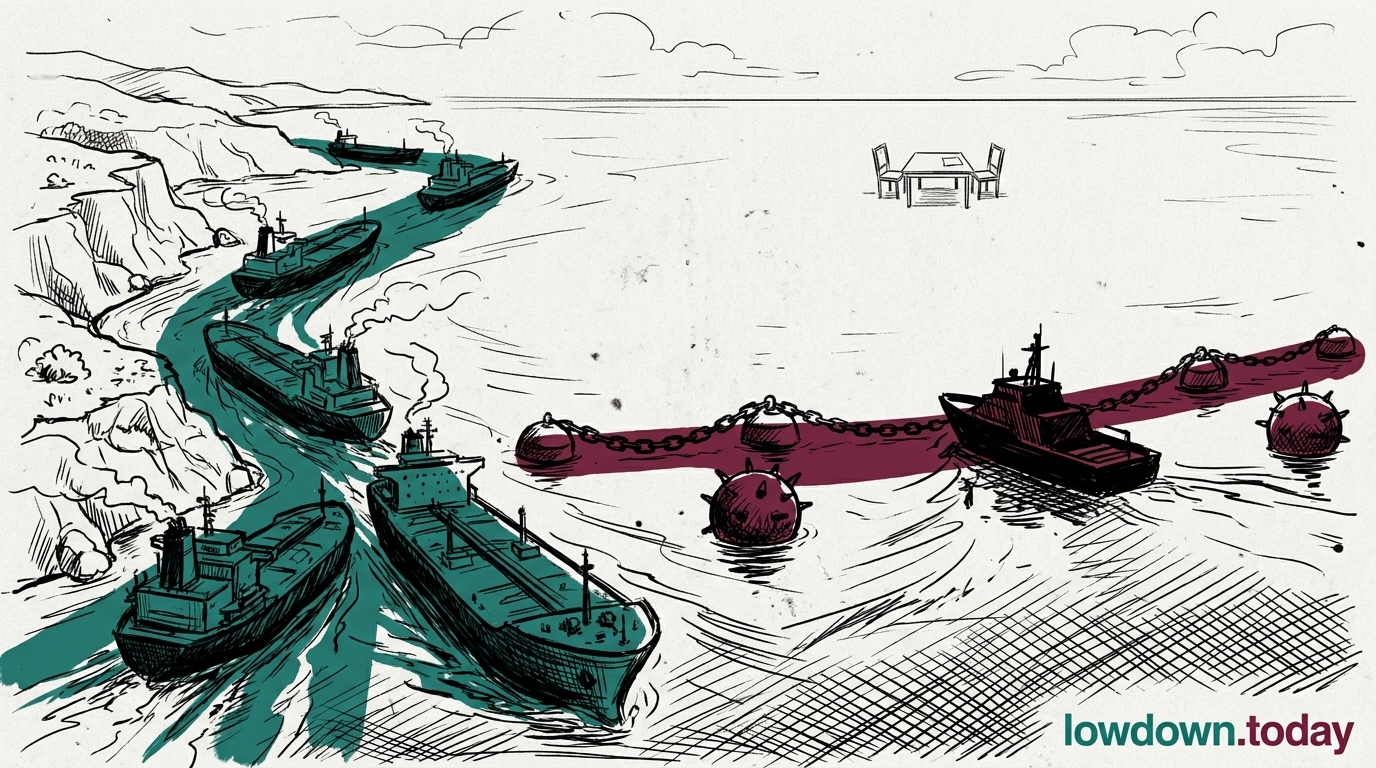
The benchmark sits boxed between two forces. Below it is a ban-priced floor near EUR 41, where the geopolitical premium has fully drained and there was no snap-back once the ban took effect. Above it is a ceiling set by a renewed Strait of Hormuz risk premium, after the chokepoint moved to contested-open status on 20 June 1. the strait's legal status is owned by the Iran-conflict-2026 briefing; for this desk it is only the datable input that lifted the prompt off its floor this week.

The contested-open status matters here purely as a price signal, not a narrative. While safe passage stays legally disputed, QatarEnergy carries no fixed date to begin its restart. Its stated 50%-in-one-month, 80%-in-two-months recovery clock has no start trigger, and two destroyed liquefaction trains cap any volume it could bring back .

The practical read for a trading desk is a prompt that can drift within a tight band on sentiment without a fresh physical catalyst. The floor is structural and tested; the ceiling depends on a sovereign discretion no European buyer controls.


Deep Analysis

In plain English

TTF is the main European gas price benchmark; think of it as the reference price that gas contracts across the continent are based on. It is set daily at a Dutch trading hub and published in euros per megawatt-hour. On 22 June, TTF recovered slightly to EUR 42.59; up from EUR 41.12 five days earlier. That EUR 41.12 low was the lowest it had traded since early May, and it happened because two pieces of bad news arrived at once: a new EU law banning short-term Russian pipeline imports came into force, and Iranian-American negotiations raised hopes of reopening a key Middle East shipping lane called the Strait of Hormuz. Hormuz is the narrow sea passage through which Qatar's liquefied natural gas (LNG) shipments travel. Iran re-declared it legally closed on 20 June, but American military forces logged a record 55 ships passing through the same day. So the strait is simultaneously "legally closed" and practically open; a confusing situation that is keeping gas prices stuck in a narrow band. Nobody knows when Qatar will be able to start reliably shipping again, and until they do, Europe cannot count on that LNG supply to top up its winter storage.

Deep Analysis
Root Causes

TTF's current range reflects the intersection of two competing structural forces. On the floor side, the June 17 short-term Russian pipeline ban (Regulation EU 2026/261) removes a small but non-zero volume of prompt gas; its EUR 41.12 settlement reflects the market's assessment of the direct volume impact plus the loss of a psychological long-term supply backstop.

On the ceiling side, the Hormuz contested-open status places a soft sovereign-discretion premium into the price. This premium differs structurally from a confirmed blockade premium: under a confirmed blockade, spot prices need to reach cargo-redirection levels (EUR 60+ per OIES).

Under contested-open status, where physical transits occurred at record 55-ship volume on 20 June while Iran's legal declaration asserts closure, markets price a probabilistic outcome; weighted between full reopening (EUR 38-40 floor) and confirmed re-closure (EUR 55-65 range); rather than either binary outcome outright.

What could happen next?
  • Risk

    A confirmed Hormuz re-closure; legally enforced rather than legally asserted; would move TTF rapidly toward the EUR 55-65 range, since the sovereign-discretion premium would become a confirmed physical-supply premium.

    Short term · Assessed
  • Opportunity

    A durable safe-passage date starting QatarEnergy's 50%/80% restart clock would compress TTF toward EUR 38-40 as the risk premium unwinds, but would not solve the injection shortfall unless also accompanied by a cargo-routing shift from Asia.

    Short term · Assessed
  • Consequence

    Two destroyed Ras Laffan export trains cap any QatarEnergy recovery at roughly 80% of pre-crisis capacity for years regardless of Hormuz status, embedding a structural supply deficit even after the geopolitical premium clears.

    Long term · Reported
First Reported In

Update #20 · Spark spread now feeds the winter deficit

Euronews· 22 Jun 2026
Read original
Different Perspectives
Turkiye
Turkiye
Erdogan followed the Pakistani delegation to Jeddah for an instrument that has not been signed. Ankara's entry widens Saudi Arabia's defence architecture beyond the existing Pakistan pact, adding a second non-Gulf military partner mid-conflict.
Oman
Oman
Muscat is the corridor's broker but has published nothing about the arrangement Fars describes on its behalf. The account leaves Oman administering outbound traffic only, a narrower role than the shared route its mediation has rested on since 1979.
Pakistan
Pakistan
Islamabad sent Sharif, Munir and Dar to Jeddah to widen a defence commitment it has honoured in cheaper registers since March, when Dar invoked the Saudi mutual defence pact. Jeddah tests whether that hedge becomes a binding trilateral instrument with Turkiye.
United States
United States
Washington rejected the Majlis Hormuz bill outright while CENTCOM's own tally kept climbing to 49 vessels redirected since 14 July. Both instruments tightened in the same week Trump promised the strait would reopen soon.
Iran
Iran
Iran's foreign ministry is selling a phased Hormuz corridor through Oman and denying any percentage cargo tariff, while its own Majlis is legislating fines to 20% and a bar on Israeli-linked cargo. The two accounts, from the same government, do not agree with each other.
Saudi Arabia
Saudi Arabia
Riyadh published a target forecast, not an attribution, for the campaign it says the Najran strike previewed. That keeps an Article 51 case available while it formalises a trilateral defence architecture with Pakistan and Turkiye.



