Skip to content
You can now search across every topic, entity and event.What's new
Iran Conflict 2026
21JUN

Iran fires on 7 countries in retaliation

1 min read
17:51UTC

Iran fired dozens of ballistic missiles at Israel and at US military installations across seven countries on 28 February 2026 — the widest geographic spread of Iranian offensive missile use in history.

ConflictDeveloping
Key takeaway

Iran's direct ballistic missile response across seven countries ends proxy-mediated deterrence as Iran's default posture and creates immediate US political obligations to respond.

Iran's decision to retaliate directly — rather than routing its response entirely through proxy forces — marks a change from the posture Tehran maintained through 2024 and early 2025, when Hezbollah, the Houthis, and Iraqi militias were used to maintain plausible deniability. Direct ballistic missile strikes on US military bases across seven countries remove that deniability entirely and signal that Iran has concluded the era of calibrated, deniable escalation is over.

The seven-country targeting demonstrates a pre-positioned strike capability that had been mapped and planned well in advance of 28 February. Iran's ballistic missile arsenal — including Fattah, Kheibar Shekan, and Emad variants — has sufficient range to reach US bases across The Gulf and the Levant. The simultaneous nature of the strikes suggests launch windows were coordinated to prevent interception assets in one country from being redirected to defend another.

Direct Iranian retaliation also forecloses certain de-escalation paths that proxies left open. When Iran uses proxies, it retains the option of claiming non-involvement and negotiating a pause. A direct ballistic missile attack on US military installations in seven countries creates a legal and political obligation on the United States to respond, regardless of damage levels. The strike's geographic breadth makes any US non-response politically untenable.


Deep Analysis

Deep Analysis
Escalation

Seven-country targeting creates simultaneous political and military crises across the Gulf, Levant, and potentially wider region — each host country faces Iranian retaliation risk regardless of whether it sanctioned the original US strikes, generating pressure for US force withdrawal requests that would weaken US regional posture.

What could happen next?
  • Meaning

    Short term · Assessed
  • Meaning

    Short term · Assessed
  • Meaning

    Short term · Assessed
First Reported In

Update #2 · Five cities struck on opening night

Al Jazeera· 28 Feb 2026
Read original
Different Perspectives
Shipping and insurance industry
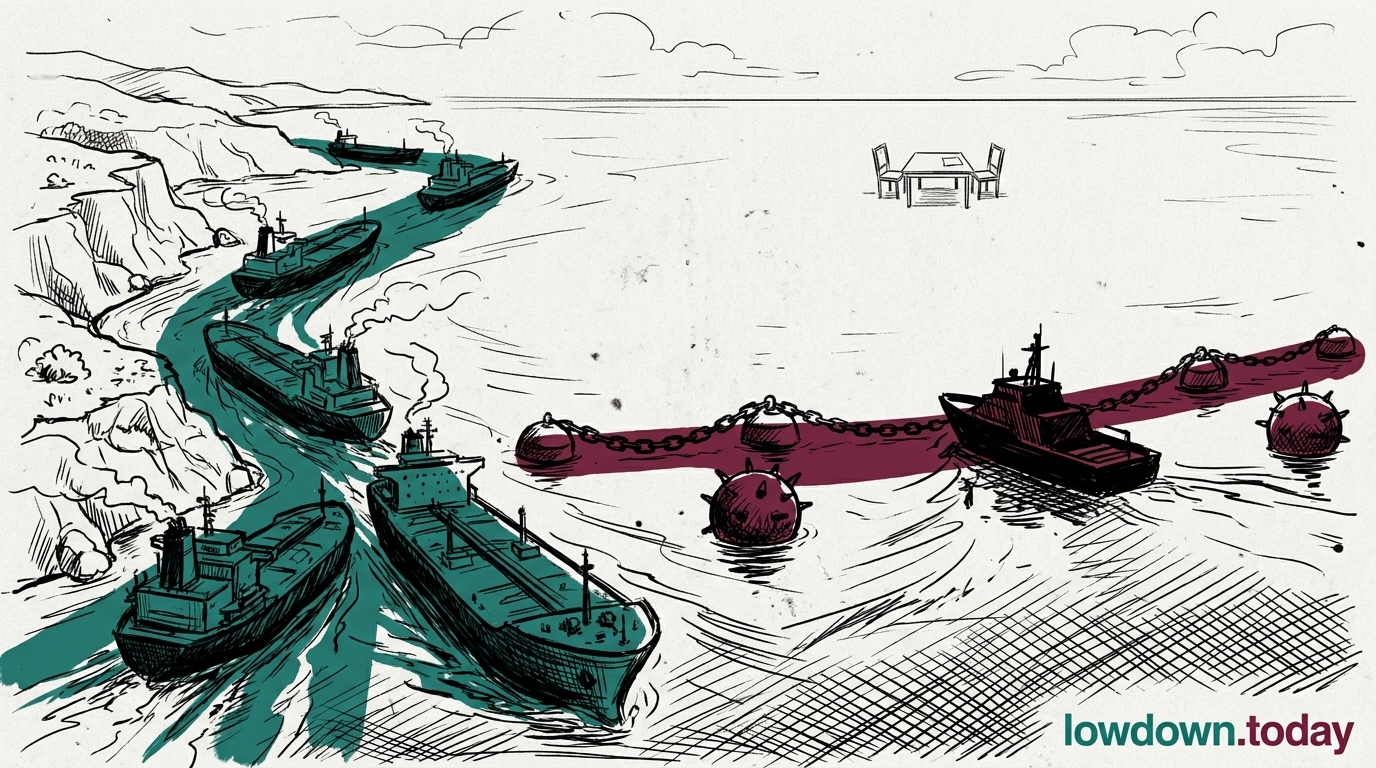
UKMTO counted about 20 US-facilitated Hormuz transits a day to 11 September against only 6 visible on AIS, with traffic still around 90% below the 138-a-day pre-war baseline. War-risk underwriters cannot price hulls they cannot see, or resolve whether the tanker El Gaia hit a mine, as Iran claims, or a missile and drone, as CENTCOM says.
European refiners
European refiners
European refiners, including Poland's Orlen, absorbed a roughly $26 gap between Dated Brent at $130.80 on 15 September and ICE Brent futures settling at $103.87 on 18 September, a spread that widened from $13.45 on 9 September rather than newly opening. Their futures hedges no longer cover what they now pay for physical barrels.
Saudi Arabia
Saudi Arabia
Saudi Aramco zeroed European term customers' October allocations and rerouted roughly 60 million barrels to Asia through Ras Tanura and Sohar, using Red Sea and Gulf terminal capacity built years ago to cut Hormuz exposure. Riyadh reallocated existing supply rather than negotiating a shortfall with Europe.
Qatar
Qatar
Qatar's energy minister Saad al-Kaabi told Bloomberg at the Qatar Economic Forum on 20 September that Bessent's two-year Hormuz-obsolescence forecast is wrong, and that Doha has deliberately built no bypass pipeline. Qatar's gas exports run through one waterway by choice, not oversight.
Iran (foreign ministry and Majlis)
Iran's foreign ministry and 130 Majlis deputies moved toward NPT withdrawal this week, with lawmaker Hossein-Ali Haji Deligani filing a triple-urgency bill on 20 September that Speaker Qalibaf has not yet scheduled. Tehran treats treaty membership as leverage still on the table, not yet spent.
Russia and China
Russia and China
Moscow and Beijing vetoed the Panel of Experts' renewal, maintaining Resolution 2231 lapsed in October 2025 and the 2025 snapback was never validly triggered, so the sanctions architecture the Panel enforces has no current legal standing. Both governments frame the veto as upholding law, not shielding Tehran.



