Skip to content
You can now search across every topic, entity and event.What's new
Iran Conflict 2026
21JUN

Freight rate holds as Brent caves

3 min read
17:51UTC

The TD3C Gulf-to-China tanker rate held its fourth-quarter forward at $181,163 a day on 22 June even as Brent shed roughly 8%, a freight market pricing a recovery in months the flat price has already called complete.

ConflictDeveloping
Key takeaway

The TD3C forward curve is pricing a slow physical Hormuz recovery the flat Brent screen has written off.

The TD3C Gulf-to-China route, the Baltic Exchange benchmark for very large crude carriers, held its 4Q26 forward rate at $181,163 a day on Monday 22 June, flat against the 16 June print and again on 19 June , even as Brent shed roughly 8% over the same stretch 1. At twice the Atlantic-basin equivalent, the curve is pricing a Hormuz recovery measured in months.

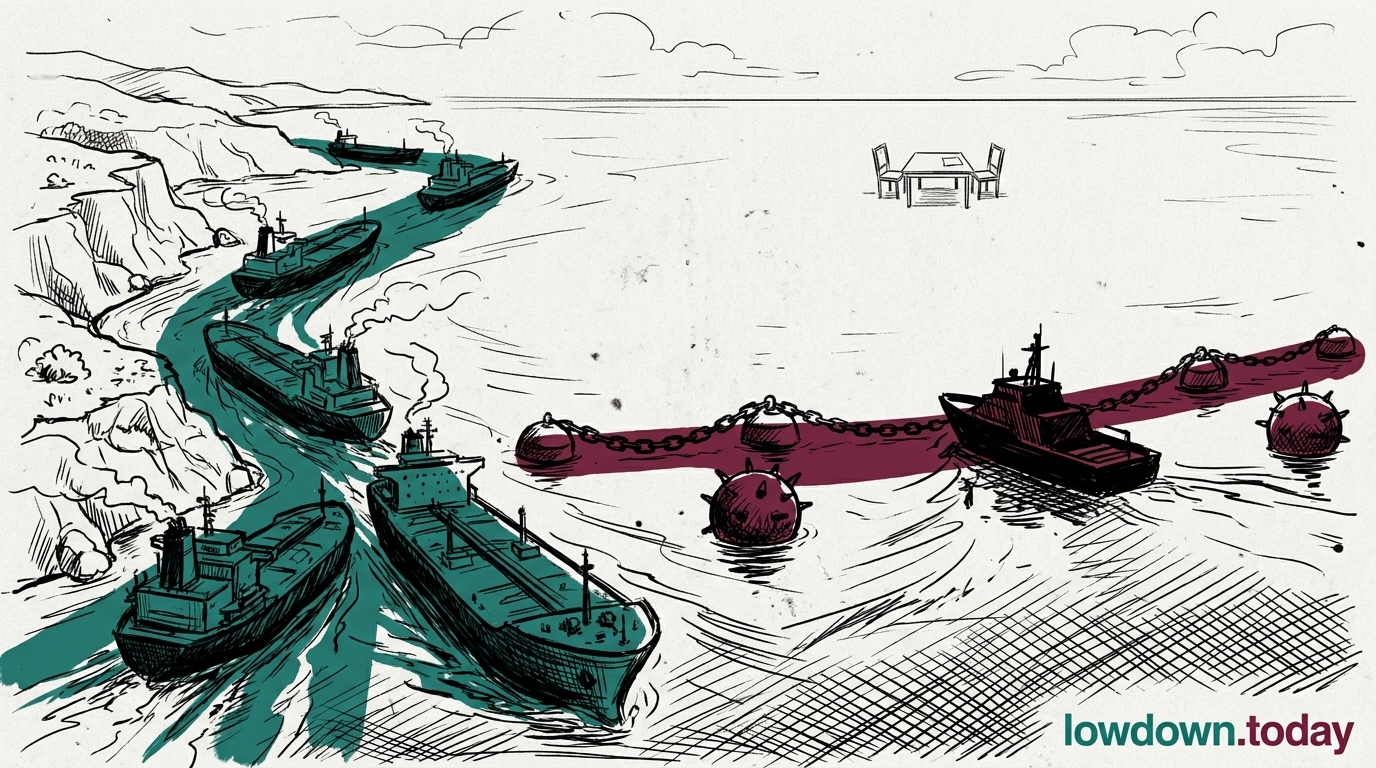
A forward freight rate that refuses to fall while the flat price drops 8% is the curve pricing the physical reopening constraints, mines uncleared and transit permits still live, that the prompt screen discounts. The geopolitics of the strait belong to the Iran desk; the freight book is ours, and it has not moved on the all-clear.

Western war-risk cover has returned to the strait, but at premiums that add a structural cost floor to every Gulf cargo, an insurance story in its own right. The signal here is the forward curve itself: it is reading the mines and the permits while the flat price is reading the diplomacy. They cannot both hold for long.


Deep Analysis

In plain English

Tanker freight rates tell you what it costs to move a large oil shipment by sea. TD3C is the standard measure for moving 270,000 tonnes of crude oil from the Middle East Gulf to China on a very large crude carrier (VLCC, a tanker roughly 340 metres long). Right now, the spot rate for a VLCC sailing today from the Gulf to China is around $412,000 per day. But the rate for a voyage in the last quarter of 2026 (Q4, October to December), traded on a forward contract, is only $181,163 per day. This gap, called a contango, shows the freight market expects Hormuz shipping costs to fall significantly by autumn, but not to fully recover to pre-war levels. At the same time, Brent crude's price fell roughly 8% this week as oil traders priced in more Iranian supply from GL X. The freight rate did not fall at all. This matters because if oil traders were right that normal supply would be flowing again soon, freight rates should also be falling. The freight market's refusal to move suggests tanker operators and insurers see a different timeline: physical barriers like mine clearance and insurance reinstatement will keep Gulf shipping expensive for longer than the oil price is implying.

First Reported In

Update #11 · Crude longs flushed flat into a loaded week

Lloyd's List· 26 Jun 2026
Read original
Different Perspectives
Hengaw
Hengaw
The Norway-based monitoring group reported the Urmia executions of Omid Behzad and Pouria Safvat, the only source to do so, consistent with its documented pattern of recording far more executions than the Iranian state acknowledges. Iran's government has not confirmed either execution.
Shipping and insurance underwriters
War-risk premiums price the Houthi campaign because the group announces its targets in advance, but a reopening Trump has promised without a published text gives underwriters no benchmark to reprice Hormuz cover against. Insurers want a text before they move rates, not a promise.
Houthi movement
Houthi movement
Spokesman Yahya Saree claimed strikes on two tankers in the Red Sea and Gulf of Aden on 5 August, only one of which UKMTO could confirm. The group's campaign against shipping continues on its own schedule, independent of any Hormuz arrangement further north.
Oman
Oman
Muscat has brokered the coordinates both Tehran and Washington's wire sources now describe differently, but has published no account of its own. Oman's position depends on treating Hormuz as a shared route, which is not what Iran is currently describing.
United States Central Command
CENTCOM raised its interdiction tally from 35 to 44 redirected vessels and disclosed its first boardings on 3 August, the day before Trump promised a reopening. The command's own enforcement record does not yet reflect the release the President has described.
Iran's Foreign Ministry
Spokesman Esmaeil Baghaei described the agreed Hormuz coordinates as a wholly new corridor under Iranian management, not a split of the existing route, days after his own deputy rejected Oman's lane proposal. Tehran wants the arrangement read as a change of ownership, not a compromise on access.



