Skip to content
You can now search across every topic, entity and event.What's new
Iran Conflict 2026
21JUN

A senior cleric blesses Khamenei's coffin

1 min read
17:51UTC

Ayatollah Abdollah Javadi-Amoli led prayers beside Khamenei's coffin in Qom on 7 July, lending religious authority that new Supreme Leader Mojtaba Khamenei cannot claim under the constitution.

ConflictDeveloping
Key takeaway

A senior marja blessed Khamenei's coffin because his successor lacks the theological rank himself.

Senior marja Ayatollah Abdollah Javadi-Amoli led prayers beside the coffin of former Supreme Leader Ali Khamenei at the Jamkaran Mosque in Qom on 7 July, after a helicopter brought the body from Tehran overnight 1. A marja is a senior Shia jurist whom followers are religiously bound to emulate, and the rank carries the theological authority that Iran's constitution, under Article 109, requires of a Supreme Leader.

Javadi-Amoli's presence supplies what the new Supreme Leader, Mojtaba Khamenei, cannot. The Assembly of Experts boycotted part of Mojtaba's appointment over his want of full marja credentials, and he has not appeared in public since taking office; Reuters sources describe him as disfigured and injured in a February strike, an account that stays reported rather than confirmed . The coffin now moves toward burial at Mashhad on 9 July , with the succession stage-managed for an authority it does not structurally hold, which bears directly on whether Tehran can own a decision to fire on shipping.


Deep Analysis

In plain English

Iran's top religious and political leader, the Supreme Leader, is supposed to have a very high level of Islamic religious scholarship, called marja status. The new Supreme Leader, Mojtaba Khamenei, does not clearly have that level of credentials, which is why some senior clerics objected to his appointment. To help make him look more legitimate, a senior religious scholar, Ayatollah Javadi-Amoli, appeared beside his father's coffin, lending his own religious authority to the moment. That gesture carries no constitutional weight; only the Assembly of Experts can settle whether Mojtaba himself meets the marja bar.

Deep Analysis
Root Causes

Article 109 sets marja-level theological credentials as a formal qualification for Iran's Supreme Leader, a bar Mojtaba Khamenei has not been publicly shown to meet, which is why the Assembly of Experts boycotted part of his appointment process.

Javadi-Amoli's presence at the coffin substitutes borrowed religious standing for Mojtaba's own, but that substitution is informal and carries no constitutional weight, leaving the credential gap legally unresolved even as the succession proceeds in practice.

What could happen next?
  • Risk

    An unresolved marja credential gap leaves Mojtaba Khamenei's authority to issue binding religious rulings open to challenge from senior clerics for as long as the gap goes unaddressed.

First Reported In

Update #148 · Iran shoots the Hormuz route it rejected

Radio Farda (RFE/RL)· 7 Jul 2026
Read original
Causes and effects
This Event
A senior cleric blesses Khamenei's coffin
The succession leans on a borrowed marja precisely because Mojtaba lacks the theological rank to own hard decisions himself.
Different Perspectives
Hengaw
Hengaw
The Norway-based monitoring group reported the Urmia executions of Omid Behzad and Pouria Safvat, the only source to do so, consistent with its documented pattern of recording far more executions than the Iranian state acknowledges. Iran's government has not confirmed either execution.
Shipping and insurance underwriters
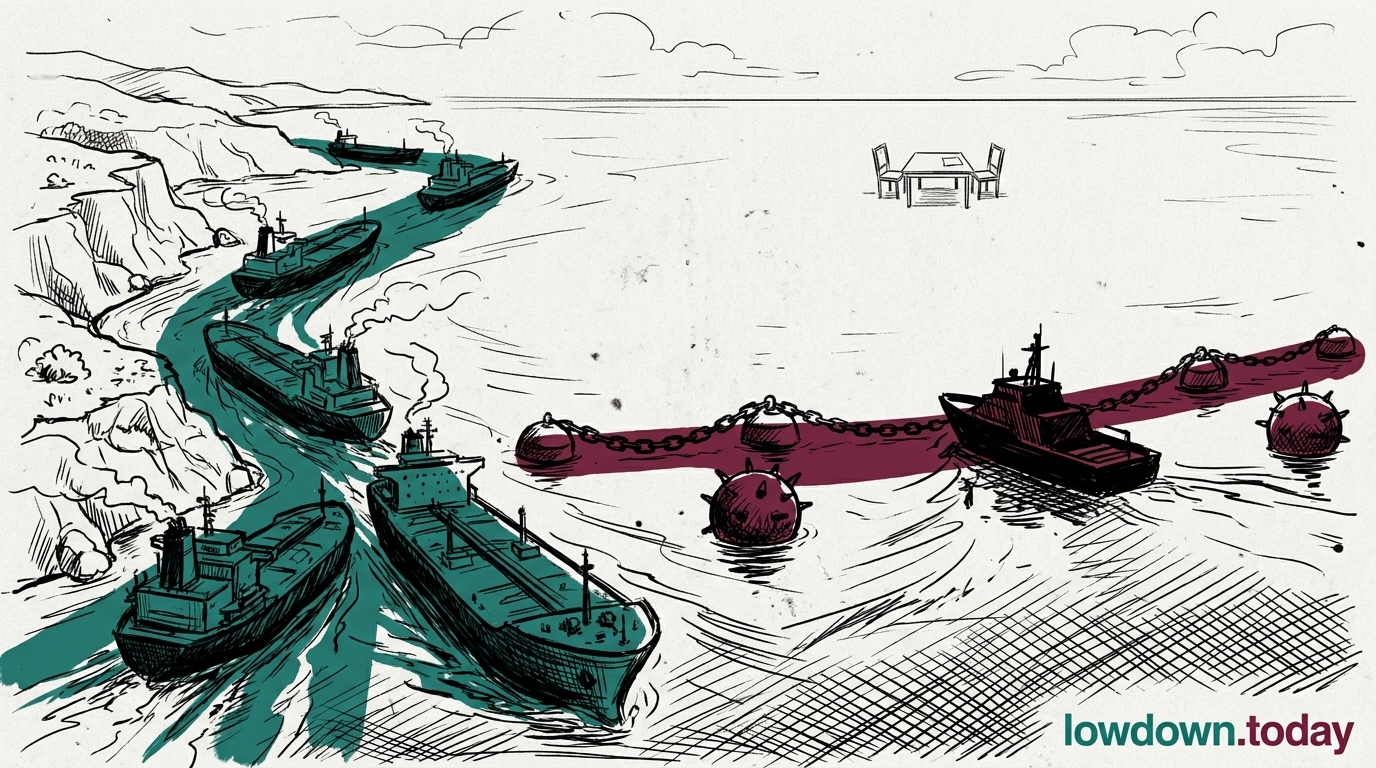
War-risk premiums price the Houthi campaign because the group announces its targets in advance, but a reopening Trump has promised without a published text gives underwriters no benchmark to reprice Hormuz cover against. Insurers want a text before they move rates, not a promise.
Houthi movement
Houthi movement
Spokesman Yahya Saree claimed strikes on two tankers in the Red Sea and Gulf of Aden on 5 August, only one of which UKMTO could confirm. The group's campaign against shipping continues on its own schedule, independent of any Hormuz arrangement further north.
Oman
Oman
Muscat has brokered the coordinates both Tehran and Washington's wire sources now describe differently, but has published no account of its own. Oman's position depends on treating Hormuz as a shared route, which is not what Iran is currently describing.
United States Central Command
CENTCOM raised its interdiction tally from 35 to 44 redirected vessels and disclosed its first boardings on 3 August, the day before Trump promised a reopening. The command's own enforcement record does not yet reflect the release the President has described.
Iran's Foreign Ministry
Spokesman Esmaeil Baghaei described the agreed Hormuz coordinates as a wholly new corridor under Iranian management, not a split of the existing route, days after his own deputy rejected Oman's lane proposal. Tehran wants the arrangement read as a change of ownership, not a compromise on access.



