Skip to content
You can now search across every topic, entity and event.What's new
Iran Conflict 2026
19JUN

France cheaper on a waiver ending today

3 min read
12:07UTC

France cleared EUR 98.95/MWh on Monday, a EUR 4.21 discount to Germany, on nuclear output that RTE called a public necessity and that a thermal-discharge waiver expires today.

ConflictDeveloping
Key takeaway

France's EUR 4.21 discount to Germany depends on a Bugey thermal waiver that expires today with no renewal confirmed.

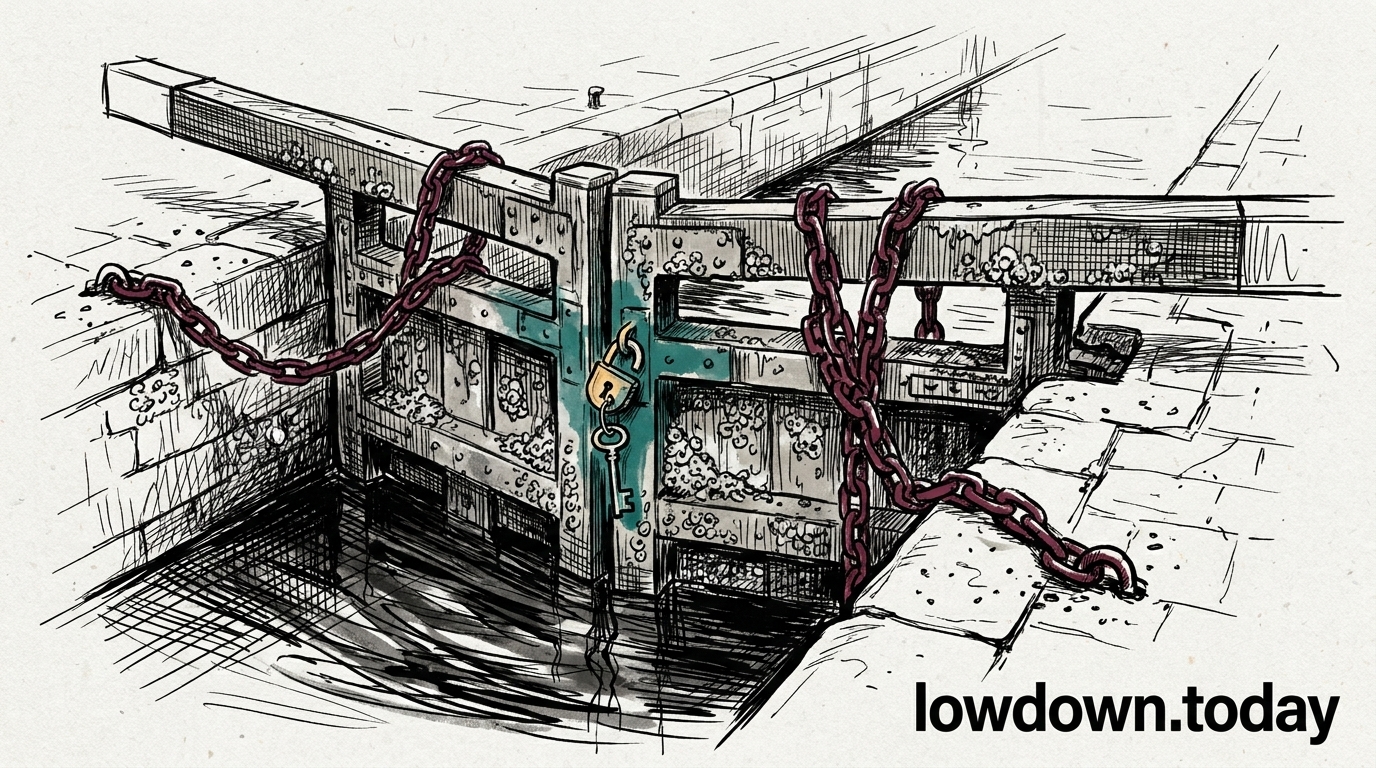
ASNR, France's nuclear safety and radiation-protection regulator, temporarily relaxed thermal-discharge limits on reactors 4 and 5 at Bugey on 10 July, capping the heating of the Rhone between the upstream and downstream measuring points at 1C under reinforced monitoring 1. The economy ministry ratified the decision in the Journal officiel on 11 July 2. The order runs to 20 July inclusive, today, with no extension confirmed 3.

That waiver is what the French price is standing on. France cleared EUR 98.95/MWh on Monday 20 July, a EUR 4.21 discount to Germany 4, settling a spread that had flipped direction three times around 16 July . Both zones are cross-verified against two independent price sources; the 17 to 19 July series is not, so 20 July reads as one confirmed print rather than a trend.

The order's own text moves the story off EDF's balance sheet and onto system margin. It records that RTE, the French transmission system operator, required minimum output from Bugey 4 and 5 as a "necessite publique", a public necessity, for grid security 5. EDF had already shut units at Chooz, Golfech and Bugey on 12 July under the 28C river-cooling limit , then slipped their restarts into a 19 to 25 July window 6. RTE's case for the waiver was that the system could not absorb losing two more reactors on top of those outages.

EDF's own Bugey production page has not been updated since 3 July and still describes the previous outage cycle, so the operator has confirmed nothing about Bugey 3's slipped restart through an entire active curtailment window 7. A desk holding FR-DE into this week is therefore short two disclosures at once: whether ASNR renews the derogation, and whether the reactor it never covered has physically come back.


Deep Analysis

In plain English

French nuclear plants draw river water to cool their reactors, then release it warmer than they took it in. To protect river ecology, regulators normally cap how much warmer that water can get, and during a heatwave that cap can force a reactor to cut output or shut down. France's grid operator, RTE, asked the safety regulator, ASNR, to temporarily relax that limit for two reactors at the Bugey plant so they could keep running at full power through the heatwave. That kept French electricity slightly cheaper than Germany's on 20 July, EUR 98.95 against EUR 103.16 per megawatt hour, but the relaxation runs out today, so it is unclear whether the discount holds tomorrow.

Deep Analysis
Root Causes

French nuclear cooling-water discharge is capped at 28C on the Rhone by standing environmental regulation, and only a formal government derogation, published in the Journal officiel, can override that limit. The cap exists to protect river ecology during heatwaves, which is precisely when reactor output is under the most pressure.

The waiver's underlying trigger is fleet-wide, not plant-specific: Golfech 2, Bugey 3 and Chooz 2 have already shut fully on the same limit, alongside reduced output at Saint-Alban, Blayais and Tricastin. With that much firm nuclear capacity already curtailed, RTE assessed that exempting Bugey 4 and 5 from the ordinary limit was necessary to hold grid balance, which is the structural condition that makes today's French discount possible.

What could happen next?
  • Consequence

    If RTE does not renew the Bugey 4 and 5 waiver, French reactors face the same cooling-driven curtailment already applied to Chooz, Golfech and Bugey 3, which would remove the supply cushion currently holding France cheaper than Germany.

  • Precedent

    A grid-security derogation overriding an environmental discharge limit sets a template RTE and ASNR could reach for again later in the heatwave season if other reactors approach the same constraint.

First Reported In

Update #28 · Hormuz premium inverts the German spark spread

RTE via energy-charts.info· 20 Jul 2026
Read original
Different Perspectives
Lloyd's Market Association
War-risk underwriters price the Houthis' Red Sea attacks because the group announces its targets in advance, but the unclaimed Damietta drone gives insurers a hit with no author to price against. An attack nobody claims costs shipping more than one that is claimed, since premiums are set against a known pattern, not raw damage.
US Central Command
US Central Command
CENTCOM has announced no strike on Iran since resuming bombing on 30 July within hours of an IRGC salvo on Jordan, and centcom.mil did not respond to requests to confirm any pause. The command has gone quiet before while a larger operation was being weighed, so silence alone proves nothing about what it has or has not done.
Hengaw
Hengaw
Hengaw recorded at least 67 executions in Iran during July, of which the state acknowledged only eight, and reported the 1 August execution of protest detainee Arvin Kheirkhahan at Shahrud with no advance notice to his family. A family's first notice of a death sentence is now usually the instruction to collect a body.
Egypt
Egypt
Egypt's government asked media on 2 August to report the Damietta attack accurately, named no author, and said no findings will be published before its own investigation concludes. Cairo holds the debris and jurisdiction over an attack on its own soil, and naming a culprit now would pull it into a dispute it has avoided for five months.
Iran's Foreign Ministry
Araghchi called the Hormuz talks with Oman final-stage on 2 August, four days after his own deputy rejected Oman's lane proposal, and denied the Damietta drone strike as an Israeli false flag while two Iranian officials privately claimed it for Tehran. Iran's public position now contradicts itself on both files at once.
Bahrain and Kuwait
Bahrain and Kuwait
Bahraini and Kuwaiti aircraft flew their own strikes on Iranian depots in July with Emirati air cover behind them, and Ynetnews reports some Gulf capitals wanted the 2 August strike to proceed rather than stop. States that have already taken fire see a closing window on Iranian weakness, not a reason to pause.



