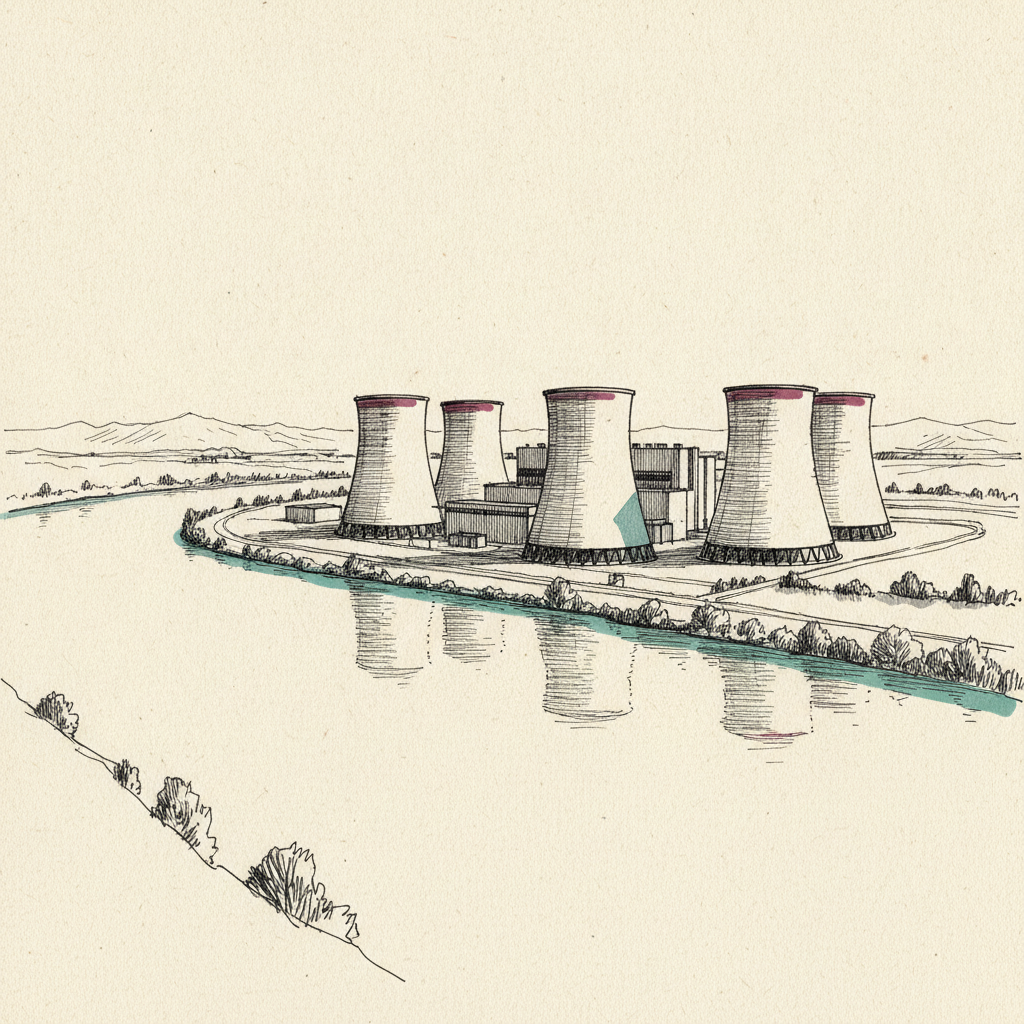
Bugey Nuclear Power Station
EDF nuclear station on the Rhone in Ain, eastern France.
Bugey is EDF's four-reactor nuclear station on the Rhone at Saint-Vulbas, eastern France, generating roughly 3,580 MW combined, among the oldest plants in France's fleet, commissioned between 1979 and 1980.
Last refreshed: 20 July 2026
Why did French regulators let two Bugey reactors run hotter than normal in July 2026?
Timeline for Bugey Nuclear Power Station
France cheaper on a waiver ending today
European Energy MarketsBackground
Bugey Nuclear Power Station is EDF's four-reactor pressurised water plant at Saint-Vulbas in the Ain department of eastern France, on the right bank of the Rhone roughly 35 kilometres upstream of Lyon. The four active units, Bugey 2, 3, 4 and 5, each generate in the 880 to 910 megawatt range, giving the site a combined capacity of around 3,580 megawatts. A fifth, older reactor, Bugey 1, a gas-cooled unit that entered service in 1972, was permanently shut down in 1994 and remains under decommissioning.
The station was built during France's 1970s nuclear expansion: Bugey 2 and 3 entered commercial service in March 1979, Bugey 4 followed in July 1979 and Bugey 5 in January 1980, making Bugey one of the older stations in France's operating fleet.
Its Rhone-side siting is a structural feature of the site: units 2 and 3 draw direct river cooling while 4 and 5 use cooling towers, a distinction that shapes how each pair copes with hot, low-flow summers. Hot weather periodically forces the regulator ASNR to weigh environmental thermal-discharge limits against grid operator RTE's requests for continued output, a recurring seasonal tension for Rhone-cooled reactors rather than a one-off event.
Reference
Who operates the Bugey nuclear plant?
Where is the Bugey nuclear plant located?
When does the Bugey thermal derogation expire?


Written with AI from Lowdown's published reporting. Not individually reviewed by an editor. Updated 20 July 2026. Editorial standards.