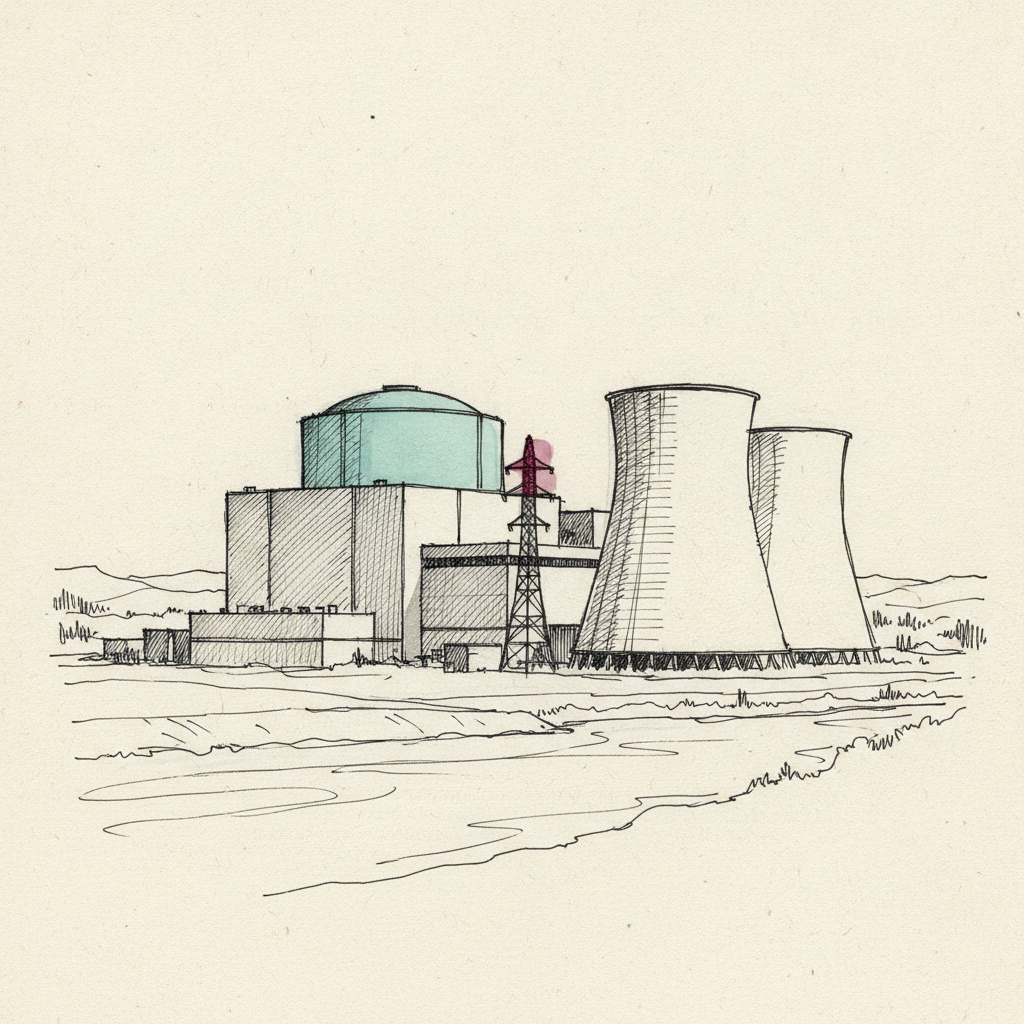
Bugey 3
Unit 3 of France's Bugey Nuclear Power Station, a 910 MW reactor operated by EDF.
River-temperature limits took Bugey 3 offline twice in six weeks, on 30 June and again on 12 July 2026, briefly flipping France's day-ahead power price above Germany's before it settled back to a three-euro discount by 13 July.
Last refreshed: 27 July 2026 · Appears in 1 active topic
Can river-temperature limits make French nuclear less reliable during summer heat waves?
Timeline for Bugey 3
Mentioned in: France goes €43 below Germany
European Energy MarketsFrance cheaper on a waiver ending today
European Energy MarketsStayed offline; restart slipped to 19 July
European Energy Markets: EDF slips three reactor restarts to late JulyFrench heat flips the FR-DE spread
European Energy MarketsFrance stays the cheaper power leg
European Energy MarketsBackground
Bugey 3 is a 910 MW pressurised water reactor operated by EDF at the Bugey Nuclear Power Station near Saint-Vulbas on the Rhône, in eastern France. It is one of four PWR units at the site, all of which draw cooling water from the river.
French nuclear capacity is routinely curtailed in hot summers when river temperatures rise above environmental discharge thresholds set to protect river ecology from thermal pollution. Curtailments are ordinarily temporary, restored once ambient temperatures fall, though regulators can also grant exemptions that relax the discharge limit itself rather than wait for the heat to pass.
For European power markets, Bugey 3's availability feeds into the wider French nuclear fleet's baseload role, which has historically kept French day-ahead power priced below Germany's even during periods of curtailment. Its recurring exposure to Rhône heat marks river-temperature limits as a structural constraint on the unit's summer output rather than a one-off event.
River heat repeatedly curtails Bugey 3
Bugey 3 went offline on 30 June 2026 as Rhône water temperatures breached the regulated cooling-discharge threshold, part of a wider curtailment that day cutting roughly 12% of EDF's nuclear fleet. It went offline again on 12 July, alongside Chooz and Golfech, as a second heat dome pushed river temperatures past the same limit.
Losing Bugey 3's 910 MW twice within six weeks helped strip enough baseload that the domestic fleet briefly could not undercut German prices at all: the day-ahead spread inverted on 12 July to roughly a seven-euro premium, unwinding within a day to a three-euro discount by 13 July. Two stoppages inside the same six-week window mark river heat as a recurring CAP on the unit's summer output, not a one-off outage.
River heat repeatedly curtails Bugey 3
Why did France grant Bugey 3 an exemption to discharge warmer water?
Did Bugey 3 going offline cause French electricity prices to spike?
What happens to French nuclear output when rivers get too warm?
Why was Bugey 3 taken offline in June 2026?

