Skip to content
You can now search across every topic, entity and event.What's new
Iran Conflict 2026
17JUN

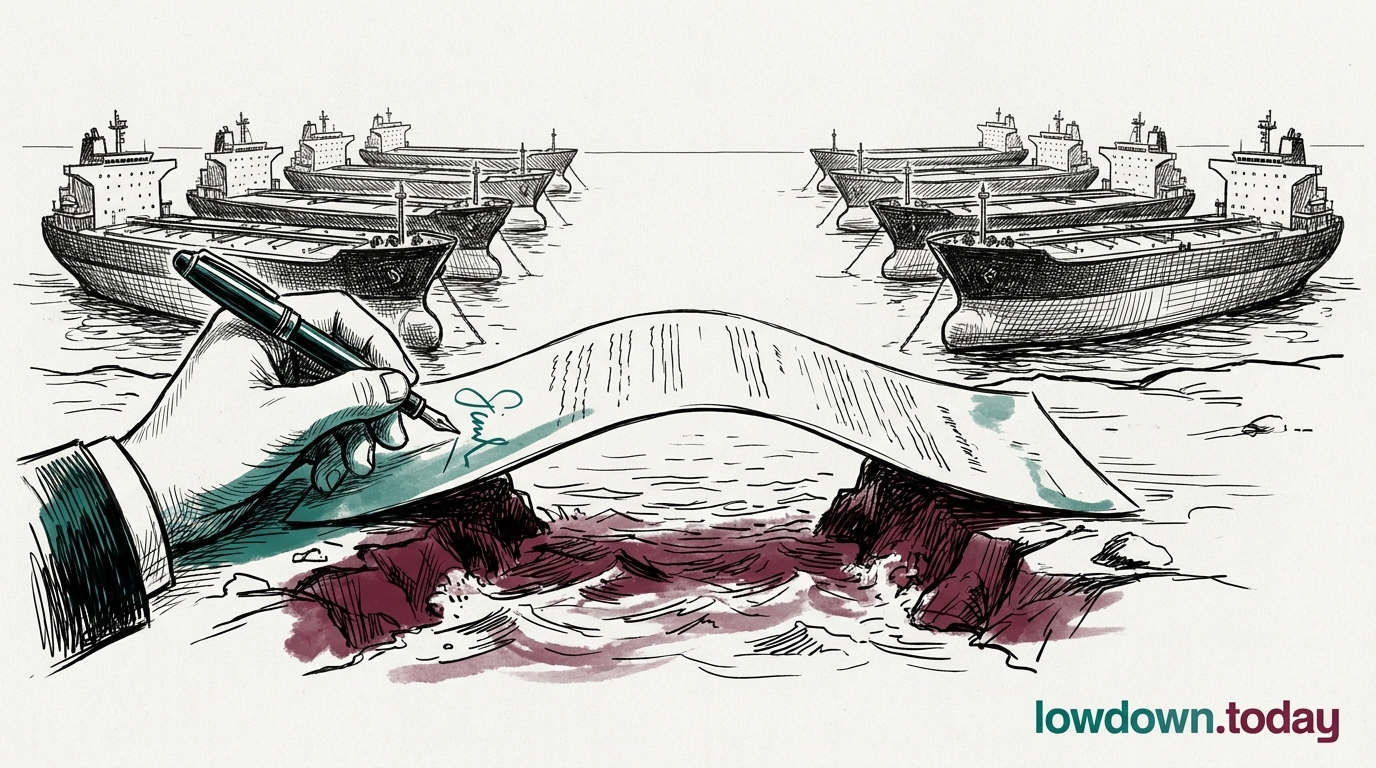
Trump Extends Hormuz Deadline for Fifth Time

2 min read
09:37UTC

Five deadlines in six weeks, zero enforcement. The coercive mechanism has become diplomatic cover for continued talks.

ConflictAssessed
Key takeaway

Five deadlines, zero enforcement; the threat is now the extension.

The 6 April power-grid deadline was superseded by a 48-hour Hormuz ultimatum, which has now been extended again to Tuesday 8pm ET (8 April). This is the fifth reformulation of the same threat in six weeks.

The pattern: 16 March to 23 March. 23 March to 6 April. 6 April replaced by 48-hour ultimatum expiring 7 April. 7 April extended to Tuesday. Each deadline arrived with escalating rhetoric. None produced action. Trump told Axios the US is in deep negotiations and threatened to blow up everything if no deal by Tuesday. The words are documented. The action is the extension itself.

Coercive diplomacy requires credible commitment to escalation. Five extensions in 42 days is the opposite of credibility. What the pattern reveals is that Trump has no appetite for the energy infrastructure campaign he threatens. Each extension is a policy decision disguised as a tactical pause. Iran's General Aliabadi dismissed Trump as helpless, nervous, unbalanced and stupid. The deadline no longer functions as leverage; it functions as domestic political communication.

The Islamabad Accord's timing is not coincidental. It provides Trump with a potential face-saving exit from the deadline cycle. If the accord gains traction, Tuesday's deadline can be reframed as a diplomatic success rather than a sixth capitulation.


Deep Analysis

In plain English

Trump has threatened to bomb Iran's power grid five times in six weeks and extended the deadline every time. The threats no longer carry weight because Iran knows they will not be acted on. The new peace plan from Pakistan may give Trump a way to step back from the deadlines without looking like he backed down.

Deep Analysis
Root Causes

US coercive diplomacy required credible escalation. Five deadline extensions destroyed that credibility. The gap between rhetoric and action has become the defining feature of US policy in this conflict, creating the diplomatic vacuum Pakistan filled.

Escalation

Mixed. The extension itself is de-escalatory (no strike). But each extension without consequence makes the eventual choice between striking and permanently abandoning the threat more binary. The Islamabad Accord offers a third path.

What could happen next?
  • US coercive credibility in the Middle East is materially damaged for the remainder of this conflict

  • Trump faces growing political exposure from both anti-war and hawkish constituencies

First Reported In

Update #60 · Pakistan's Ceasefire Plan Fills the Vacuum

Time· 6 Apr 2026
Read original
Different Perspectives
Lloyd's Market Association
War-risk underwriters price the Houthis' Red Sea attacks because the group announces its targets in advance, but the unclaimed Damietta drone gives insurers a hit with no author to price against. An attack nobody claims costs shipping more than one that is claimed, since premiums are set against a known pattern, not raw damage.
US Central Command
US Central Command
CENTCOM has announced no strike on Iran since resuming bombing on 30 July within hours of an IRGC salvo on Jordan, and centcom.mil did not respond to requests to confirm any pause. The command has gone quiet before while a larger operation was being weighed, so silence alone proves nothing about what it has or has not done.
Hengaw
Hengaw
Hengaw recorded at least 67 executions in Iran during July, of which the state acknowledged only eight, and reported the 1 August execution of protest detainee Arvin Kheirkhahan at Shahrud with no advance notice to his family. A family's first notice of a death sentence is now usually the instruction to collect a body.
Egypt
Egypt
Egypt's government asked media on 2 August to report the Damietta attack accurately, named no author, and said no findings will be published before its own investigation concludes. Cairo holds the debris and jurisdiction over an attack on its own soil, and naming a culprit now would pull it into a dispute it has avoided for five months.
Iran's Foreign Ministry
Araghchi called the Hormuz talks with Oman final-stage on 2 August, four days after his own deputy rejected Oman's lane proposal, and denied the Damietta drone strike as an Israeli false flag while two Iranian officials privately claimed it for Tehran. Iran's public position now contradicts itself on both files at once.
Bahrain and Kuwait
Bahrain and Kuwait
Bahraini and Kuwaiti aircraft flew their own strikes on Iranian depots in July with Emirati air cover behind them, and Ynetnews reports some Gulf capitals wanted the 2 August strike to proceed rather than stop. States that have already taken fire see a closing window on Iranian weakness, not a reason to pause.



