Skip to content
You can now search across every topic, entity and event.What's new
Iran Conflict 2026
17JUN

Lukoil-ISAB sale licence runs to 27 June

2 min read
09:37UTC

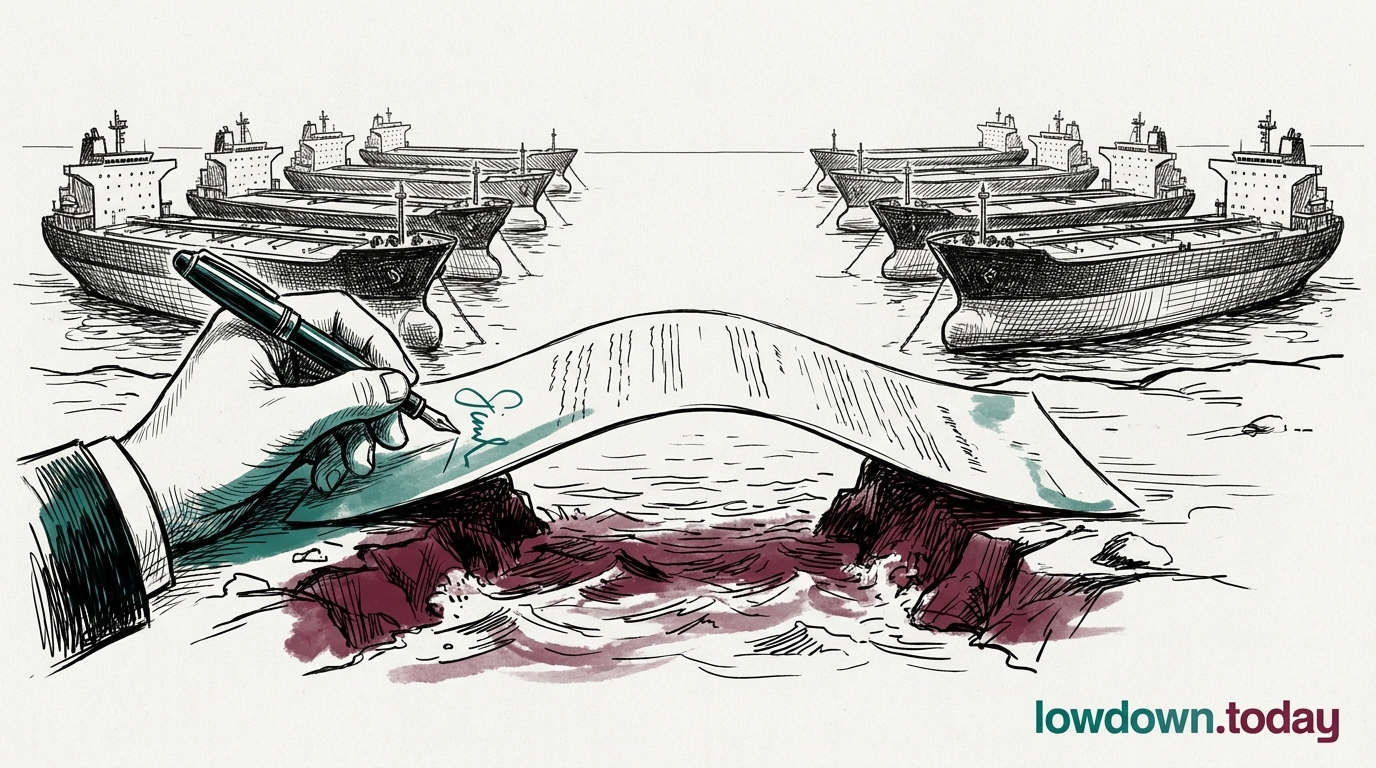
General License 131F, which authorises only negotiation of the Lukoil-ISAB sale, runs to 27 June, keeping the Sicilian refinery's crude procurement under a sanctions overhang ten days after the GL 134C cliff.

ConflictDeveloping
Key takeaway

Two OFAC deadlines ten days apart turn late June into a concentrated squeeze on European crude access.

General License 131F, the OFAC authorisation governing the sale of the ISAB refinery by its sanctioned owner Lukoil, runs to 27 June. The licence permits only negotiation of the sale, not its completion, which leaves the Sicilian plant's crude procurement under a sustained sanctions overhang. ISAB is one of Italy's largest refineries; Lukoil is the Russian oil major that has owned it since 2008.

GL 131F lets the parties talk without letting money or assets change hands, a holding pattern rather than a resolution, so the refinery operates under the constant question of whether its ownership clears sanctions before the licence lapses. Procurement counterparties price that uncertainty into every cargo, which raises the refinery's effective crude cost regardless of the spot market.

The 27 June expiry twins with the GL 134C waiver cliff on 17 June , creating back-to-back sanctions deadlines that both tighten European-accessible crude inside a single fortnight. One governs whether Russian oil keeps flowing to Indian buyers; the other governs whether a major Mediterranean refinery's ownership stays in limbo. Together they make late June a concentrated test of how far the US will press the Russian-oil chokehold against European refining capacity.


Deep Analysis

In plain English

ISAB is a large oil refinery in Sicily, on the southern tip of Italy, owned by Lukoil, the Russian oil company. Because Lukoil is subject to US sanctions, ISAB has been operating under a series of temporary OFAC waivers that allow certain business activities to continue while a sale of the refinery is negotiated. The current waiver, called GL 131F, only permits negotiating the sale, not actually completing it. It expires on 27 June. If it is not renewed and no sale completes, the refinery faces a hard choice about what crude oil it can legally buy and how. ISAB processes crude from North Africa and the Middle East into petrol, diesel, and jet fuel for European markets, so its procurement constraints have real effects on Southern European fuel supply.

What could happen next?
  • Risk

    GL 131F expiry on 27 June without a renewal or a completed transaction licence would leave ISAB's 800kbd refinery in prolonged procurement limbo, forcing continued spot sourcing at elevated CPC/Augusta freight rates.

  • Consequence

    The back-to-back GL 134C (17 June) and GL 131F (27 June) deadlines create a ten-day window in which both Russian crude in-transit cover and ISAB sale negotiation authority simultaneously lapse, compounding European crude access uncertainty.

First Reported In

Update #6 · OPEC's quota is fiction at a 37-year low

OilPrice.com· 8 Jun 2026
Read original
Different Perspectives
Lloyd's Market Association
War-risk underwriters price the Houthis' Red Sea attacks because the group announces its targets in advance, but the unclaimed Damietta drone gives insurers a hit with no author to price against. An attack nobody claims costs shipping more than one that is claimed, since premiums are set against a known pattern, not raw damage.
US Central Command
US Central Command
CENTCOM has announced no strike on Iran since resuming bombing on 30 July within hours of an IRGC salvo on Jordan, and centcom.mil did not respond to requests to confirm any pause. The command has gone quiet before while a larger operation was being weighed, so silence alone proves nothing about what it has or has not done.
Hengaw
Hengaw
Hengaw recorded at least 67 executions in Iran during July, of which the state acknowledged only eight, and reported the 1 August execution of protest detainee Arvin Kheirkhahan at Shahrud with no advance notice to his family. A family's first notice of a death sentence is now usually the instruction to collect a body.
Egypt
Egypt
Egypt's government asked media on 2 August to report the Damietta attack accurately, named no author, and said no findings will be published before its own investigation concludes. Cairo holds the debris and jurisdiction over an attack on its own soil, and naming a culprit now would pull it into a dispute it has avoided for five months.
Iran's Foreign Ministry
Araghchi called the Hormuz talks with Oman final-stage on 2 August, four days after his own deputy rejected Oman's lane proposal, and denied the Damietta drone strike as an Israeli false flag while two Iranian officials privately claimed it for Tehran. Iran's public position now contradicts itself on both files at once.
Bahrain and Kuwait
Bahrain and Kuwait
Bahraini and Kuwaiti aircraft flew their own strikes on Iranian depots in July with Emirati air cover behind them, and Ynetnews reports some Gulf capitals wanted the 2 August strike to proceed rather than stop. States that have already taken fire see a closing window on Iranian weakness, not a reason to pause.



