Skip to content
You can now search across every topic, entity and event.What's new
Iran Conflict 2026
13JUN

Hormuz cover returned before the strait did

3 min read
10:52UTC

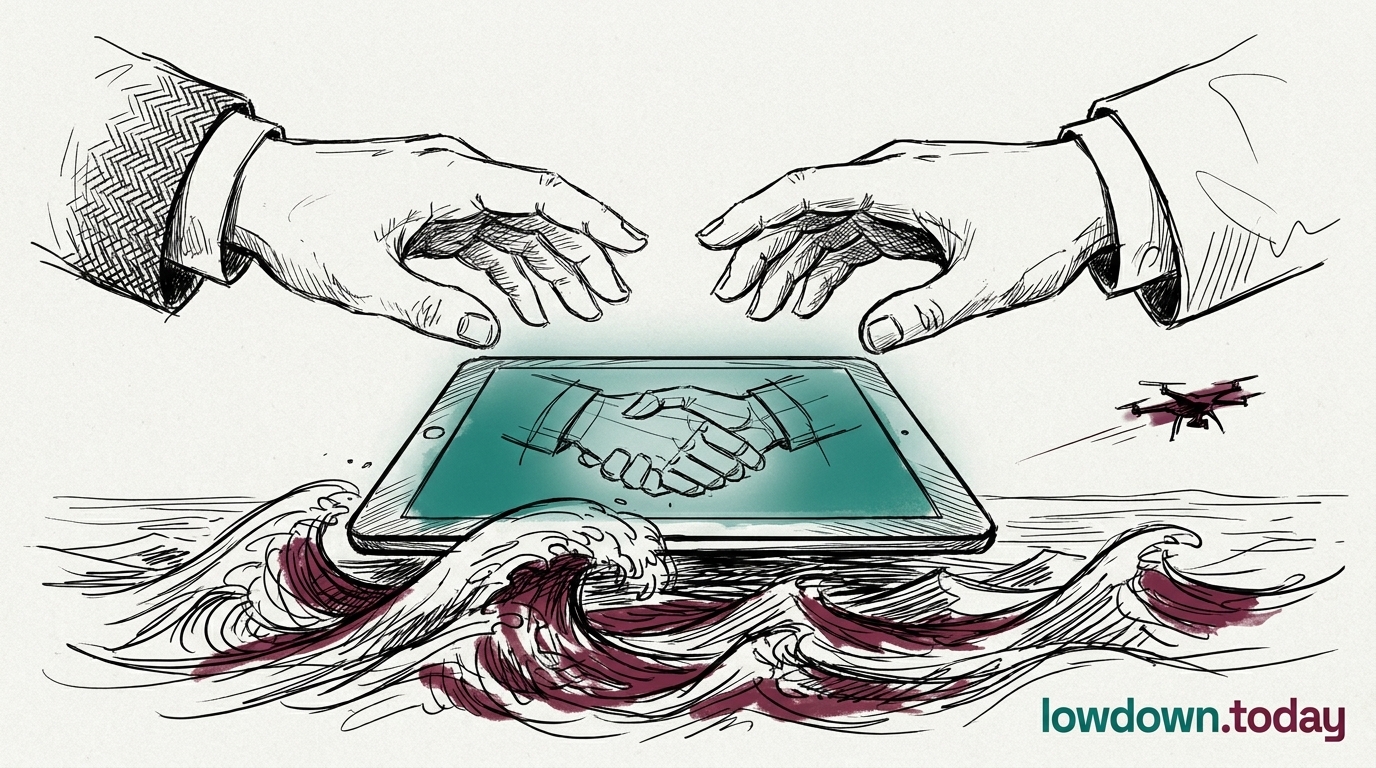
Lloyd's launched a Chubb-led $400m war-risk consortium for the Strait of Hormuz on 19 June, the first private capacity back since the P&I clubs pulled cover, all of it gated on sanctions screening.

ConflictDeveloping
Key takeaway

Lloyd's offered $400m of Hormuz war-risk cover while mines and an unsigned waiver keep the strait shut.

Lloyd's of London, the centuries-old marine insurance market, launched a Chubb-led war-risk consortium on Friday 19 June, offering $200m of hull capacity, $200m of protection-and-indemnity (P&I) cover and $200m of cargo capacity for vessels crossing the Strait of Hormuz, a total of $400m 1. Lloyd's chief of markets Patrick Tiernan said the facility was available to brokers immediately, subject to underwriting and sanctions screening 2. It is the first substantive return of private war-risk capacity since the International Group of P&I Clubs withdrew cover four months ago.

Fresh capacity does not make the water safe. War-risk insurance and navigational safety are separate locks on the same door: Lloyd's reopened the insurance one with $400m, but the channel through Hormuz stays physically shut, its mines uncleared and unswept . Cover now exists for a crossing the strait cannot yet carry, which is why the capacity is a signal of confidence rather than a reopening.

The sanctions-screening condition wires the consortium to an instrument that has not fired. Every covered cargo must already comply with existing US restrictions, so the cover prices the strait off the same Office of Foreign Assets Control (OFAC) waiver the Islamabad memorandum promised and has not delivered . Brokers can buy the policy; until the channel is swept and the waiver is signed, there is little for it to insure.

Deep Analysis

In plain English

When ships cross dangerous waters, they need two types of insurance. Lloyd's of London describes hull cover as protecting the vessel itself against damage or destruction. Protection-and-indemnity, usually called P&I, covers the liability if someone is hurt or cargo is lost. Without both, no shipping company will send a vessel through a conflict zone, and no bank will finance the cargo. Since the Iran-US conflict began, every major P&I insurer had refused to cover ships going through the Strait of Hormuz. On 19 June, Lloyd's of London, the world's leading specialist insurance market, announced that a consortium led by Chubb would offer $400m of this cover. The catch: every cargo covered by this consortium must comply with US sanctions. Because the Islamabad deal promised to waive US sanctions on Iranian oil but that waiver has not yet been issued, Iranian oil cargoes still cannot be legally covered. Patrick Tiernan opened the insurance door on 19 June; the OFAC waiver that would make it usable for Iranian cargo has not arrived.

Deep Analysis
Root Causes

The withdrawal of war-risk cover from Hormuz in March 2026 traced to three simultaneous triggers: IRGC mine-laying operations, the US naval blockade, and the absence of any joint rules-of-engagement framework. Lloyd's underwriters informally conditioned a return on a written rules-of-engagement document from either the 26-nation coalition or Iran's PGSA. No such document has been published.

The consortium's 19 June launch bypasses that condition by operating as private market capacity rather than mutual P&I club cover, allowing Chubb and its syndicate partners to make individual underwriting decisions rather than requiring the IG clubs to lift their collective exclusion. The structural gap this creates is that the IG clubs, which cover the bulk of global tonnage, remain out of the market, limiting the consortium's practical reach to vessels that can arrange alternative cover.

What could happen next?
  • Opportunity

    The $400m consortium is the first substantive return of private war-risk capacity since the P&I clubs withdrew in March 2026; if the OFAC waiver follows and mines are cleared, it provides the financial architecture for a partial resumption of Hormuz traffic.

    Short term · Suggested
  • Risk

    Without the International Group of P&I Clubs lifting their mutual exclusion, the Lloyd's consortium can cover at most a minority of the global fleet transiting Hormuz, limiting its economic impact even after the OFAC waiver arrives.

    Medium term · Assessed
  • Precedent

    Lloyd's returning ahead of the IG clubs establishes that private market capacity can re-enter before mutual cover, potentially eroding the collective bargaining position the IG clubs use to negotiate safety clearance standards with flag states and governments.

    Long term · Suggested
First Reported In

Update #133 · Lebanon froze the Iran deal

Lloyd's of London· 20 Jun 2026
Read original
Different Perspectives
Iran's Supreme Leader's office and Iranian households
A letter published through state media named Lebanon's territorial integrity and an end to Israeli operations there as the war's ending condition; the same week, spokesperson Mohajerani cut the subsidised petrol ration from 70 to 50 litres a month. Iranian agencies still disagree on who inside the office signed the letter.
Oman
Oman
Muscat proposed a voluntary-funded coalition to police Hormuz, the corridor its own coastline gives it standing to manage, while Iran wants control and toll rights over shipping and Washington insists on free navigation. Oman's remit stops at the strait; it has no comparable claim over Iraq, the Caspian, or Lebanon.
Kyiv
Kyiv
President Volodymyr Zelenskyy confirmed the Caspian strike on an Iranian vessel carrying military cargo from Russia's Astrakhan region, opening a front that ties Iran's war to its supply relationship with Moscow rather than to anything the Gulf mediators are discussing.
Riyadh
Riyadh
Maj Gen Turki Al Malki named Iraq as the launch point for drones intercepted over the Eastern Province and Riyadh, the first time this war has reached Saudi Arabia from that direction rather than from Yemen. Nothing landed, but a second launch geography aimed at Saudi oil now exists alongside the Houthi front.
Baghdad
Baghdad
Iraq's Foreign Ministry summoned its own ambassador in Riyadh after Saudi Arabia's Defence Ministry said the drones came from Iraqi territory, while the same day drones struck Iranian-Kurdish opposition camps inside Iraq. Baghdad is disowning attacks it did not launch from territory it does not fully control.
The Pentagon and Congress
Acting press secretary Joel Valdez attributed the toll's reversal to site anomalies, the same explanation the department gave for the opposite cut on 24 July; Representative Thomas Massie called the category change an absurd ruse designed to reset the war's legal clock. Neither side agrees on which explanation, or which war, is real.