Skip to content
Briefings are running a touch slower this week while we rebuild the foundations.See roadmap
Iran Conflict 2026
11JUN

Royal Navy to board sanctioned tankers

2 min read
09:17UTC

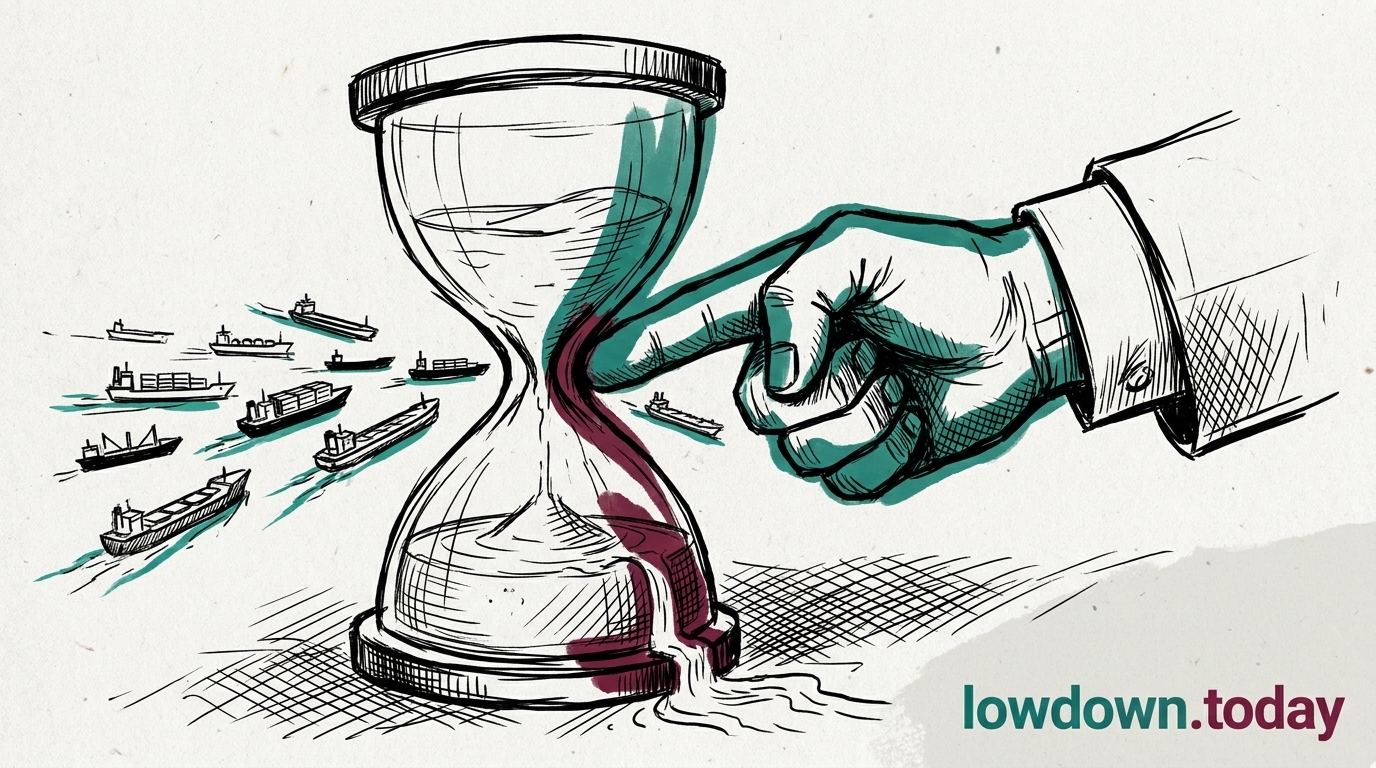
Britain authorised naval interdiction of sanctioned Russian tankers in UK waters, converting a 34-kilometre strait into the most enforceable maritime sanction of the war.

ConflictAssessed
Key takeaway

Britain converted a geographic chokepoint into the most enforceable maritime sanction of the war.

Keir Starmer announced at the JEF summit in Helsinki on 26 March that the Royal Navy is authorised to board and interdict sanctioned shadow fleet vessels in British territorial waters 1. The English Channel is now effectively closed to the more than 600 tankers sanctioned by the EU, UK, and US combined 2.

This is the most aggressive European enforcement action against Russia's oil revenue infrastructure since the war began. Previous seizures of individual vessels, the Ethera in Belgian waters , the Caffa and Sea Owl I off Sweden , were opportunistic. Channel interdiction is structural: it forces sanctioned tankers to circumnavigate Britain, adding over 2,000 nautical miles and several days to each voyage.

For shadow fleet operators, that means tens of thousands of dollars in extra fuel and crew costs per trip, eroding the margin between sanctioned-price oil and market price. The Channel's shallow, narrow waters (34 kilometres at Dover) make boarding operationally straightforward compared to open-ocean enforcement. Shadow fleet vessels are typically older, under-insured, and crewed by mariners with limited consular protection. Geography and legal vulnerability combine to make this chokepoint uniquely enforceable.

The EU had already signalled a shift from chasing individual ships to targeting operators, brokers, and registries . Britain's naval enforcement adds a physical barrier to that administrative squeeze. Denmark controls the only alternative short route through the Danish Straits; if Copenhagen follows London's lead, the last short northern European passage for shadow fleet traffic closes.

Deep Analysis

In plain English

Russia earns billions selling oil to fund its war. It uses a 'shadow fleet' of ageing, poorly insured tankers — over 600 ships — to move oil around Western sanctions. The English Channel at Dover is only 34 kilometres wide. Britain has now told its navy to stop and board any sanctioned Russian tankers using that route. This forces those ships to sail around Britain instead, adding several days and thousands of pounds per trip. The goal is to make sanctions evasion unprofitable, not just inconvenient.

Deep Analysis
Root Causes

The shadow fleet problem has three structural roots.

Western sanctions created a price cap mechanism but not an enforcement mechanism. Ships can lie about cargo origins, use ship-to-ship transfers, and reflag to evade detection. Windward's data shows Sovcomflot has reflagged 56% of its fleet to Russia's own registry, removing Lloyd's oversight.

Insurance markets withdrew from shadow fleet vessels after sanctions, but the vessels found alternative cover in India, the UAE, and Russia itself — degraded but functional.

The Channel interdiction addresses the geography but not the ownership structure. Until flag state accountability is enforced globally — including on India and the UAE — the shadow fleet can route around European chokepoints.

First Reported In

Update #8 · Pentagon diverts funds; 948 drones fired

UK Government· 27 Mar 2026
Read original
Different Perspectives
Oil markets and Lloyd's of London
Brent fell to $89.25 on ceasefire probability, not new barrels, with traders voting for Trump's deed over Tehran's denial. Lloyd's has not repriced Hormuz war-risk cover because its trigger requires a UN Security Council resolution or government certification, so tanker insurance costs remain elevated regardless of the spot move.
Pakistan and Qatar mediators
Pakistan's Mohsin Naqvi was in Tehran for his second visit in under a week, using the Pakistan-Qatar channel that delivered April's ceasefire after an identical public-denial cycle. The channel carries both civilian and military buy-in from Islamabad, the only configuration Iran's split command cannot dismiss as a partial signal.
India
India
India summoned the US Deputy Chief of Mission after three Indian sailors were killed aboard MT Settebello, the first formal grievance from a major non-belligerent directed at US enforcement. Indian seafarers supply roughly 12 per cent of the global maritime workforce; their presence on third-flag Gulf tankers is structurally inevitable regardless of bilateral diplomacy.
Islamic Revolutionary Guard Corps (IRGC)
The IRGC declared Hormuz closed on 11 June while civilian negotiators were on the same mediation channel, then issued no public comment on the MoU framework. Its silence on the framework, rather than any foreign ministry statement, is the operative approval signal; the corps' unilateral Hormuz closure shows it did not treat the diplomatic track as binding on its operations.
Iran foreign ministry (Baghaei)
Esmail Baghaei told IRNA that reports of a finalised deal were 'merely speculation' and that Iran had 'not yet made a final decision'. The denial is structurally identical to Iranian foreign ministry statements during the April ceasefire talks, which produced a binding text within 48 hours of the same language.
Trump administration / CENTCOM
Trump cancelled the third strike day and called the MoU 'very strong' and almost ready to sign, while CENTCOM kept tanker enforcement running in the same 24-hour window. The administration is simultaneously withdrawing the military pressure it claims drove the deal and sustaining the enforcement campaign it is trying to trade away.