Skip to content
Foundations rebuilt, and the first new thing is here: search across every topic, entity, and event.Try search
Iran Conflict 2026
11JUN

China halts big-four loans to refiners

3 min read
09:17UTC

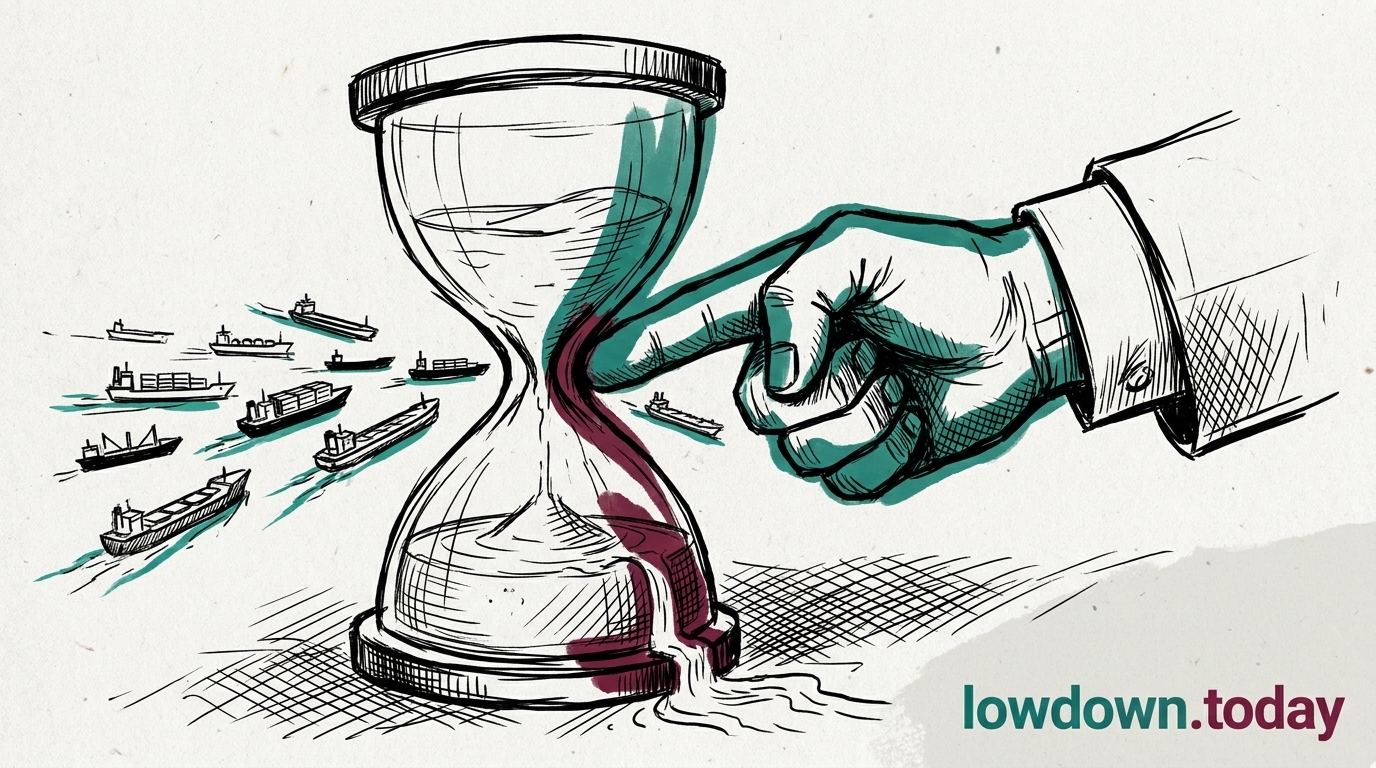
China's banking regulator told ICBC, AgBank, CCB and Bank of China to stop new lending to five sanctioned refiners, Hengli among them. Existing credit lines stand. The order tightens the screw without cutting it.

ConflictDeveloping
Key takeaway

Beijing caps fresh state-bank lending to sanctioned refiners while leaving existing loans intact.

China's banking regulator, the National Financial Regulatory Administration (NFRA), instructed the country's four largest state banks, ICBC, Agricultural Bank of China, China Construction Bank and Bank of China, to halt new lending to five sanctioned refiners, Hengli among them 1. The NFRA is China's top banking and insurance supervisor, created in 2023 to consolidate financial oversight.

The NFRA order covers new lending only and leaves repayment of existing loans untouched, so the five refiners keep their current credit lines. The order constrains fresh exposure without forcing a default, which would ripple back through the state banks that made the loans.

The move mirrors the Commerce Ministry's earlier blocking list , extending the same restraint from the trade-policy track to the banking-regulation track. Read alongside the secondary-sanctions exposure Chinese banks already face on dollar-clearing for restructured trades , it shows Beijing managing the same risk from two directions: limiting how much state credit rides on entities that Washington could blacklist.

The timing sits awkwardly against the mediation gathering in the same city. China is hosting Pakistan's negotiators while quietly capping its banks' fresh lending to the refiners caught in the US sanctions net, protecting its own institutions whatever the talks produce. The instruction is a hedge, not a break: enough to limit downside, not enough to abandon the refiners that move sanctioned Iranian crude.

Deep Analysis

In plain English

China's banking regulator, the National Financial Regulatory Administration (NFRA), told the country's four biggest banks on 25 May to stop making new loans to five oil refineries that the United States has placed on its sanctions list. The four banks are ICBC, Agricultural Bank of China, China Construction Bank, and Bank of China. The order covers new loans only. The refineries can still repay old loans and keep using credit they already have. China did this partly to protect its own banks from US penalties. American financial sanctions work by threatening to cut off any bank that deals with companies on the blocked list from the dollar-clearing system, which is like the global plumbing that makes international payments work.

Deep Analysis
Root Causes

MOFCOM's Announcement No. 21 blocking statute, issued in May 2026, prohibits Chinese entities from complying with foreign sanctions that MOFCOM has not formally recognised.

The NFRA instruction mirrors the blocking list, covering the same five refiners, but operates on a different legal basis: NFRA can issue binding supervisory orders to state banks under its 2023 founding statute without triggering the MOFCOM anti-sanctions-compliance prohibition. The two tracks (NFRA lending halt and MOFCOM blocking statute) thus operate in parallel without legal contradiction.

The structural driver is the GL V expiry on 24 May: with OFAC's dollar-clearing exposure now live for Chinese state banks, NFRA's new-lending halt functions as a circuit-breaker, cutting balance-sheet exposure to refiners who may become OFAC-blocked counterparties within days.

What could happen next?
  • Consequence

    The five sanctioned refiners lose access to new bank credit for crude inventory purchases, compressing their ability to pre-buy dark-fleet Iranian cargoes 30-60 days forward.

  • Risk

    If OFAC determines the new-lending halt is insufficient and issues a secondary-sanctions determination against one of the four state banks over existing credit lines, China faces a direct confrontation between its NFRA compliance order and a live OFAC enforcement action.

First Reported In

Update #107 · Two markets, two prices on one Iran deal

OFAC / US Treasury· 25 May 2026
Read original
Different Perspectives
Oil markets / Lloyd's underwriters
Futures markets priced CENTCOM's strikes-complete statement as a de-escalation signal and pushed Brent down 1.7 per cent to $94.71, even as the IRGC declared Hormuz closed. Lloyd's war-risk premiums held elevated because institutional de-listing requires a UN Security Council resolution that Russia and China have just shown they will block.
Pakistan (mediator)
Pakistan (mediator)
Interior minister Mohsin Naqvi carried dual civilian and military letters to Mojtaba Khamenei in Tehran on 6-7 June with no public response. The IRGC's Hormuz closure on 11 June shows the corps is acting independently of the channel Pakistan is using, making the mediation structurally unable to produce a binding commitment without direct IRGC access.
Russia and China
Russia and China
Russia and China voted against GOV/2026/40 at the IAEA Board, following through on the blocking position coordinated with Grossi in Geneva on 5 June; both states continue to oppose Western institutional pressure on Iran at every multilateral venue.
E3 and IAEA (UK, France, Germany)
The E3 co-sponsored IAEA resolution GOV/2026/40, adopted 21-3-10 on 10 June, demanding Iran disclose 440.9 kg of unaccounted HEU and admit inspectors to four denied facilities. The 10 abstentions and Russia-China noes leave any Security Council referral without a viable enforcement path.
IRGC / Iran military command
The corps declared Hormuz closed to all traffic on 11 June and claimed two vessels struck, overriding the MoU its own civilian negotiators were pursuing through Pakistan. The closure order used the Persian Gulf Strait Authority apparatus to convert a toll mechanism into a military prohibition.
Trump administration / CENTCOM
CENTCOM completed a second day of strikes on Tehran, Sirik and Minab, rejected the IRGC Hormuz closure as inconsistent with observed transit, and said strikes were complete. Hegseth framed the bombing explicitly as the negotiation: the method is coercive deal-making with no stated pause threshold.