Skip to content
Briefings are running a touch slower this week while we rebuild the foundations.See roadmap
Iran Conflict 2026
9JUN

Bunker-busters hit Isfahan depots

2 min read
10:36UTC

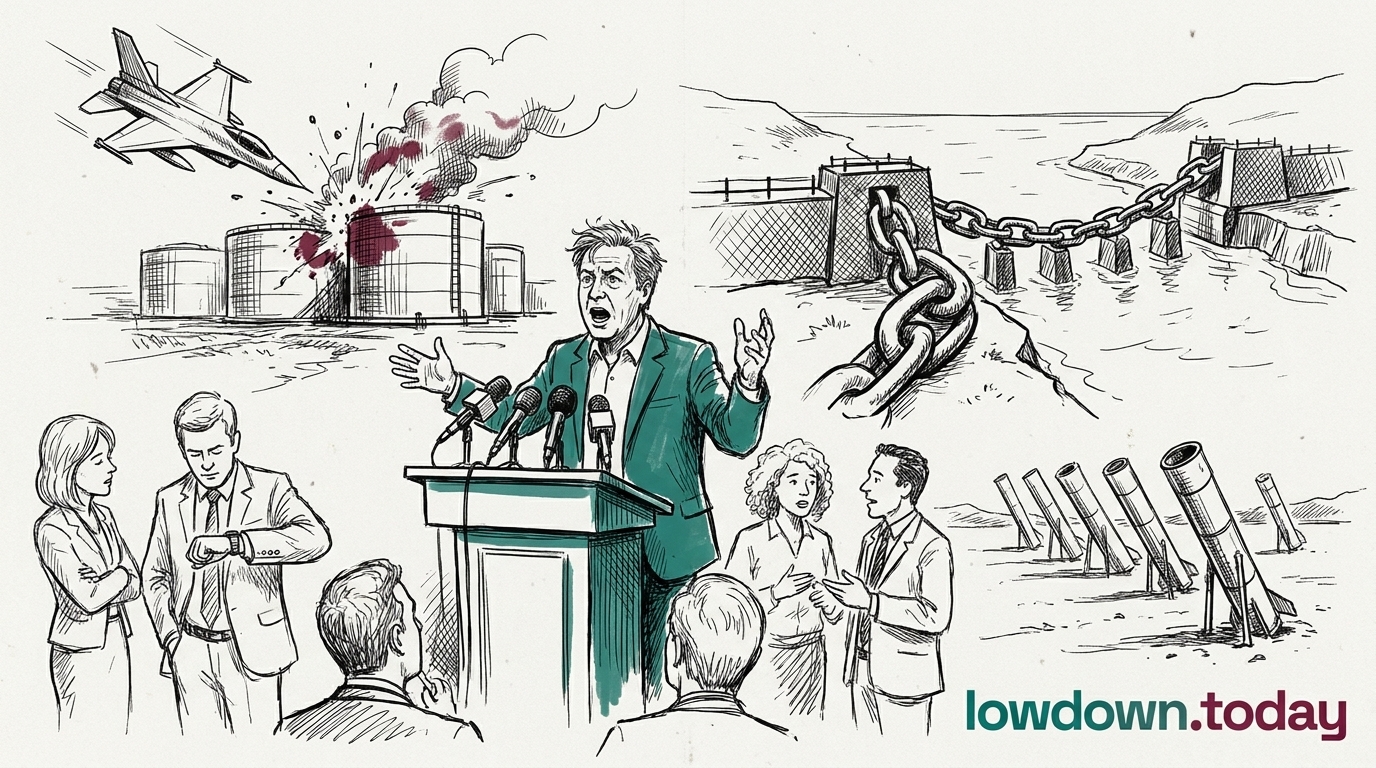
Heavy penetration munitions struck Iranian stores near Isfahan, with secondary explosions visible on video that Trump reshared.

ConflictDeveloping
Key takeaway

Isfahan strikes destroyed ammunition stores but did not prevent Iran's same-day cluster warhead retaliation.

US forces dropped a high volume of 2,000-pound bunker-buster bombs on Iranian ammunition depots near Isfahan overnight on 30 to 31 March. 1 Secondary explosions were confirmed on video. President Trump reportedly reshared the footage.

The strikes add to a campaign that had already exceeded 10,000 targets according to CENTCOM commander Admiral Brad Cooper five days earlier . Isfahan's depots hold conventional munitions that feed Iran's ballistic missile and drone operations. Destroying stockpiles degrades Iran's ability to sustain the current firing rate, but the third Bushehr strike within the reactor perimeter demonstrated that the air campaign has not altered Tehran's willingness to launch.

Iran's response came within hours. A ballistic missile carrying a cluster warhead struck three Israeli cities the same day. The sequence (bunker-busters, then retaliatory escalation with a new weapon type) mirrors a pattern established across multiple strike-retaliation cycles in this conflict. Each round introduces heavier ordnance on both sides.

Deep Analysis

In plain English

US planes dropped extremely heavy bombs, each weighing 2,000 pounds, on Iranian weapons storage sites near the city of Isfahan overnight. These 'bunker-busters' are designed to penetrate underground or reinforced structures before exploding. The secondary explosions visible on video confirmed ammunition was destroyed. But within hours, Iran fired a new type of missile at Israeli cities in retaliation. Destroying storage does not stop missiles already on their way. This strike-retaliation pattern has repeated multiple times throughout the war.

Deep Analysis
Root Causes

The Isfahan ammunition depots hold conventional munitions feeding Iran's ballistic missile and drone operations. Destroying stockpiles is a logical target within the stated objective of degrading Iran's military capacity, even after Hormuz reopening was privately abandoned as the primary goal.

The bunker-buster choice reflects intelligence that the depots were hardened or semi-underground. The 2,000-pound GBU-28 is the heaviest penetration munition in the US inventory. Deploying it at high volume signals that the target was assessed as both deeply protected and high-value. Secondary explosions confirm the assessment was correct.

Escalation

Each strike-retaliation cycle introduces heavier ordnance on both sides. The Isfahan bunker-busters prompted a cluster warhead within hours. At the current exchange rate, the next cycle could involve larger warheads or multiple simultaneous launches, especially if Israel's upper-tier defences are confirmed exhausted. The absence of any diplomatic off-ramp on the military track means the cycle has no natural stopping point.

What could happen next?
  • Consequence

    Isfahan depot destruction degrades Iran's sustained firing rate but does not interrupt the current operational tempo within the same 24-hour window.

    Immediate · 0.8
  • Risk

    Each strike-retaliation cycle introduces heavier weapons on both sides, with the next Iranian response potentially targeting coalition bases directly.

    Short term · 0.7
  • Consequence

    Civilian casualty exposure in Iran rises as strikes extend into logistics infrastructure across population centres.

    Short term · 0.75
First Reported In

Update #53 · Trump drops Hormuz goal; toll becomes law

Times of Israel· 31 Mar 2026
Read original
Causes and effects
This Event
Bunker-busters hit Isfahan depots
The strikes extend CENTCOM's campaign past 10,000 declared targets and triggered Iran's cluster-warhead retaliation within hours.
Different Perspectives
Markets
Markets
Brent crude rose 2.2 per cent to $96.34 on 10 June, reversing a 7 per cent weekly decline built on deal optimism, as the overnight exchange repriced the Strait of Hormuz risk premium in a single session. The move reflects transit-risk repricing rather than supply shock: Iran's exports had already collapsed to below 300,000 barrels per day.
Pakistan
Pakistan
Pakistan's Naqvi channel, the only mediation track carrying both civilian and military buy-in, was stress-tested by live ordnance within 48 hours of the 6-7 June Tehran visit. Whether Washington informed Islamabad of the imminent strike plan while Naqvi was in Tehran remains undisclosed, putting the channel's neutrality under scrutiny.
Kuwait
Kuwait
Kuwait hosted the third Iranian strike on its soil since the 3 June airport drone attack, with Ali Al Salem airbase targeted in the three-country salvo. Its recent $1.98 billion Anduril Anvil counter-drone purchase signals it is rearming rather than reconsidering its hosting posture.
Bahrain
Bahrain
Bahrain absorbed the IRGC barrage via PAC-3 intercepts with its magazine already at 87 per cent depletion and no resupply before 2027. Sounding air-raid sirens over Manama, it faced the intercept burden with the thinnest defensive stack in the Gulf coalition.
Jordan
Jordan
Jordan reported all five incoming missiles intercepted with no injuries and no damage, a clean defensive performance that strengthens Amman's case for staying in the Western coalition without escalating its own posture. It now sits on Iran's target list for the first time despite not being a party to the Abraham Accords confrontation.
Iran / IRGC
Iran / IRGC
Foreign Minister Araghchi posted on X that US forces should 'leave our region if you want to be safe' and framed the exchange as a US defeat, while the IRGC claimed 21 targets hit and an F-35 hangar destroyed. The claims serve a domestic and Arab-audience framing rather than a verified battle-damage assessment.