Skip to content
You can now search across every topic, entity and event.What's new
Iran Conflict 2026
8JUN

Trump's Pickaxe threat, but no order

1 min read
09:58UTC

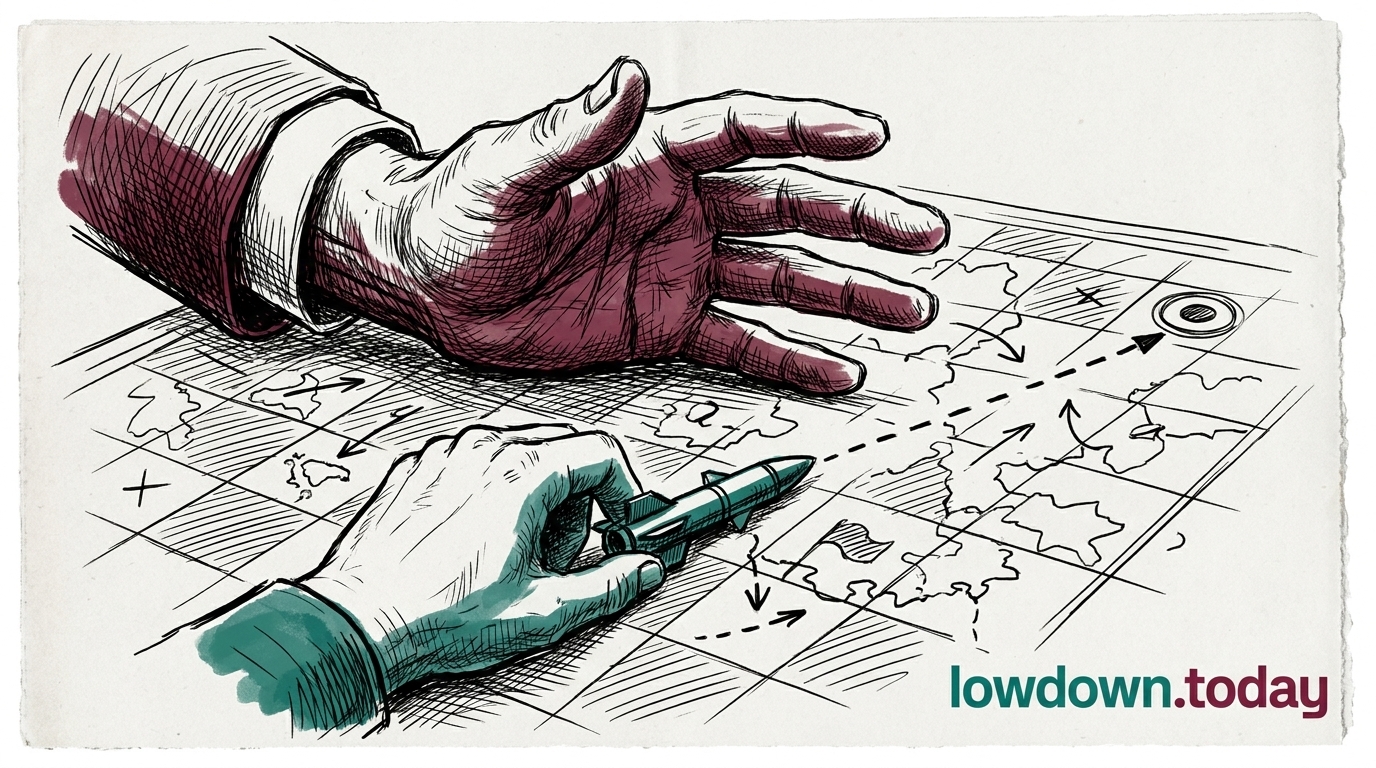
Donald Trump said the US would be hitting Pickaxe Mountain very soon and heavily, though no CENTCOM release, deployment or force-posture change names the site.

ConflictDeveloping
Key takeaway

Trump named Pickaxe Mountain as a target in words only; no order or deployment follows the threat.

Donald Trump said the United States would be "hitting that area very probably pretty soon, very heavily", referring to Pickaxe Mountain, the tunnel complex near Natanz 1. No CENTCOM (US Central Command) release, deployment order or force-posture change names the site.

Trump committed words, not an order. The recent US strike waves have hit maritime, missile and drone storage and coastal-surveillance targets, most lately Ahvaz and a Khuzestan water station on an eighth night of bombing , not the mountain, and the fresh reinforcement of jets and tankers points at the coast and the Gulf rather than the interior. Pickaxe Mountain, known to Iranians as Kuh-e Kolang Gaz La, is a deep tunnel complex that Israeli intelligence assesses now holds moved nuclear material, which is what lifts a presidential aside about striking it above routine bluster. On the substance, though, Trump has committed only rhetoric, and the measurable posture is aimed elsewhere.

Deep Analysis

In plain English

President Trump said the US would soon be 'hitting that area very probably pretty soon, very heavily,' referring to Pickaxe Mountain, a site in Iran linked to its nuclear programme. But no US military order, deployment announcement or official release has actually named Pickaxe Mountain as a target. This matters because Trump has a track record in this war of making strong public statements that are not always followed by an actual military order. The clearer signal to watch is troop and aircraft movements, not what he says at a podium.

Deep Analysis
Root Causes

Trump's preference for public declaration over signed orders predates this specific threat. OFAC recorded zero new Iran, IRGC or Hezbollah sanctions instruments for a full week in early July even as he told reporters he would 'finish the job' militarily, signing nothing alongside the line.

The measurable US action in this period is the separate jet and refueller reinforcement into the region, not the Pickaxe threat itself. Force posture, not rhetoric, has been the reliable indicator of what Washington is actually preparing to do.

Escalation

Trump's rhetoric has repeatedly run ahead of any signed military order in this war, so the measurable escalation risk sits with the separate jet and refueller reinforcement, not with this statement alone.

What could happen next?
  • Risk

    Treating Trump's Pickaxe Mountain line as an imminent operational fact, rather than rhetoric unmatched by any signed order, would overstate the immediate strike risk based on this war's pattern so far.

First Reported In

Update #160 · Houthis hit Saudi tankers; Brent tops $100

The Jerusalem Post· 23 Jul 2026
Read original
Causes and effects
Different Perspectives
India
India
India buys more Saudi crude than any other country and has 2.5 million nationals working in the kingdom, so a $100 Brent and a live strike on Saudi tankers reach New Delhi through both fuel bills and remittance risk. Neither channel has an alternative route the way Saudi Arabia's own pipeline does.
Qatar
Qatar
Qatar co-authored the four-mediator ten-day ceasefire proposal alongside Egypt, Pakistan and Oman, centred on resuming Hormuz navigation, while separately pursuing its dated compensation claim against Iran at the UN Security Council filed on 21 July. Doha is mediating and litigating in the same week.
Israel
Israel
Israeli intelligence, reported by the Wall Street Journal, assesses Iran moved thousands of centrifuges and part of its roughly 440kg enriched-uranium stock into Pickaxe Mountain after the June 2025 strikes on its three main nuclear sites. Some of the US refuelling aircraft now deploying to the region are bound for Israeli bases and Ramon Airport.
Houthis
Houthis
Yahya Saree announced the missile and drone strikes on the Encelia and Layla on 22 July as enforcement of the embargo his forces had declared by radio warning alone two days earlier. Six vessels already turned back on the broadcast; the strike shows Houthi forces will use weapons once warnings stop working.
Saudi Arabia
Saudi Arabia
Saudi Arabia's state news agency confirmed only a fire on the Encelia's bow, with the crew safe; the Layla strike remains unconfirmed by Riyadh. The kingdom built its Petroline pipeline specifically to bypass Hormuz through the Red Sea, so the tanker fire lands on the route Riyadh had already spent billions escaping.
United States
United States
Washington is weighing both ten-day proposals but wants a longer truce than either offers, and moved F-16 and F-35 jets plus refuelling aircraft into the region while it decides. That deployment, not Trump's Pickaxe Mountain remarks, is the measurable US action, buying options for the day talks fail rather than betting on them.