Skip to content
Briefings are running a touch slower this week while we rebuild the foundations.See roadmap
Iran Conflict 2026
6JUN

Iran cluster warhead hits three cities

2 min read
12:17UTC

The first confirmed cluster-warhead ballistic missile in this conflict turned three cities into area targets on the same day Israel's missile shield neared zero.

ConflictDeveloping
Key takeaway

Iran is matching new weapons to Israel's defence gap, turning each missile into an area threat.

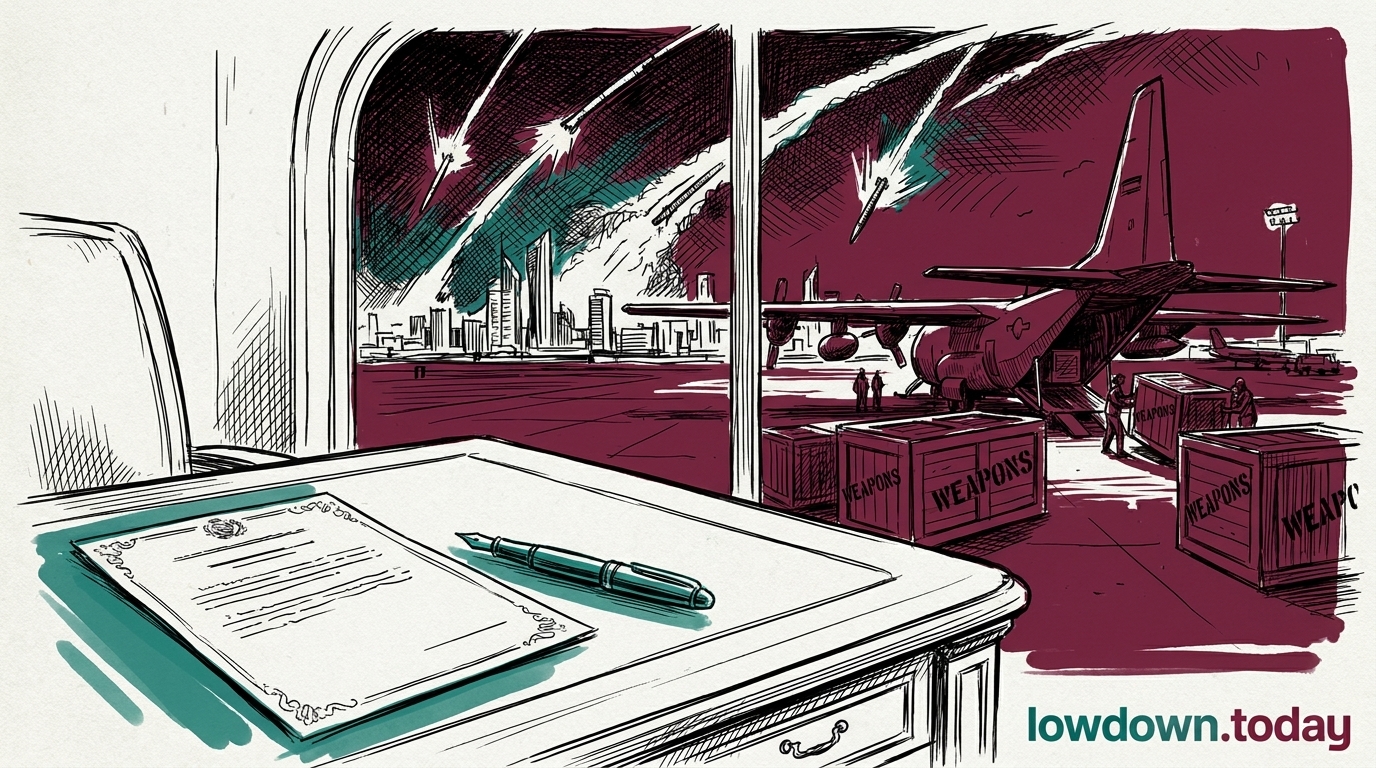
A ballistic missile carrying a cluster-bomb warhead struck central Israel on 31 March, scattering submunitions across Bnei Brak, Ramat Gan, and Petah Tikva. 1 Six people were lightly injured. It was the first confirmed use of a cluster warhead on a ballistic missile in this conflict.

Cluster munitions scatter bomblets across a wide area. Against urban targets, they bypass the point-defence logic of interceptors: even a successful interception may not catch every submunition. The tactical shift suggests Iran is adapting to the interception window that remains before Arrow-3 stocks run out entirely. The USS Tripoli arrived days ago with 3,500 Marines , confirming that Tehran's intelligence services have demonstrated awareness of coalition planning. The cluster warhead's timing, coinciding with RUSI's projected Arrow-3 exhaustion, may reflect similar intelligence-driven calibration.

The three cities hit sit in the Greater Tel Aviv area, the densest urban corridor in Israel. If cluster warheads become standard payload on Iranian medium-range missiles, each launch becomes an area-wide threat rather than a single-point strike. The multiplication effect on civilian risk is substantial. Israel's 6,131 hospitalisations since 28 February already exceed total casualties from the entire 2006 Lebanon War. Undefended cluster warhead strikes would accelerate that count sharply.


Deep Analysis

In plain English

A cluster bomb is a weapon that opens in mid-air and releases dozens or hundreds of smaller bomblets over a wide area, rather than hitting one point. Iran put this type of warhead on a ballistic missile and fired it at central Israel for the first time. Six people were lightly injured this time. The worry is what happens when Israel's missile defence system, which intercepts incoming missiles, runs out of interceptors. RUSI projected that might happen by end of March. If the shield is exhausted and these area-effect weapons keep arriving, they land across entire city blocks rather than one building. That changes the casualty risk from dozens to potentially hundreds per strike.

Deep Analysis
Root Causes

GPS jamming across both Hormuz and Bab al-Mandeb has degraded missile accuracy for both sides. Iran's shift to cluster warheads bypasses the precision problem: area-effect weapons achieve their tactical purpose without requiring a direct hit.

Arrow-3 depletion creates a window of opportunity. Against an undefended target, even a conventional warhead lands with certainty. A cluster warhead against a partially defended target increases the probability that at least some submunitions reach civilians even if the main body is intercepted. This is military adaptation to a specific defence gap rather than an arbitrary escalation.

Iran's IRGC Aerospace Force has faced internal criticism over mismanagement and near-suicidal launch conditions. Switching to a weapon that does not require precision reduces the operational demand on crews while maintaining psychological pressure on Israeli urban populations.

What could happen next?
  • Risk

    If cluster warheads become standard Iranian payload, each missile launch becomes an area-wide threat rather than a single-point strike, multiplying civilian casualty risk in any city targeted.

    Immediate · 0.8
  • Consequence

    Even partially successful interceptions may not catch all submunitions, reducing the practical effectiveness of remaining missile defence assets.

    Immediate · 0.85
  • Precedent

    First confirmed use of cluster warheads on ballistic missiles in this conflict establishes a qualitative threshold that may prompt Israeli or US pressure for expanded rules of engagement.

    Short term · 0.7
  • Risk

    Post-conflict unexploded submunitions in urban Israeli areas will cause civilian casualties for years after any ceasefire.

    Long term · 0.9
First Reported In

Update #53 · Trump drops Hormuz goal; toll becomes law

Times of Israel· 31 Mar 2026
Read original
Causes and effects
This Event
Iran cluster warhead hits three cities
Cluster warheads on ballistic missiles shift the threat from single-point strikes to area-wide civilian danger, arriving as upper-tier interceptors approach exhaustion.
Different Perspectives
Israel
Israel
The IDF struck a Lebanese army unit on 6 June, killing a colonel, and privately told Moscow that shelling near Bushehr was accidental, per Putin's SPIEF disclosure. Israel is advancing in Lebanon past an unenforced ceasefire text while maintaining a back-channel to Russia on nuclear-site deconfliction.
Lebanon
Lebanon
President Aoun told CNN on 5 June that Iran uses Lebanon as a bargaining chip and urged Hezbollah toward diplomacy; on 6 June an IDF strike killed a Lebanese army colonel on the Khardali-Nabatieh road. The Lebanese state is publicly rejecting Iranian tutelage while the army sustains casualties from Israeli fire and the Washington framework remains unenforced.
Bahrain
Bahrain
Bahrain's US Fifth Fleet headquarters was among the targets in the 5-6 June two-country salvo; its PAC-3 magazine stands at 87 per cent depletion with an 18-month resupply gap and no comparable arms sale has been announced. The state is defending a critical US regional command on a thinning interceptor stock.
Kuwait
Kuwait
Kuwait received a $1.98bn US counter-drone sale approval on the same day IRGC missiles targeted its bases; it expelled two Iranian diplomats on 4 June and filed a formal protest. The arms approval gives Kuwait a future capability but leaves a 6-18 month delivery gap that the salvo tempo is already pressing.
Russia
Russia
Putin reaffirmed Russia's offer to hold Iran's 440.9 kg HEU at SPIEF on 6 June, said Russia is not arming Iran, and disclosed that both the US and Israel privately told Moscow that shelling near Bushehr was accidental. The restatement casts Moscow as the only remaining mediator both sides call, a position serving Russian interests whatever the nuclear file produces.
Iran
Iran
The IRGC, per Iranian state media, fired seven ballistic missiles at US bases in Kuwait and Bahrain, the largest two-country salvo of the war, and framed the launches as lawful retaliation; Foreign Minister Araghchi rejected Aoun's bargaining-chip accusation and Velayati warned Beirut against diplomatic naivety. Tehran has sent no HEU counter-proposal since Araghchi confirmed no progress on 4 June.



