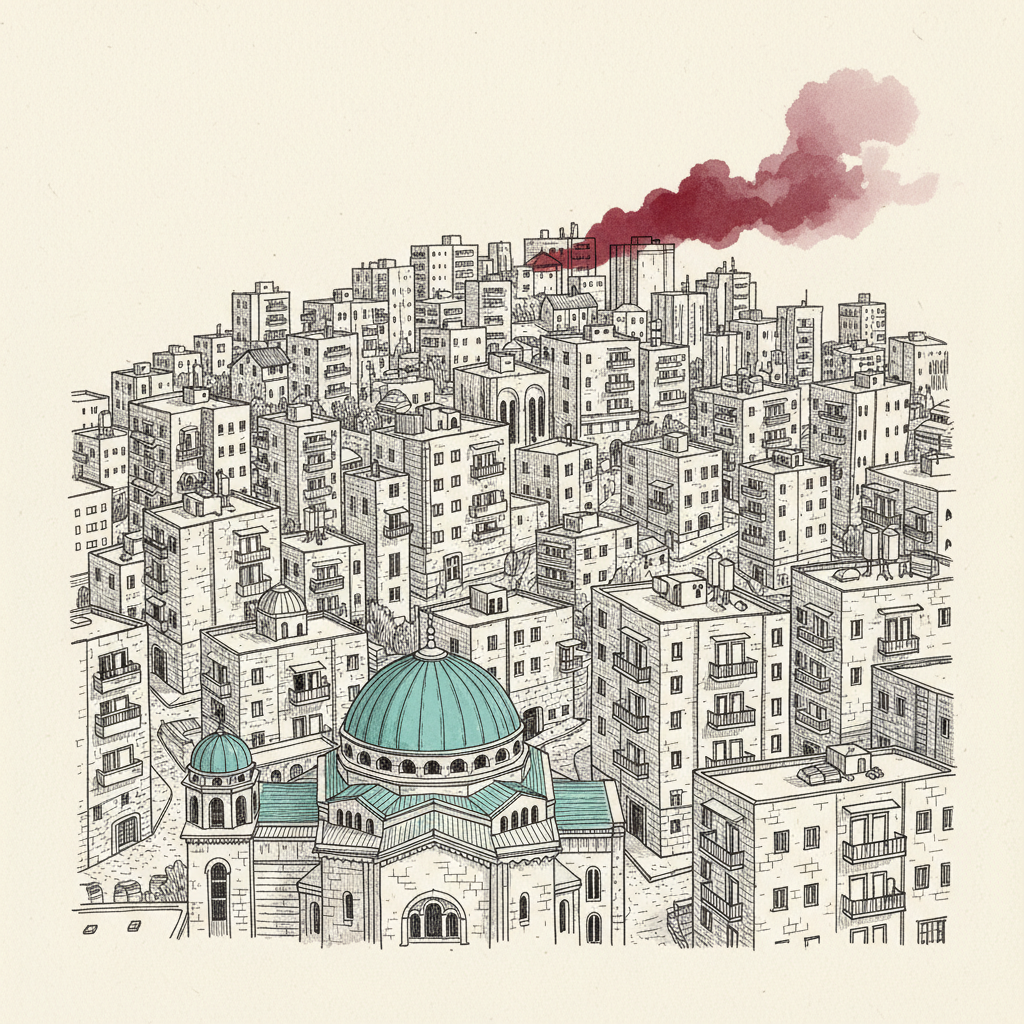
Bnei Brak
Israeli ultra-Orthodox city east of Tel Aviv; struck by Iranian cluster-warhead ballistic missiles in March 2026.
Last refreshed: 28 July 2026 · Appears in 1 active topic
Why did Iran target a civilian ultra-Orthodox city with cluster-warhead ballistic missiles?
Timeline for Bnei Brak
Iran cluster warhead hits three cities
Iran Conflict 2026Mentioned in: Iran resumes fire after 11-hour pause
Iran Conflict 2026Mentioned in: Cluster bomblets fall on Tel Aviv area
Iran Conflict 2026Background
Bnei Brak became one of the most frequently struck civilian areas in central Israel during the Iran conflict. Iranian ballistic missiles carrying cluster-bomb warheads hit the city multiple times, injuring dozens of residents including children and elderly. On 31 March 2026, a single Ballistic missile scattered submunitions across Bnei Brak, Ramat Gan, and Petah Tikva, the first confirmed use of a cluster warhead on a ballistic missile in the conflict.
The city of roughly 200,000 people sits 7 km east of central Tel Aviv. It is one of the most densely populated municipalities in Israel and the world's largest centre of ultra-Orthodox (Haredi) Jewish life outside the United States. Most residents are religiously observant, with a high proportion of large families and young children, a demographic profile that amplified the humanitarian impact of cluster-munition attacks. In one barrage cluster munitions wounded 12 people including six children and a 94-year-old woman rescued from a directly hit building.
The strikes intensified international debate over the Convention on Cluster Munitions, which neither Iran nor Israel has signed. Civil defence infrastructure including shelters and the Iron Dome network provided partial protection, though the dispersal pattern of submunitions complicated evacuation and clearance.
What is Bnei Brak?
Where is Bnei Brak located?
Was Bnei Brak hit by Iranian missiles in 2026?
What happened in Bnei Brak on 31 March 2026?
What is the population of Bnei Brak?
How many people were wounded in the Bnei Brak cluster attack?
What are cluster munitions and why are they controversial?
What is an ultra-Orthodox Jewish city?

