Skip to content
Briefings are running a touch slower this week while we rebuild the foundations.See roadmap
Iran Conflict 2026
5JUN

Iran's internet returns at 40%, by design

3 min read
08:43UTC

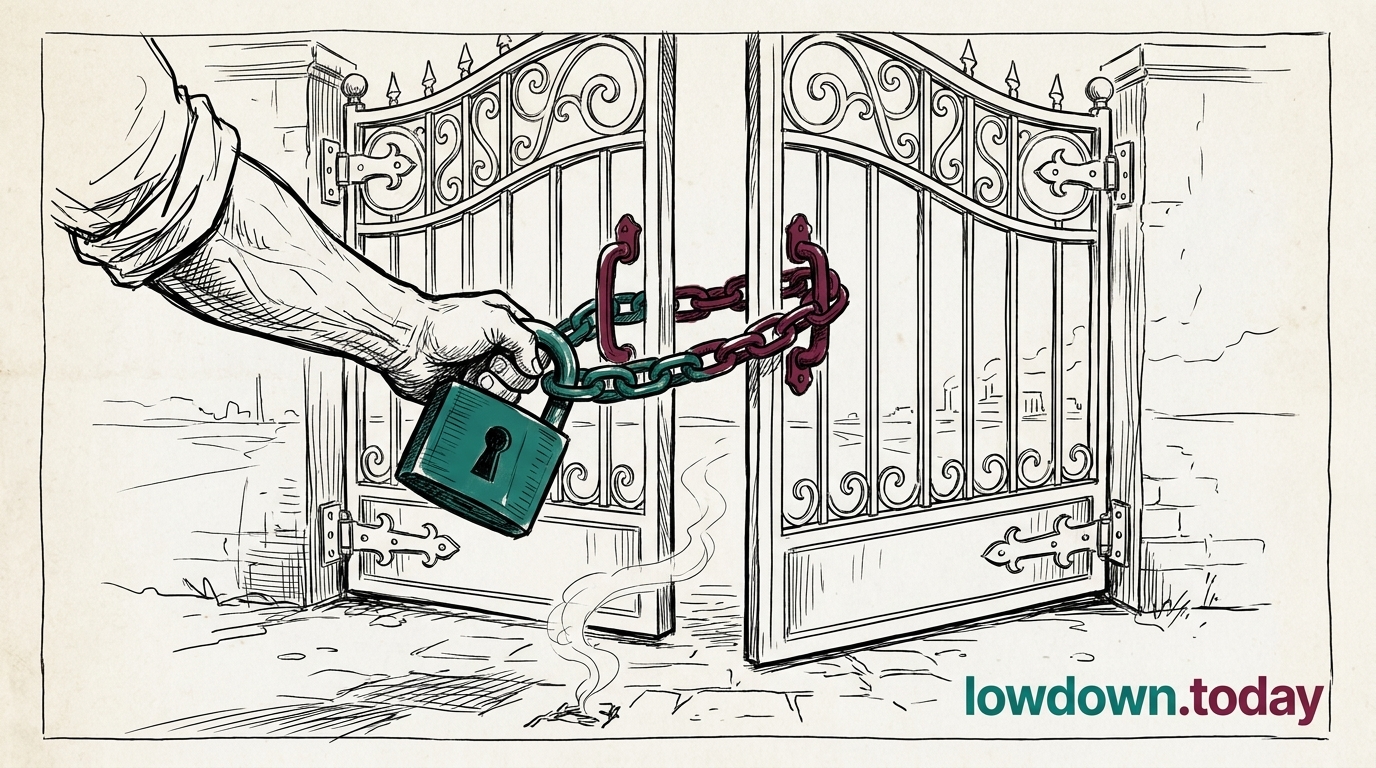
Iran's internet reached only 40 per cent of pre-war traffic by 28 May, NetBlocks reported, with Chinese-built hardware for a permanent, switchable blackout already installed.

ConflictDeveloping
Key takeaway

Iran rebuilt its internet around a Chinese-built switch it can flip off at will.

Iran's internet reached only about 40 per cent of pre-war traffic by 28 May, the monitor NetBlocks reported, three days after President Masoud Pezeshkian's 25 May restoration order ended the longest national shutdown on record . 1 NetBlocks is the UK-based watchdog that measures connectivity disruptions worldwide. In practice most Iranians remain effectively offline, and those who do reconnect stay on virtual private networks, the tools that route traffic abroad to evade state filtering, expecting the next shutdown.

Mohammad Sarafraz, a member of Iran's Supreme Council of Cyberspace, confirmed that Chinese-built deep-packet-inspection hardware for a permanent, switchable blackout has been imported and installed . 2 Deep-packet inspection lets the state read and block traffic by content rather than crudely severing the line.

Iranians are back online inside a system that can be cut by a single decision, with the Chinese equipment already wired in. The 40 per cent figure is the visible change; the switchable hardware behind it is the durable one. Iran has compressed the timeline China used in Xinjiang, where a ten-month isolation in 2009 was followed by embedded inspection hardware, installing the architecture during the war rather than after it. The next blackout need not be an emergency dragged out for weeks. It can be a switch, and VPN use stays heavy because ordinary users assume the next cut is a matter of when, not whether. 3

Deep Analysis

In plain English

Iran's government shut off most of its internet on 28 February when the war started. President Pezeshkian ordered it restored on 25 May. Three days later, on 28 May, only about 40% of normal traffic was flowing, according to the monitoring service NetBlocks. Most people are still effectively offline, and those who can connect use VPNs because they expect the government to cut it again. A senior official called Mohammad Sarafraz confirmed that China supplied Iran with hardware that lets the government switch internet access on or off instantly, by region or across the whole country. So the restoration is partial by design, and the hardware to kill it again is already installed and running.

What could happen next?
  • Consequence

    China's DPI hardware converts Iran's internet kill-switch from an emergency measure requiring days to implement into a standing capability operable in seconds, permanently changing the information-control architecture regardless of any future civilian presidential order.

  • Risk

    VPN saturation at 35 to 40 million users, built during the 90-day blackout, means any future selective restoration will face an already-circumventing user base that is harder to track than a population encountering VPNs for the first time.

First Reported In

Update #112 · Treasury opens a second Iran sanctions front

TechTimes· 30 May 2026
Read original
Different Perspectives
Israel
Israel
IDF Chief Eyal Zamir declared on 3 June there was no ceasefire for his forces, and strikes killed at least 10 civilians and one Israeli soldier on 4 June. The IDF killed Hezbollah's chief engineer and warned three south Lebanon villages to evacuate on 5 June, advancing into ground the unsigned Washington framework has not caught.
Hezbollah / Lebanon
Hezbollah / Lebanon
Naim Qassem rejected the Washington Lebanon framework on 4 June as "absurd, humiliating and insulting", blocking a ceasefire instrument that required Hezbollah to withdraw north of the Litani before any Israeli withdrawal. Over one million Lebanese remain displaced; the framework's collapse prolongs that toll.
Iran
Iran
Foreign Minister Araghchi publicly coupled the Lebanon ceasefire to the Iran-US nuclear track on 4 June, carrying IRGC authority rather than his own civilian mandate. The IRGC delegation has sent no HEU counter-proposal since Araghchi confirmed no progress that same day; Mojtaba Khamenei's 21 May order to keep the 440.9 kg stockpile inside Iran remains operative.
United States
United States
Rubio placed the Iran-US deal at 95 per cent complete on 4 June while the administration signed no Iran instrument and OFAC designated only Cuban targets. Trump separately disclosed and rejected an airlift plan to collect Iran's HEU stockpile, claiming the material is "entombed", a claim the IAEA cannot verify.
China
China
Beijing's MOFCOM Blocking Rules constrain OFAC enforcement on the mainland; China has not corroborated Trump's verbal account of any bilateral summit, and the rial's failure to hold its Rubio bounce, combined with the IRGC's stablecoin rail closure, increases Chinese yuan-denominated oil-payment exposure through Hormuz.
Bahrain
Bahrain
The IRGC struck Bahrain on 3 June as its sirens sounded and its PAC-3 magazine neared exhaustion; excluded from Rubio's 2 May emergency resupply, Bahrain received a 50-round Federal Register notice on 1 June on an 18-month delivery timeline, meaning it is defending the US Fifth Fleet headquarters on the last rounds it has.
