Skip to content
You can now search across every topic, entity and event.What's new
Iran Conflict 2026
5JUN

FDD: oil licence has no enforcement

3 min read
08:43UTC

The Foundation for Defense of Democracies found that General License X carries no escrow, no value cap, no buyer list and no reporting, functioning as a 60-day safe harbour for Chinese refiners.

ConflictDeveloping
Key takeaway

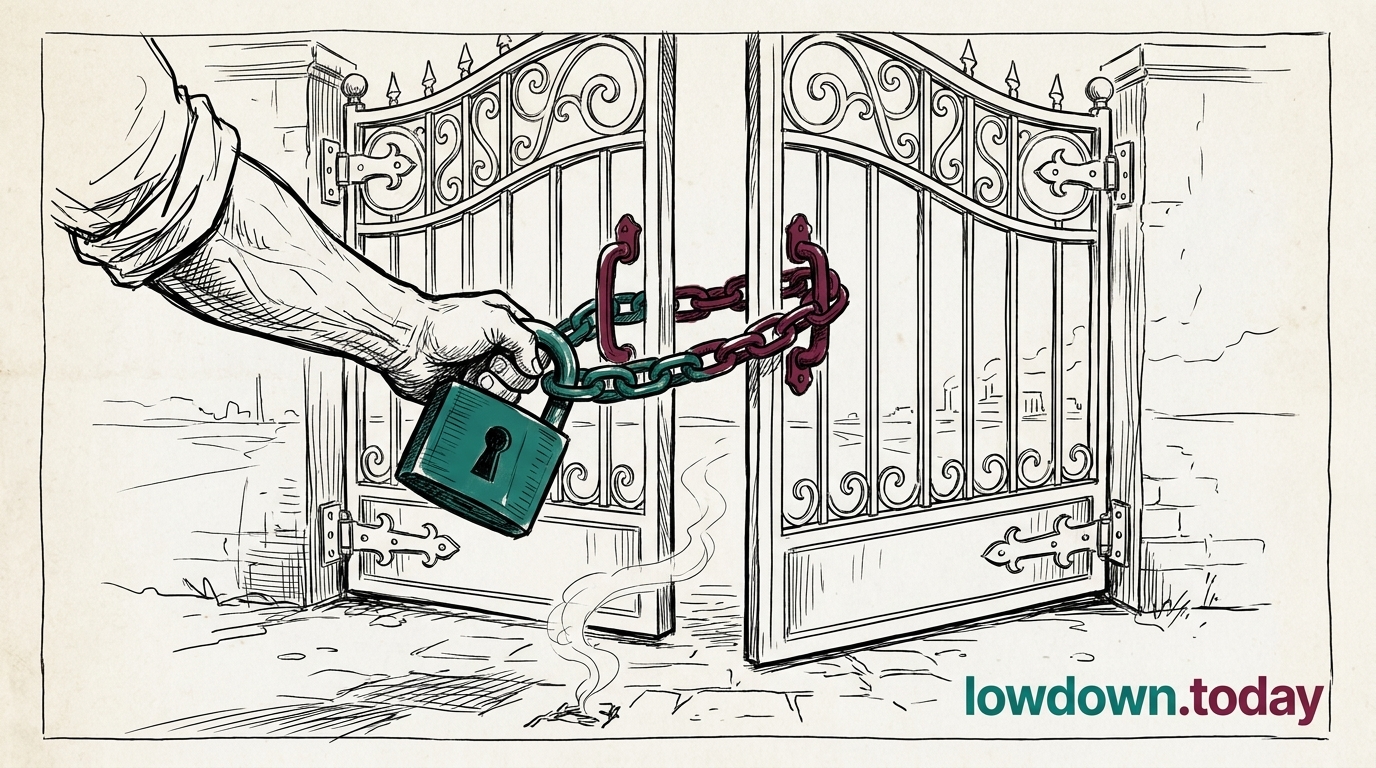
General License X has no escrow, cap or reporting, mostly legalising the Chinese purchases already under way.

The Foundation for Defense of Democracies (FDD), a Washington think tank focused on Iran sanctions, found that General License X carries no escrow mechanism, no value cap, no approved-buyer list and no transaction reporting requirement 1. The licence is the OFAC instrument Treasury Secretary Bessent signed on 22 June , the first oil-relief paper of the war after 116 days of sanctions.

That absence of architecture changes what the licence does. Rather than relief for Iran, the FDD reads it as a 60-day safe harbour for the Chinese refiners and banks already buying Iranian crude through workarounds: it legalises the trade that was happening anyway, without recording who buys, how much, or at what price.

The revenue at stake makes the gap consequential. The FDD estimated roughly one-third of Iran's annual oil income, about $12.4 billion, flows to the IRGC and the armed forces, the same actors holding the nuclear file shut. No bank or trader had publicly disclosed a transaction under the licence as of 23-24 June. The signed paper exists; the enforcement that would make it accountable does not.

Deep Analysis

In plain English

On 22 June, the US Treasury issued a document called General License X, which allowed Iranian oil to be sold legally on international markets for 60 days. The Foundation for Defense of Democracies; a Washington think tank that monitors Iran sanctions; examined the document and found it had no safeguards: no limit on how much oil could be sold, no list of approved buyers, no requirement to report transactions, and no account held in escrow to ensure the money goes where it should. In practice, this means China; the main buyer of Iranian oil; can continue buying it through the same workaround channels it has used for years, now with a legal cover rather than sanctions risk. Roughly one-third of Iran's oil income, about $12.4 billion per year, goes to the IRGC (the country's powerful ideological military force). The licence does not prevent that from continuing.

Deep Analysis
Root Causes

GL X's lack of enforcement architecture reflects a tension inside the US sanctions regime that has existed since 2019: the secondary-sanctions threat against Chinese crude buyers was never enforced because designating Chinese state-owned refiners would trigger a full economic confrontation the Trump administration chose to avoid.

The FDD finding that roughly one-third of Iran's oil revenues (~$12.4bn) flows to the IRGC and armed forces was known at the time of GL X's drafting. The licence provides a market-price signalling benefit (Brent falling toward $76) without requiring the political cost of secondary sanctions to enforce Iranian compliance.

First Reported In

Update #137 · Iran and Oman claim the strait; US says no

Foundation for Defense of Democracies· 24 Jun 2026
Read original
Different Perspectives
International Group of P&I Clubs
The Group has kept its Hormuz war-risk exclusion in force through the entire shipping recovery, even as London hull war-risk premiums fell to about 2% of vessel value. A burning LNG carrier off Limah is now the fresh case for holding that line, with mutual pooling meaning one hit reprices the strait for every owner at once.
Jordan
Jordan
Jordan's government said no threats existed at Aqaba hours before Iranian missiles landed there, and has not addressed the IRGC's claim that Jordanian civilians and soldiers supplied targeting intelligence for the strike. Amman hosts forces it does not command and is saying as little as it can.
United States (CENTCOM)
The Pentagon named two of the seventeen American dead, 1st Lieutenant Tyler Feehan and Private Isabella Gonzales, both killed at Jordan's Muwaffaq Salti Air Base, days after its Amman embassy had warned citizens away from Aqaba's airport and seaport. Washington is naming its own cost while flagging threats it declines to attribute publicly.
Iran
Iran
Iran said on Monday it disabled two oil tankers crossing the Strait of Hormuz without its permission, asserting a right to license passage through the strait it borders. Tehran named neither vessel, and CENTCOM had already denied a comparable Iranian claim on 18 July.
Qatar
Qatar
Qatar moved from summoning Iran's deputy ambassador on 8 July to a dated written claim at the UN Security Council thirteen days later, citing Resolution 2817 and reserving its Article 51 right of self-defence. Doha is building a permanent record while still hosting CENTCOM's forward headquarters and mediating with Tehran.
CENTCOM
CENTCOM
CENTCOM confirmed a third American service member died in northern Iraq on 19 July clearing unexploded ordnance from a downed Iranian drone, and recovered unidentified remains at Muwaffaq Salti Air Base in Jordan. The Pentagon has framed its Khuzestan strikes as degrading IRGC capacity, a rationale that stretches to explain a reactor foundation with no nuclear material in it.