Skip to content
Briefings are running a touch slower this week while we rebuild the foundations.See roadmap
Iran Conflict 2026
4JUN

GBU-57 bunker buster not used at Natanz

3 min read
11:25UTC

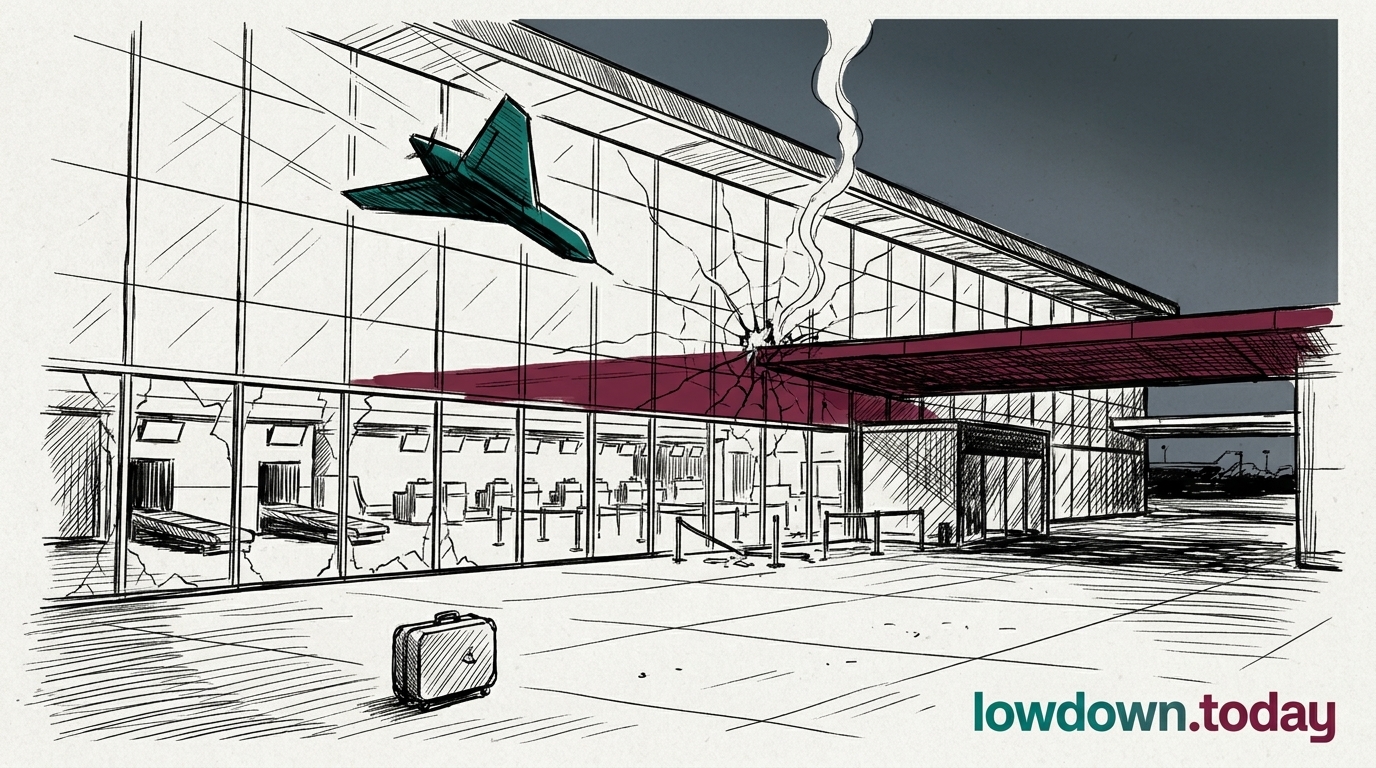
The B-2s that struck Natanz carried 2,000-pound bombs that penetrate a metre of concrete. The enrichment halls sit under eight metres of concrete and twenty-two metres of earth.

ConflictAssessed
Key takeaway

The gap between the weapon required and the weapon used is itself a strategic signal — whether deliberately communicated as restraint or inadvertently revealed as a constraint.

Defence analysts at The War Zone and Army Recognition assessed that the GBU-57 Massive Ordnance Penetrator — the 30,000-lb weapon engineered for deeply buried targets — has not been confirmed used against Iranian nuclear facilities. The B-2 Spirit bombers that struck Natanz carried GBU-31 2,000-lb munitions with BLU-109 warheads, which penetrate approximately 1–2 metres of reinforced concrete. Natanz's enrichment halls sit under 8 metres of concrete and 22 metres of earth. Fordow is inside a mountain.

The GBU-57 exists for this target set. Boeing developed it from 2004 under a programme accelerated by successive US administrations specifically to hold Iran's Fordow facility at risk after its existence was revealed. The weapon penetrates over 60 metres of earth or 118 metres of reinforced concrete — the minimum required to reach Natanz's centrifuge halls. The B-2 fleet at Whiteman Air Force Base — the same base the strike aircraft launched from — carries both weapons. The bombers carried the smaller one.

Three explanations exist, each with different strategic implications. The GBU-57 may be held in reserve for a subsequent phase, making the current campaign preparatory — sealing entrances and destroying surface infrastructure before the penetrating weapon is deployed. It may have been withheld because detonating 30,000 pounds of explosive near tonnes of enriched uranium risks exactly the radiological release the IAEA has confirmed did not occur. Or it was never authorised, which would disconnect the nuclear justification Defence Secretary Hegseth offered from the Pentagon podium from the campaign's actual military plan.

Senior Israeli defence figures, including former IDF Chief of Staff Gadi Eisenkot, have publicly questioned whether air power alone can destroy Iran's dispersed and hardened nuclear programme. Internal Israeli military assessments reportedly reached the same conclusion as recently as 2024. The distance between what the campaign has deployed and what it needs to penetrate is measurable: 8 metres of concrete and 22 metres of earth.


Deep Analysis

In plain English

The US built a 30,000-pound bomb specifically to destroy bunkers like Natanz and Fordow — it took seven years and only the B-2 stealth bomber can carry it. That bomb was not used. The bombs that were used can penetrate roughly one to two metres of reinforced concrete — adequate for a hardened surface building, not for a facility buried under eight metres of concrete and 22 metres of earth. The question this raises is deliberate: was the bigger bomb withheld as a future threat, or was there a constraint on using it?

Deep Analysis
Synthesis

Senator Warner's statement that there was no imminent threat from Iran, combined with MOP non-use, suggests a possible coherence in the administration's approach that the body frames as a gap: if the actual objective is coercive pressure and regime behaviour change rather than programme destruction, GBU-31 strikes that damage entrances and demonstrate B-2 overflight may be calibrated to that objective. The munitions gap is either a capability failure or a strategy — and those two interpretations demand opposite policy responses.

Root Causes

Three structural explanations are not mutually exclusive: first, political constraint on striking nuclear facilities with maximum force due to the nuclear adjacency taboo and concern about Russian or Chinese reaction; second, a strategy of progressive pressure reserving maximum capability for a second phase contingent on Iranian behaviour; third, sortie and logistics constraints on MOP deployment given its unique carriage requirements. The body's framing — that stated war aims and demonstrated capability are misaligned — assumes the first explanation; the second would mean alignment exists but is not publicly disclosed.

Escalation

The non-use of the MOP creates a visible and identifiable next rung on the escalation ladder. Iran's leadership can observe that maximum available capability was withheld — this either signals US restraint (reducing Iranian incentive to retaliate massively) or signals a ceiling on current willingness to escalate (potentially emboldening a measured response). The ambiguity appears deliberate and constitutes a form of coercive signalling: the threat of MOP deployment remains available as leverage.

What could happen next?
2 risk1 meaning1 consequence1 precedent
  • Risk

    If Iran concludes the programme survived intact, reconstruction begins underground where further GBU-31 strikes cannot reach — and the window for coercive leverage narrows as reconstruction proceeds.

    Short term · Suggested
  • Meaning

    The US retains an unambiguous escalation reserve in MOP deployment — a demonstrated capability step withheld from the current strike package — which functions as both leverage and deterrent simultaneously.

    Medium term · Assessed
  • Consequence

    Congressional and allied pressure to clarify whether MOP will be used will intensify as battle damage assessment proceeds and programme survival becomes the central intelligence question.

    Short term · Suggested
  • Risk

    Partial disruption of nuclear infrastructure without programme termination may accelerate Iranian decision-making toward weaponisation as the only remaining deterrent against future strikes.

    Medium term · Suggested
  • Precedent

    First public assessment of GBU-57 non-use against its designed target set establishes a documented precedent of restraint that constrains future US freedom of action — using MOP in a second wave becomes a visible and politically significant escalation step.

    Long term · Suggested
First Reported In

Update #14 · Natanz unverified; Hormuz sealed

War on the Rocks· 3 Mar 2026
Read original
Causes and effects
This Event
GBU-57 bunker buster not used at Natanz
The only weapon in the US arsenal capable of penetrating Natanz's underground enrichment halls or reaching Fordow's mountain facility has not been confirmed used, creating a measurable gap between the administration's stated nuclear objective and the military capability it has actually deployed.
Different Perspectives
Israel
Israel
IDF Chief Eyal Zamir declared on 3 June there was no ceasefire for his forces, and strikes killed at least 10 civilians and one Israeli soldier on 4 June. The IDF killed Hezbollah's chief engineer and warned three south Lebanon villages to evacuate on 5 June, advancing into ground the unsigned Washington framework has not caught.
Hezbollah / Lebanon
Hezbollah / Lebanon
Naim Qassem rejected the Washington Lebanon framework on 4 June as "absurd, humiliating and insulting", blocking a ceasefire instrument that required Hezbollah to withdraw north of the Litani before any Israeli withdrawal. Over one million Lebanese remain displaced; the framework's collapse prolongs that toll.
Iran
Iran
Foreign Minister Araghchi publicly coupled the Lebanon ceasefire to the Iran-US nuclear track on 4 June, carrying IRGC authority rather than his own civilian mandate. The IRGC delegation has sent no HEU counter-proposal since Araghchi confirmed no progress that same day; Mojtaba Khamenei's 21 May order to keep the 440.9 kg stockpile inside Iran remains operative.
United States
United States
Rubio placed the Iran-US deal at 95 per cent complete on 4 June while the administration signed no Iran instrument and OFAC designated only Cuban targets. Trump separately disclosed and rejected an airlift plan to collect Iran's HEU stockpile, claiming the material is "entombed", a claim the IAEA cannot verify.
China
China
Beijing's MOFCOM Blocking Rules constrain OFAC enforcement on the mainland; China has not corroborated Trump's verbal account of any bilateral summit, and the rial's failure to hold its Rubio bounce, combined with the IRGC's stablecoin rail closure, increases Chinese yuan-denominated oil-payment exposure through Hormuz.
Bahrain
Bahrain
The IRGC struck Bahrain on 3 June as its sirens sounded and its PAC-3 magazine neared exhaustion; excluded from Rubio's 2 May emergency resupply, Bahrain received a 50-round Federal Register notice on 1 June on an 18-month delivery timeline, meaning it is defending the US Fifth Fleet headquarters on the last rounds it has.


