Skip to content
You can now search across every topic, entity and event.What's new
Iran Conflict 2026
3JUN

Kyiv's Druzhba gambit unlocks €90bn loan

3 min read
09:04UTC

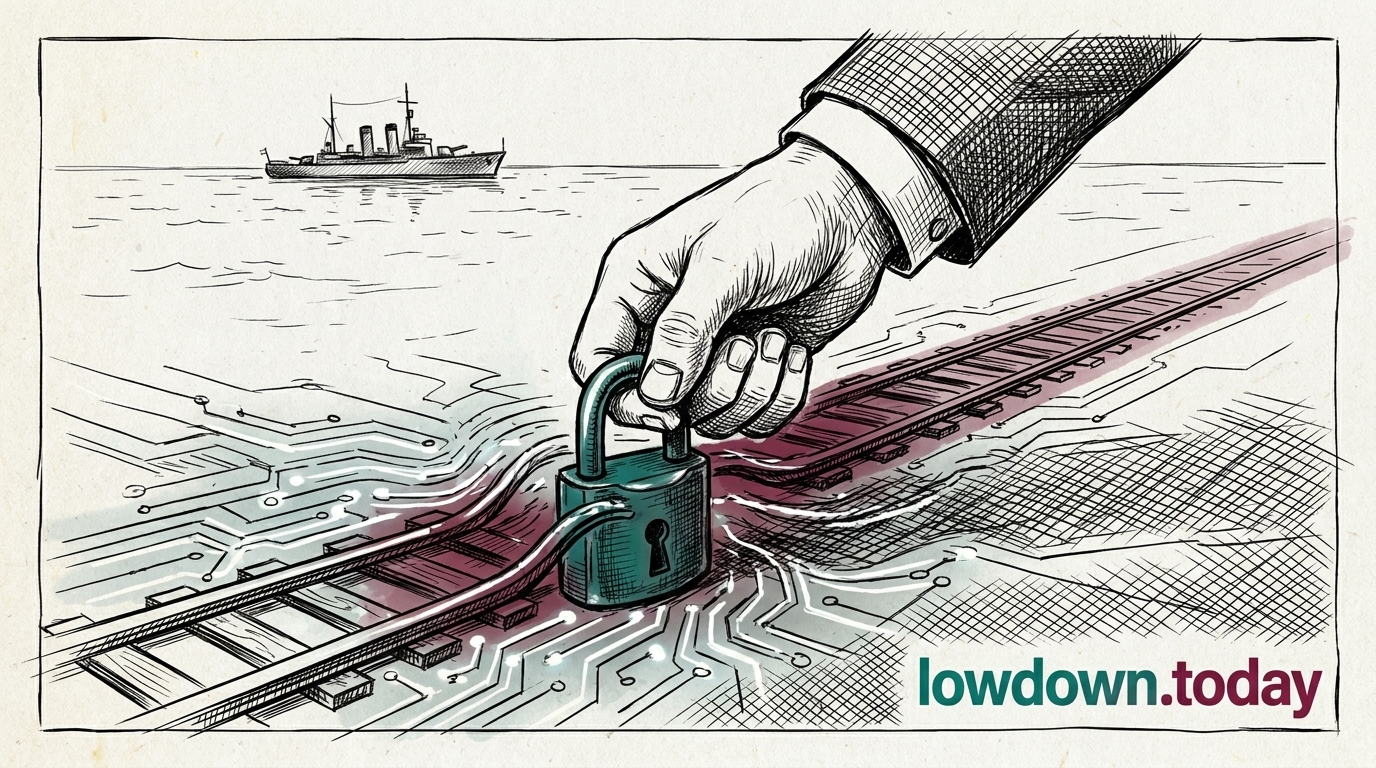
Zelenskyy reopened the Druzhba pipeline on 21 April; within hours Orbán dropped the veto on Kyiv's €90 billion loan. A physical lever now sits outside Brussels's legal architecture.

ConflictDeveloping
Key takeaway

Kyiv fixed the pipe, unlocked the loan, then bombed the Russian end of the same system.

Volodymyr Zelenskyy confirmed the Druzhba pipeline operational on Tuesday 21 April, and oil resumed flowing from Belarus at 11:35 the following morning 1. Within hours, Viktor Orbán dropped the veto Hungary had held on the €90 billion EU loan for Ukraine since February. The European Council approved the loan and its 20th sanctions package on Thursday 23 April. The Druzhba is the Soviet-era crude line, built in 1964, that has fed Central European refineries without interruption through every post-Cold War crisis; a Russian drone strike severed it in January and Kyiv has controlled restoration ever since.

The sequence sits against a second track across 20 to 23 April. SSU Alpha drones struck the Samara crude dispatch station and the Gorky pumping station near Nizhny Novgorod after flow had been restored, and the Tuapse refinery was hit on 20 April. Kyiv put the pipeline back into service for the EU country that had been blocking its own funding, then extended the anti-oil campaign to the Russian end of the same system.

The enforcement geometry has shifted. Hungarian refiners MOL and Slovnaft price Druzhba crude at a discount to Brent-linked seaborne alternatives; a renewed Ukrainian strike on the pipeline would push them onto Adriatic crude at a higher landed cost, and the retail fuel price in Budapest would register it within a fortnight. The sanctions architecture has always assumed commercial enforcement running through European banks and insurers. The Druzhba move adds a physical enforcement layer held by a non-EU state, outside any EU legal framework, with a hand on the valve that Brussels cannot itself apply. The loan arrives with a dependent pipeline, and the disbursement timeline past mid-May now runs on Hungarian cabinet formation rather than a Brussels calendar.


Deep Analysis

In plain English

Ukraine repaired a Soviet-era oil pipeline called Druzhba (meaning 'friendship') that carries Russian crude oil across Ukraine to Hungary and Slovakia. Russia had damaged the pipeline in a drone strike in January, and Hungary's Prime Minister Viktor Orbán used the disruption as an excuse to block Brussels's €90 billion Ukraine aid package. When Ukraine fixed the pipeline and oil started flowing again on 22 April, Orbán dropped his veto within hours. Two days later, the EU approved the loan. In plain terms: Ukraine fixed Russia's oil pipe to get Hungary's vote to fund its own defence.

Deep Analysis
Root Causes

Two structural conditions made the gambit possible. First, Hungary and Slovakia refined Druzhba crude in plants built in the 1960s and 1970s specifically for that feedstock grade; retrofitting for North Sea or Caspian crude requires capital investment neither country has committed.

Hungary's Százhalombatta and Slovakia's Slovnaft refineries were built in the 1960s to accept Druzhba's specific Siberian crude grade; retrofitting for North Sea or Caspian feedstocks requires capital investment that neither government has committed.

Second, the EU's joint borrowing mechanism requires unanimity at the Council level. That design, carried over from the €750 billion post-Covid recovery fund, gave any single member a structural veto. Brussels responded by excluding Hungary, Slovakia, and Czech Republic from the joint borrowing rather than amending the unanimity rule: that approach is a patch rather than a fix, the same mechanism remains available to future blocking states.

What could happen next?
  • Consequence

    Magyar's government must be seated before the first disbursement tranche can flow; the €28.3 billion military component is the most time-critical given Ukraine's documented €19.6 billion 2026 funding gap.

    Short term · 0.85
  • Risk

    Ukraine's Gorky pumping station strike after restoring Druzhba flow signals Kyiv retains the ability to re-weaponise the pipeline; any future deterioration in EU-Ukraine relations could reactivate the leverage in reverse.

    Medium term · 0.65
  • Precedent

    The unanimity veto mechanism in the EU joint borrowing framework survived intact; future blocking states can repeat the gambit, and future Ukraines can repeat the pipeline play. Both playbooks are now documented.

    Long term · 0.8
First Reported In

Update #14 · Kyiv's Druzhba gambit unlocks €90bn loan

Euronews· 24 Apr 2026
Read original
Different Perspectives
Oil markets / Lloyd's of London
Brent fell to near $87.33 on 80 per cent deal-probability pricing, but Lloyd's has not de-listed Hormuz from its war-risk register and shipping diversions continue at 139 vessels. Insurance markets are lagging futures: physical risk remains while financial markets have spent the good news before the paper exists.
India
India
Modi is expected to raise the deaths of three Indian sailors in the 11 June CENTCOM strike on the MT Settebello with Trump at G7 sidelines, the first non-party leader to put the blockade's human cost into a formal bilateral. New Delhi is also a major Iranian oil buyer whose import volumes the sanctions-relief terms will govern.
Israel (Netanyahu)
Israel (Netanyahu)
Netanyahu stated Israel is not party to the deal on 12 June; Defence Minister Katz ruled out the Lebanon withdrawal Iran's draft demands, inserting a third blocker the US-Iran negotiating channel cannot resolve. Israel's position tethers Hormuz reopening to a Lebanon settlement Washington has not brokered.
Pakistan (mediator, Sharif/Naqvi)
Sharif declared a final agreed text on 12 June before either principal confirmed it, running two Tehran visits in under a week without securing a written IRGC or Khamenei response. Islamabad's incentive to claim a diplomatic win outpaces its standing to deliver either capital's signature.
Iran foreign ministry (Araghchi)
Araghchi declared digital signing within days while setting dilute-in-Iran as a non-negotiable red line on the 440.9 kg HEU stockpile, a standing Tehran position he cannot override without authorisation from Khamenei, reachable only by courier. The FM track is sprinting to close before the IRGC reasserts control.
Trump administration / CENTCOM
Vance called the deal still TBD on 12 June while CENTCOM downed Iranian drones over Hormuz for a second consecutive night and the White House register stayed blank. Washington holds the ship-out position on HEU and has not signed an Iran instrument in over 100 days of conflict.



