Skip to content
Briefings are running a touch slower this week while we rebuild the foundations.See roadmap
Iran Conflict 2026
30MAY

House kills War Powers Resolution on Iran

1 min read
10:17UTC

The House narrowly rejected a War Powers Resolution on Iran 219-212 on Saturday; Senate Democrats are forcing their own vote this week as the 60-day clock approaches 29 April.

ConflictDeveloping
Key takeaway

Three deadlines converge in 10 days with zero executive instruments behind them.

The House of Representatives rejected the War Powers Resolution (WPR) on Iran 219-212 on Saturday. Seven votes changed would have passed it. Senate Democrats, led by Mark Warner, announced they are forcing a vote this week. Even if the Senate passes a resolution, Trump would veto, and override requires two-thirds .

The blockade announcement on Sunday, which followed the House vote, adds a new question. A naval blockade is an act of war under international law. Whether it constitutes a fresh introduction of forces into hostilities, requiring separate congressional notification under the WPR, is a live legal question .

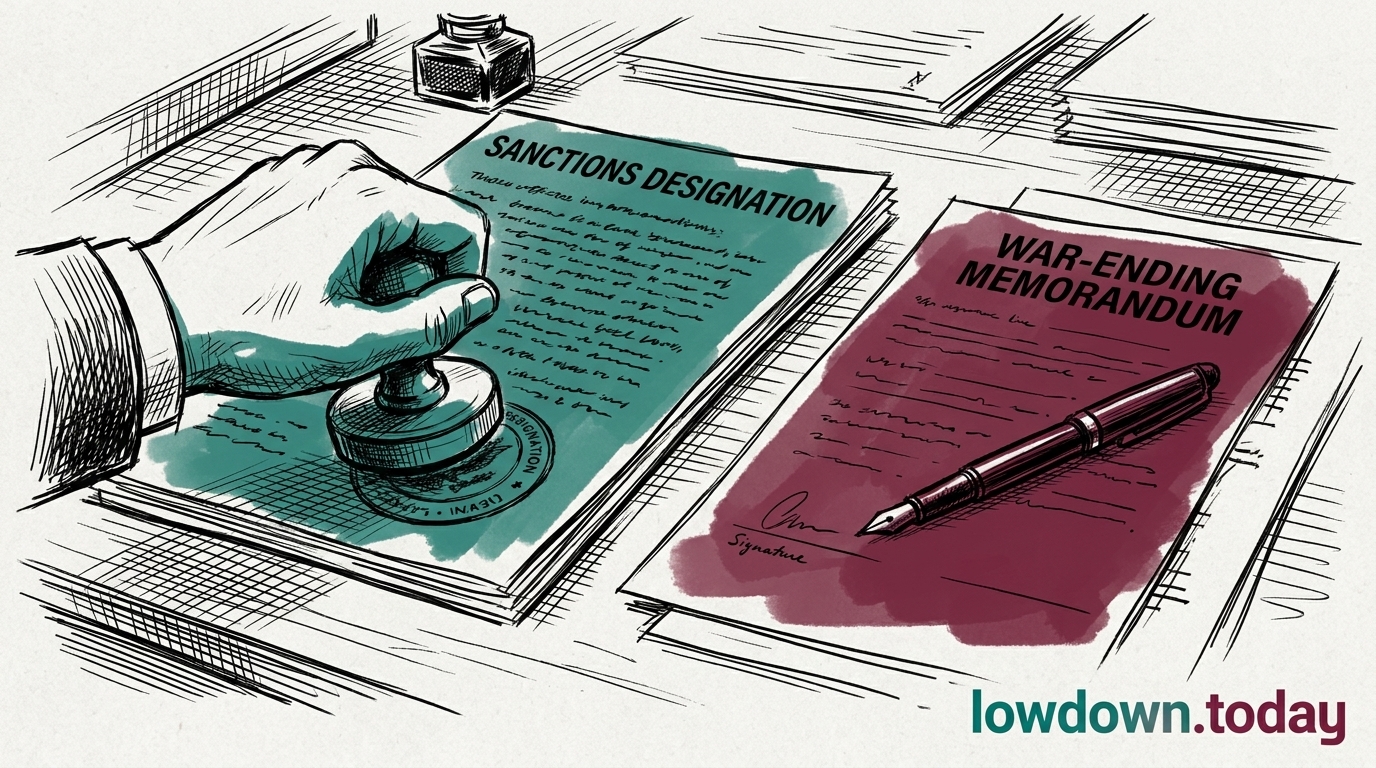
GL-U lapses this Saturday . The ceasefire window closes the following Wednesday. The WPR 60-day clock runs out around 29 April. All three fall within a 10-day window; none has a presidential instrument behind it.

Deep Analysis

In plain English

The War Powers Resolution is a law from 1973 that says the US president must get approval from Congress within 60 days of sending troops into combat, or withdraw them. It was passed after the Vietnam War, when Congress felt it had lost control of military decisions. The 60-day clock on the Iran war started on 28 February when strikes began. That means Congress's deadline to act falls around 29 April. On 12 April, the House of Representatives voted 219-212 to reject a resolution that would have required Trump to end the military action. That is a razor-thin margin: just four votes from passing. Senate Democrats are now forcing their own vote in the upper chamber this week. Even if the Senate passes it, Trump would almost certainly veto it, and overriding a veto requires two-thirds of Congress, which the Democrats do not have. The practical effect is political: Democrats are creating a public record of opposition without enough votes to stop the blockade.

What could happen next?
  • Precedent

    A 219-212 House vote on War Powers Resolution establishes the narrowest majority ever to reject WPR application to an active US combat operation, weakening the precedent for future congressional oversight.

    Long term · Assessed
  • Risk

    The blockade, announced after the House WPR vote, may constitute a new introduction of forces into hostilities, restarting the 48-hour notification clock and creating separate legal exposure.

    Immediate · Medium
  • Consequence

    Three converging deadlines, GL-U expiry 19 April, ceasefire 22 April, WPR clock 29 April, give Congress and allies a compressed window before the legal architecture collapses simultaneously.

    Short term · Assessed
First Reported In

Update #67 · Trump blockades Iran on a tweet

NBC News· 13 Apr 2026
Read original
Different Perspectives
Iran human rights monitors (Amnesty International, Iran HRM, Hengaw)
Monitors documented 30 women held on capital moharebeh charges in a basement prison ward, Benyamin Naqdi's death sentence with a forced-confession broadcast, and 39 political executions since February. Iran's security courts have processed protest cases at uninterrupted wartime tempo regardless of the diplomatic track.
Lloyd's of London (war-risk underwriters)
Lloyd's held its Hormuz war-risk designation at $10-14 million per voyage while Brent fell 19%, maintaining a structural divergence from futures pricing. Underwriters require a UN Security Council resolution or government certification letter, not diplomatic optimism, before de-listing the strait.
Oman (Sultan Haitham's government)
Muscat issued a mine alert in its own territorial waters while denying any Hormuz toll plan after US Treasury threatened sanctions. A suspected mine in Omani waters on the same weekend as US financial pressure forces Muscat to demonstrate sovereignty without appearing to choose sides.
China (PRC)
China (PRC)
Beijing sent scholars rather than its defence minister to Shangri-La for the second year running and addressed Taiwan and multilateralism without mentioning Iran. China maintains its bilateral energy corridor protection with Tehran while refusing the diplomatic exposure of a public position at multilateral forums.
Iran Supreme National Security Council
The SNSC framed the unsigned MOU as a 10-point Iranian victory with enrichment already recognised, and the foreign ministry rejected Trump's nuclear conditions within hours. Tehran treats each unsigned day as validation that Iran has retained its stockpile without surrendering it.
Trump administration (CENTCOM/White House)
Trump posted three non-negotiable public conditions while CENTCOM disabled a commercial ship and Hegseth threatened resumed strikes from Singapore. The administration treats the unsigned MOU as leverage to extract maximum Iranian concessions before any ceasefire instrument is committed to paper.