Skip to content
Briefings are running a touch slower this week while we rebuild the foundations.See roadmap
Iran Conflict 2026
27MAY

$200bn war bill not yet sent to Congress

2 min read
15:33UTC

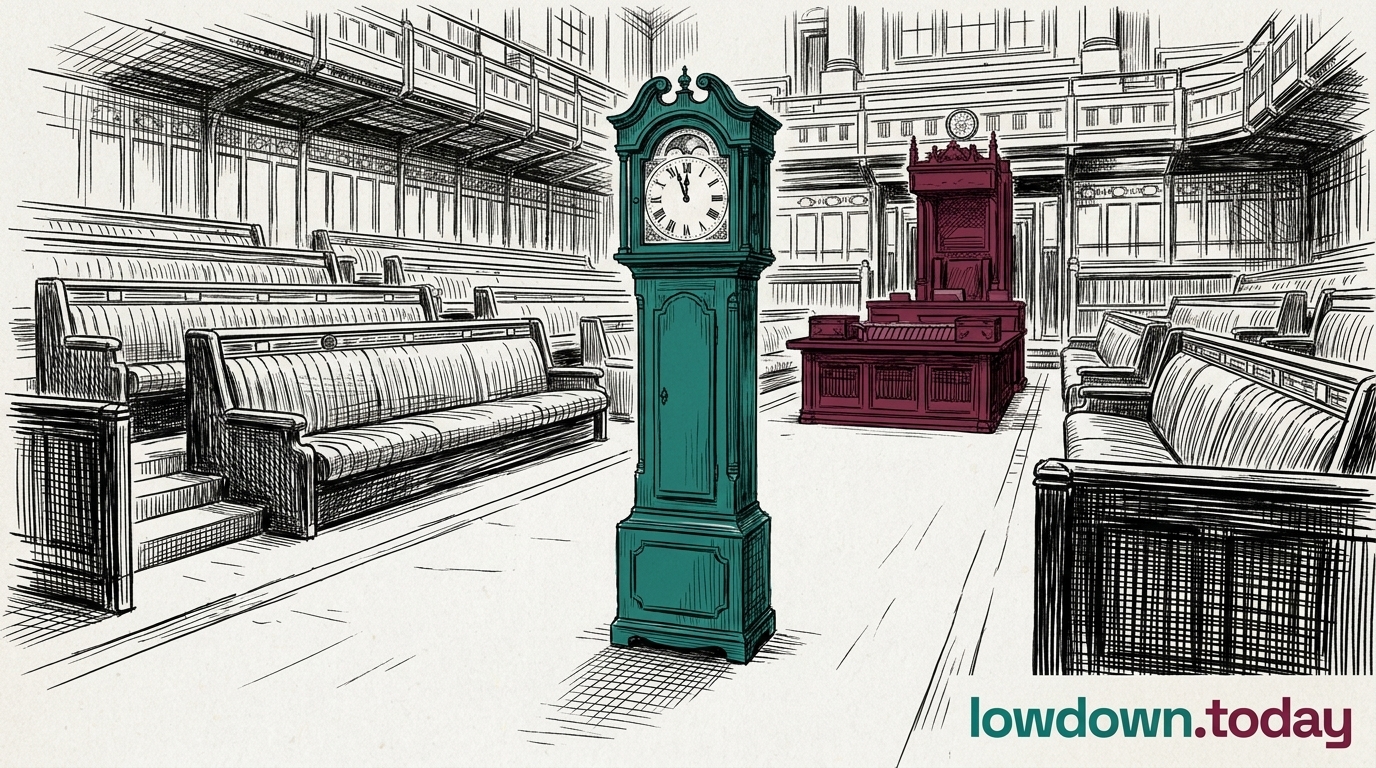
At $800 million per day, the Iran war is burning through money Congress has not authorised and may not approve.

ConflictDeveloping
Key takeaway

Military operations are expanding while Congress refuses to pay for them.

Pentagon officials confirmed on 31 March that their $200 billion Iran war supplemental has not been formally submitted to Congress. 1 Republican leaders told the Washington Post they lack the votes within their own party. The US spent roughly $15 billion in the first 19 days, nearly $800 million per day, more than the entire annual budget of the US Coast Guard.

The funding gap matters operationally. The 82nd Airborne's Devil Brigade is deploying to Kuwait . The USS Tripoli arrived with 3,500 Marines. Three Pentagon sources confirmed planning for "weeks of ground operations" including an amphibious seizure of Kharg Island. All of this requires money Congress has not authorised. Defence Secretary Pete Hegseth confirmed a forthcoming request but said the figure "could move." Heritage Foundation president Kevin Roberts endorsed the Republican resistance.

Deep Analysis

In plain English

The US military has been spending roughly $800 million every day on this war. To keep going, the Pentagon needs Congress to approve a special $200 billion funding package on top of the normal defence budget. That package has not been submitted to Congress yet. Republican leaders, from the president's own party, have said they do not have enough votes to pass it. The Heritage Foundation, a conservative think tank that helped write Trump's policy agenda, is backing the resistance. The practical problem is that the US has already committed ground troops to Kuwait and is planning to seize an Iranian oil island. All of that requires money Congress has not authorised.

What could happen next?
  • Risk

    Without supplemental authorisation, ground force deployments and Kharg Island planning may outpace available funding, creating a legal and operational crisis simultaneously.

    Short term · 0.75
  • Consequence

    Republican resistance from within the president's own party removes the political safety net that a bipartisan supplemental would normally provide.

    Immediate · 0.85
  • Opportunity

    The funding gap creates domestic leverage for a negotiated settlement: if the war cannot be funded at current scale, a deal becomes financially necessary regardless of military preference.

    Short term · 0.7
First Reported In

Update #53 · Trump drops Hormuz goal; toll becomes law

Washington Post· 31 Mar 2026
Read original
Causes and effects
This Event
$200bn war bill not yet sent to Congress
Without the $200 billion supplemental, the military expansion (ground troops, amphibious planning, interceptor replenishment) lacks financial authorisation.
Different Perspectives
Iran human rights monitors (Amnesty International, Iran HRM, Hengaw)
Monitors documented 30 women held on capital moharebeh charges in a basement prison ward, Benyamin Naqdi's death sentence with a forced-confession broadcast, and 39 political executions since February. Iran's security courts have processed protest cases at uninterrupted wartime tempo regardless of the diplomatic track.
Lloyd's of London (war-risk underwriters)
Lloyd's held its Hormuz war-risk designation at $10-14 million per voyage while Brent fell 19%, maintaining a structural divergence from futures pricing. Underwriters require a UN Security Council resolution or government certification letter, not diplomatic optimism, before de-listing the strait.
Oman (Sultan Haitham's government)
Muscat issued a mine alert in its own territorial waters while denying any Hormuz toll plan after US Treasury threatened sanctions. A suspected mine in Omani waters on the same weekend as US financial pressure forces Muscat to demonstrate sovereignty without appearing to choose sides.
China (PRC)
China (PRC)
Beijing sent scholars rather than its defence minister to Shangri-La for the second year running and addressed Taiwan and multilateralism without mentioning Iran. China maintains its bilateral energy corridor protection with Tehran while refusing the diplomatic exposure of a public position at multilateral forums.
Iran Supreme National Security Council
The SNSC framed the unsigned MOU as a 10-point Iranian victory with enrichment already recognised, and the foreign ministry rejected Trump's nuclear conditions within hours. Tehran treats each unsigned day as validation that Iran has retained its stockpile without surrendering it.
Trump administration (CENTCOM/White House)
Trump posted three non-negotiable public conditions while CENTCOM disabled a commercial ship and Hegseth threatened resumed strikes from Singapore. The administration treats the unsigned MOU as leverage to extract maximum Iranian concessions before any ceasefire instrument is committed to paper.