Skip to content
Briefings are running a touch slower this week while we rebuild the foundations.See roadmap
Iran Conflict 2026
21MAY

Kyiv's Druzhba gambit unlocks €90bn loan

3 min read
09:55UTC

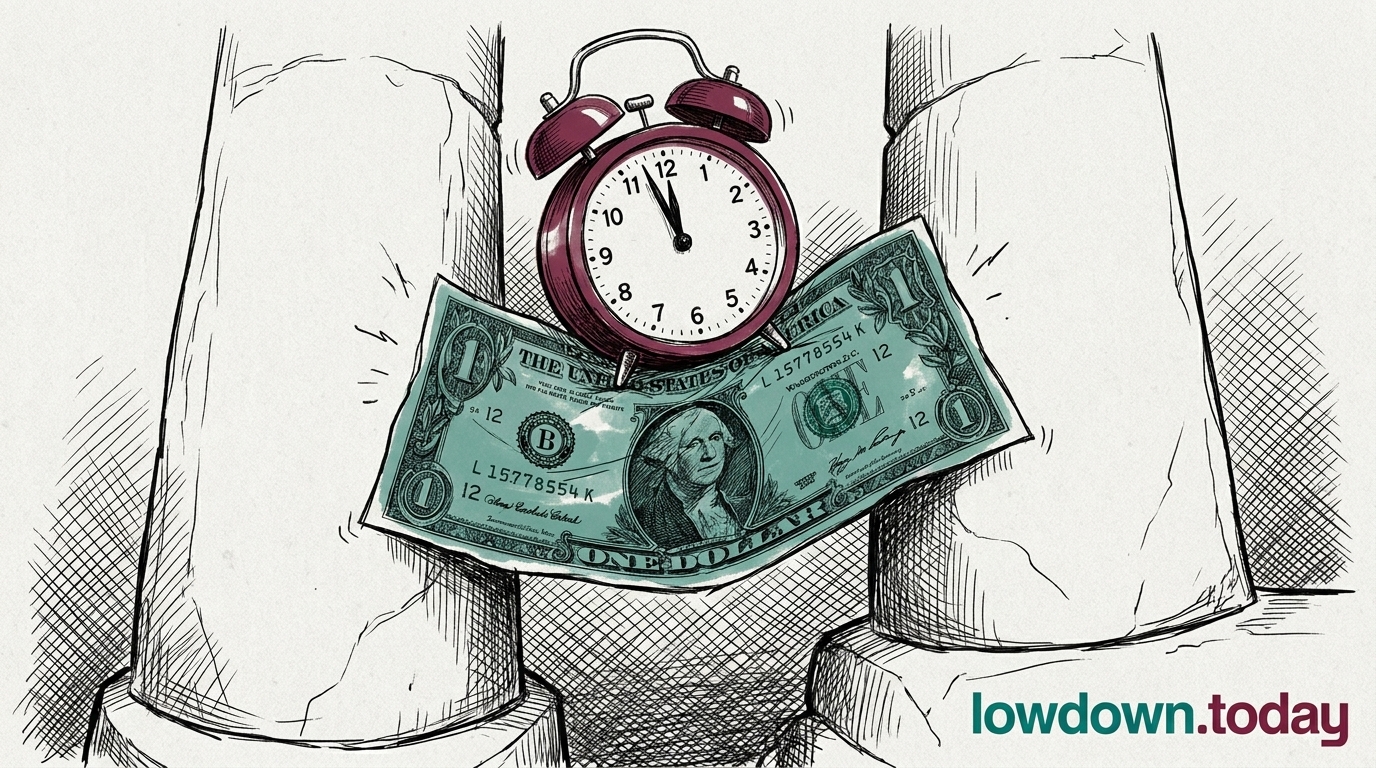
Zelenskyy reopened the Druzhba pipeline on 21 April; within hours Orbán dropped the veto on Kyiv's €90 billion loan. A physical lever now sits outside Brussels's legal architecture.

ConflictDeveloping
Key takeaway

Kyiv fixed the pipe, unlocked the loan, then bombed the Russian end of the same system.

Volodymyr Zelenskyy confirmed the Druzhba pipeline operational on Tuesday 21 April, and oil resumed flowing from Belarus at 11:35 the following morning 1. Within hours, Viktor Orbán dropped the veto Hungary had held on the €90 billion EU loan for Ukraine since February. The European Council approved the loan and its 20th sanctions package on Thursday 23 April. The Druzhba is the Soviet-era crude line, built in 1964, that has fed Central European refineries without interruption through every post-Cold War crisis; a Russian drone strike severed it in January and Kyiv has controlled restoration ever since.

The sequence sits against a second track across 20 to 23 April. SSU Alpha drones struck the Samara crude dispatch station and the Gorky pumping station near Nizhny Novgorod after flow had been restored, and the Tuapse refinery was hit on 20 April. Kyiv put the pipeline back into service for the EU country that had been blocking its own funding, then extended the anti-oil campaign to the Russian end of the same system.

The enforcement geometry has shifted. Hungarian refiners MOL and Slovnaft price Druzhba crude at a discount to Brent-linked seaborne alternatives; a renewed Ukrainian strike on the pipeline would push them onto Adriatic crude at a higher landed cost, and the retail fuel price in Budapest would register it within a fortnight. The sanctions architecture has always assumed commercial enforcement running through European banks and insurers. The Druzhba move adds a physical enforcement layer held by a non-EU state, outside any EU legal framework, with a hand on the valve that Brussels cannot itself apply. The loan arrives with a dependent pipeline, and the disbursement timeline past mid-May now runs on Hungarian cabinet formation rather than a Brussels calendar.


Deep Analysis

In plain English

Ukraine repaired a Soviet-era oil pipeline called Druzhba (meaning 'friendship') that carries Russian crude oil across Ukraine to Hungary and Slovakia. Russia had damaged the pipeline in a drone strike in January, and Hungary's Prime Minister Viktor Orbán used the disruption as an excuse to block Brussels's €90 billion Ukraine aid package. When Ukraine fixed the pipeline and oil started flowing again on 22 April, Orbán dropped his veto within hours. Two days later, the EU approved the loan. In plain terms: Ukraine fixed Russia's oil pipe to get Hungary's vote to fund its own defence.

Deep Analysis
Root Causes

Two structural conditions made the gambit possible. First, Hungary and Slovakia refined Druzhba crude in plants built in the 1960s and 1970s specifically for that feedstock grade; retrofitting for North Sea or Caspian crude requires capital investment neither country has committed.

Hungary's Százhalombatta and Slovakia's Slovnaft refineries were built in the 1960s to accept Druzhba's specific Siberian crude grade; retrofitting for North Sea or Caspian feedstocks requires capital investment that neither government has committed.

Second, the EU's joint borrowing mechanism requires unanimity at the Council level. That design, carried over from the €750 billion post-Covid recovery fund, gave any single member a structural veto. Brussels responded by excluding Hungary, Slovakia, and Czech Republic from the joint borrowing rather than amending the unanimity rule: that approach is a patch rather than a fix, the same mechanism remains available to future blocking states.

What could happen next?
  • Consequence

    Magyar's government must be seated before the first disbursement tranche can flow; the €28.3 billion military component is the most time-critical given Ukraine's documented €19.6 billion 2026 funding gap.

    Short term · 0.85
  • Risk

    Ukraine's Gorky pumping station strike after restoring Druzhba flow signals Kyiv retains the ability to re-weaponise the pipeline; any future deterioration in EU-Ukraine relations could reactivate the leverage in reverse.

    Medium term · 0.65
  • Precedent

    The unanimity veto mechanism in the EU joint borrowing framework survived intact; future blocking states can repeat the gambit, and future Ukraines can repeat the pipeline play. Both playbooks are now documented.

    Long term · 0.8
First Reported In

Update #14 · Kyiv's Druzhba gambit unlocks €90bn loan

Euronews· 24 Apr 2026
Read original
Different Perspectives
Turkey (Shakarab consideration)
Ankara serves as one of two Western-adjacent Iran back-channels while Turkish national Gholamreza Khani Shakarab faces imminent execution on espionage charges in Iran. President Erdogan cannot deflect the domestic political crisis that a Turkish execution would trigger, which would force suspension of the mediating role.
Germany (Bundestag gap)
Belgium, Germany, Australia, and France committed Hormuz coalition hardware on 18 May. Germany's Bundestag authorisation for the coalition deployment remains pending, creating a constitutional gap between the commitment announced and the parliamentary mandate required to operationalise it.
IEA and oil market analysts
The IEA's $106 May Brent projection met the market in one session on 20 May as Brent fell 5.16% on diplomatic optimism. Goldman Sachs and Morgan Stanley's two-layer premium framework holds: the kinetic component compressed; the structural insurance component tied to Lloyd's ROE remains unresolved.
Hengaw
Hengaw
Documented the dual Kurdish execution at Naqadeh on 21 May, the two Iraqi-national espionage executions on 20 May, and Gholamreza Khani Shakarab's imminent execution risk. The 24-hour cluster covers two executions at one facility, the first foreign-national espionage executions, and a Turkish national whose death would suspend Ankara's mediation.
Lloyd's of London
Lloyd's of London
Hull rates stand at 110-125% of vessel value on the secondary market; the Joint War Committee has conditioned cover reopening on written ROE from the coalition or PGSA. The Majlis rial bill makes any compliant ROE structurally impossible to draft while the PGSA's yuan portal remains its operational mechanism.
United Kingdom and France (Northwood coalition)
The 26-nation coalition paper requires Lloyd's to see written rules of engagement before Hormuz war-risk cover reopens. The Majlis rial bill adds a second governance incompatibility on top of the unpublished PGSA fee schedule; coalition ROE cannot mention rial without conceding Iranian sovereignty over the strait.



