Skip to content
You can now search across every topic, entity and event.What's new
European Tech Sovereignty
27MAY

Cuba carve-out strands nine SDN cargoes

2 min read
15:19UTC

OFAC added nine Cuban officials to the SDN list on 18 May, one based in Cienfuegos, while GL 134C paragraph (b)(1) excludes Cuba outright, creating a cargo class that loses its waiver on a single Cuban touch.

TechnologyDeveloping
Key takeaway

A single Cuban counterparty voids GL 134C cover for the whole cargo, not a fraction of it.

OFAC added nine Cuban officials to the SDN list on Monday 18 May, the same action that issued GL 134C, with one of the nine based in Cienfuegos, the south-central Cuban port that hosts the island's primary refinery 1. Paragraph (b)(1) of the licence excludes Cuba outright, carrying forward the carve-out that already stood when GL 134B lapsed on 16 May .

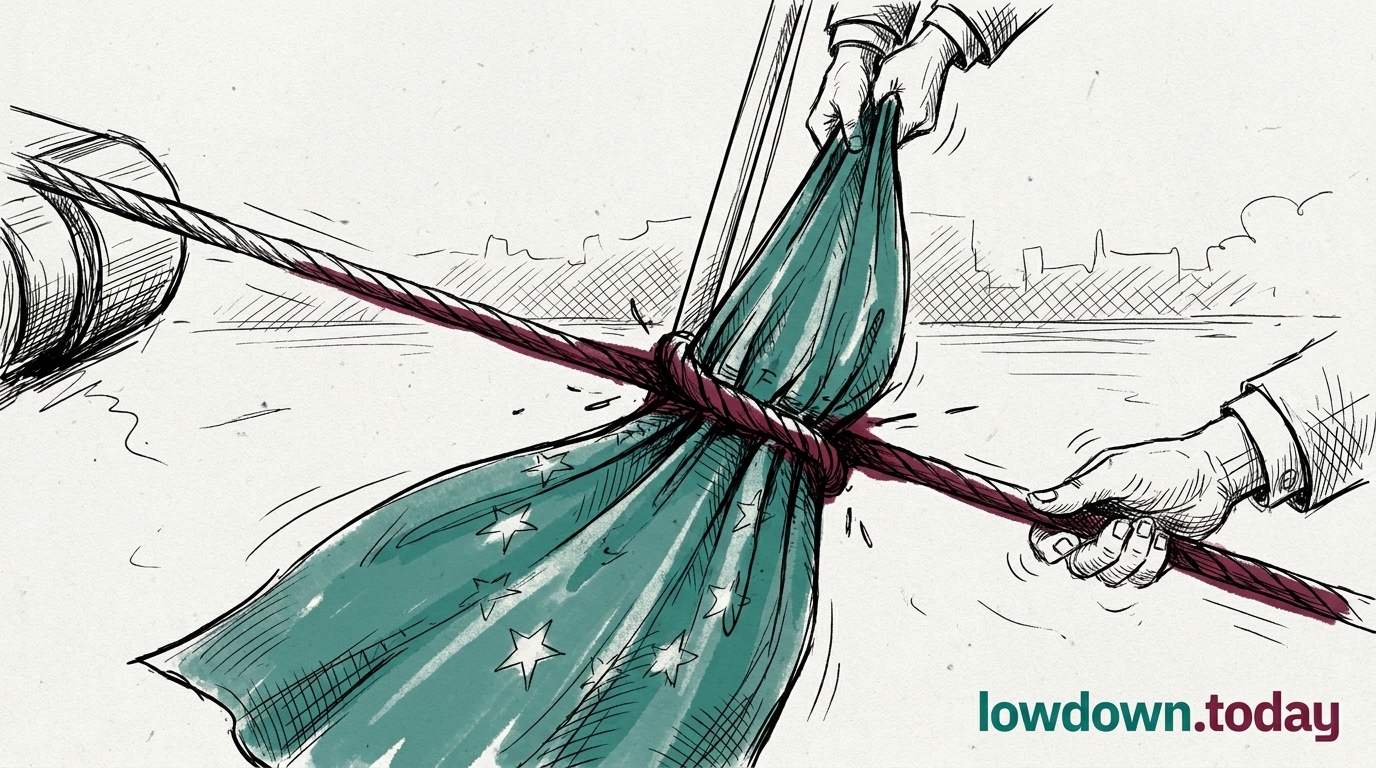
In practice that creates a Cuba-tainted cargo class. Any pre-17-April Russian barrel that touched a Cuban intermediary between loading and delivery loses 134C cover entirely. A trader who priced a Primorsk loading as fully covered now has to re-screen the whole voyage chain, because one Cuban counterparty voids the waiver for the entire cargo, not a fraction of it.

There is no pro-rata haircut to hedge against a Cuban touch: a cargo is either clean or it is uninsurable under the licence, so the diligence burden sits on proving a negative across every ship-to-ship transfer and every chartering counterparty. The sanctions policy belongs to the Russia file; the cargo-classification cost it triggers lands squarely on the desks completing those cargoes.

Deep Analysis

In plain English

Cuba is completely left out of the GL 134C permit ; any Russian oil that passed through Cuban waters, a Cuban-linked ship, or a Cuban company loses its legal protection entirely. On the same day GL 134C was signed, US authorities added nine Cuban officials to a blacklist that prohibits anyone from doing business with them. One of those officials is based in Cienfuegos, the Cuban city where Cuba's main oil refinery sits. In practical terms, this means traders need to trace the full journey of every Russian oil cargo back to its loading port to check for any Cuban connection ; a small Cuban link anywhere in the chain voids the protection for the whole shipment.

Deep Analysis
Root Causes

Cuba's carve-out reflects a US domestic political calculus that predates the Russia sanctions: the Helms-Burton Act (codified 1996) and CAATSA (2017) both embed Cuba within the same executive order architecture as Iran and Russia.

The OFAC action on 18 May was administratively combining a Russia-sanctions waiver with a Cuba-sanctions enforcement action under a shared regulatory filing, signalling Treasury treating all three programmes as a unified adversarial-nations supply-chain enforcement mandate.

The Cienfuegos designation's timing alongside GL 134C suggests Treasury has evidence of specific Russian-Cuban crude routing activity at the Cienfuegos facility ; not a coincidental pairing of unrelated enforcement actions.

First Reported In

Update #2 · GL 134C reverses the cliff, Brent -$14

OFAC· 26 May 2026
Read original
Causes and effects
This Event
Cuba carve-out strands nine SDN cargoes
One Cuban counterparty voids GL 134C cover for the whole cargo, forcing traders to re-screen voyage chains they had priced as clean.
Different Perspectives
Trump administration
Washington defends the MATCH Act as closing a loophole that lets ASML's DUV tools reach Chinese fabs indirectly, dismissing the Dutch Cabinet's June complaint of being treated with disregard. Officials expect the bill's progress through Congress to keep the DUV cross-subsidy question live regardless of ASML's Q2 numbers.
Bruegel
Bruegel
Brussels-based economists argue this week's deliverables, specialist fab aid and a digital euro that restricts no US firm, prove Europe's sovereignty agenda advances only where it meets no American resistance. They expect the leading-edge fabrication gap and dependence on US frontier AI models to persist absent a policy that directly confronts a named US interest.
German federal government
Berlin welcomes the €659m tranche funding jobs across North Rhine-Westphalia, Schleswig-Holstein, Hesse and Bavaria, on top of the ESMC Dresden fab already under construction on TSMC-shipped tooling. Officials treat power and analogue capacity as the achievable near-term win while Dresden remains Germany's only bet on leading-edge logic.
House of Commons Science, Innovation and Technology Committee
The committee's 7 July report found the UK has "no coherent strategic framework" for sovereign technology and warns it "risks being cut off at whim", citing the June order that barred foreign access to Anthropic's Fable 5 and Mythos 5 as the trigger case. It expects no domestic hyperscaler or foundry response before the gap widens further.
European Commission
European Commission
The Commission cleared €659m in German state aid on 14 July, taking cumulative Chips Act support to roughly €14.2bn, and let the digital-euro mandate reach trilogue after ECON's floor-vote shortcut was overturned. Brussels presents both as sovereignty delivered, without addressing that neither funds leading-edge logic fabrication.
ASML
ASML
ASML raised FY2026 guidance to €43-45bn on 15 July and, for the first time since Q1, dropped the export-control hedge from its release even with the MATCH Act live in Congress. Fouquet frames the order book, 86 systems against 67 in Q1, as strong enough to outrun the DUV dispute rather than evidence it has cooled.
