Skip to content
Briefings are running a touch slower this week while we rebuild the foundations.See roadmap
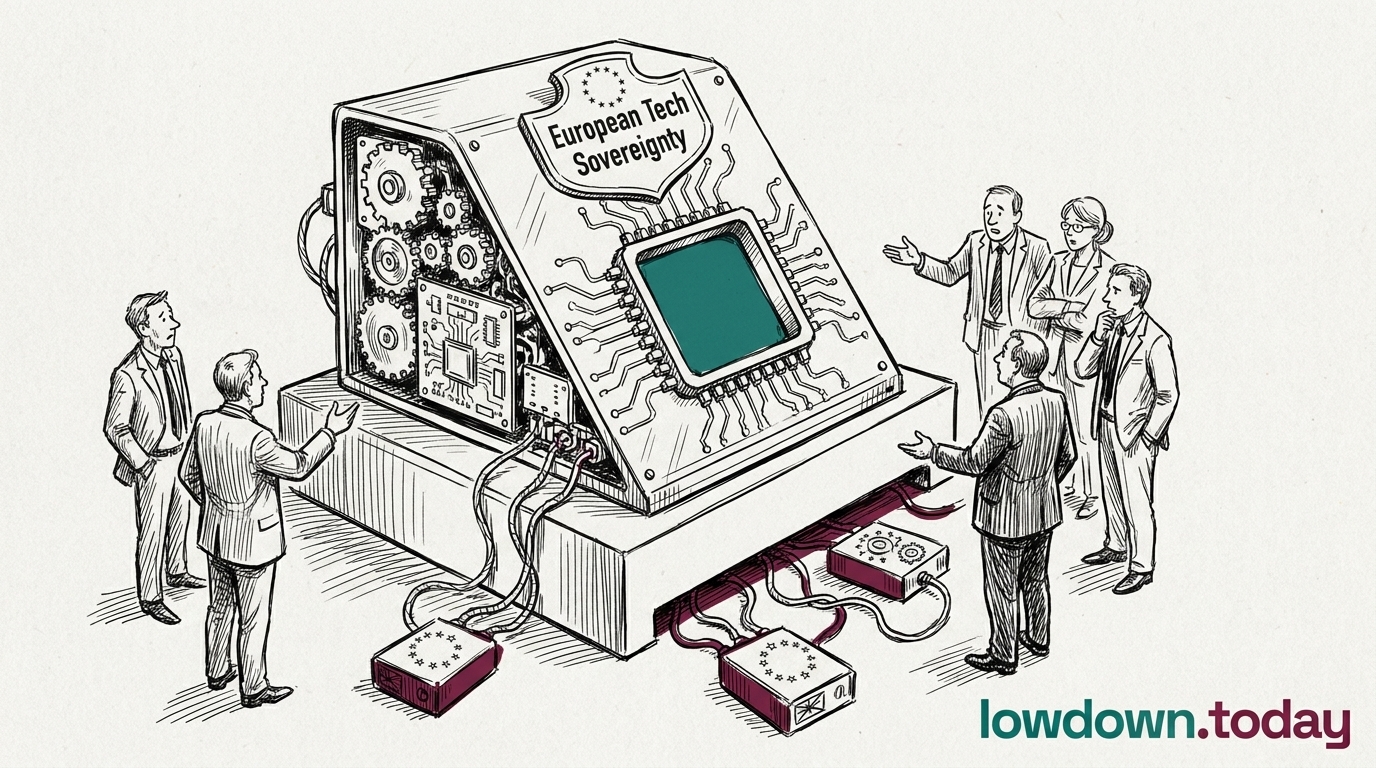
European Tech Sovereignty
23APR

Japan takes a "beyond Europe" keynote slot in Brussels

2 min read
09:21UTC

Takashi Hamada, Deputy-Chief of Mission at the Mission of Japan to the EU, delivers the "View from Beyond Europe" keynote at Sovereign Tech Europe on 23 April, signalling alignment between Tokyo's Economic Security Promotion Act and the Commission's proposed Cloud and AI Development Act.

TechnologyDeveloping
Key takeaway

Europe's sovereignty summit gives its external voice to allied diplomats, not frontier-model firms.

Takashi Hamada addresses Sovereign Tech Europe as Deputy-Chief of Mission at Tokyo's EU diplomatic office, delivering a non-European perspective keynote. Japan's Economic Security Promotion Act and Brussels' proposed industrial legislation on cloud and AI cover structurally similar ground on critical technology, supply-chain resilience and data governance. Hamada's address reads as a signal of coordinated framing between Tokyo and Brussels rather than as a specific policy announcement.

The selection matters more for who was not at the rostrum than for what Hamada said. UK Ambassador Lindsay Croisdale-Appleby takes the companion slot on relations across the Channel, confirming that Brussels staffs its external-perspective panels with allied diplomats. European frontier-model companies whose absence from the summit agenda and from the DSIT cohort define the conference do not have a counterpart slot.

Deep Analysis

In plain English

Japan sends a senior diplomat to a Brussels conference about European technology sovereignty. Tokyo and Brussels share a common interest in reducing dependence on US technology infrastructure and on Chinese supply chains, particularly in semiconductors and cloud computing. Japan's Economic Security Promotion Act of 2022 requires Japanese companies in critical sectors to maintain domestic supply chains for key technologies. Brussels has enacted its own Chips Act and is proposing a Cloud and AI Development Act covering parallel ground. Comparing notes at a Brussels summit is a low-friction way to coordinate before either side commits to a formal treaty negotiation.

First Reported In

Update #3 · Sovereignty summit, minus the sovereigns

Forum Europe· 23 Apr 2026
Read original
Different Perspectives
OpenForum Europe / EUI-Fraunhofer consortium
The consortium (OpenForum Europe, European University Institute, Fraunhofer ISI) is lobbying for a €350m EU Sovereign Tech Fund modelled on Germany's existing sovereign tech fund; Michal Kobosko MEP hosted a Parliament breakfast for it on 28 January 2026. No commissioner has named it as a priority and no host institution has been designated.
Chi Onwurah MP / UK SIT Committee
Onwurah wrote to DSIT minister Narayan that his sovereignty letter "fails to set out a coherent strategy for achieving technology sovereignty". Narayan cited the £500m Sovereign AI Unit and a proposed advanced market commitment for AI hardware; Onwurah's challenge signals that Parliament will press DSIT to move beyond an infrastructure-only first cohort.
US Trade Representative (USTR)
USTR confirmed 24 July as the final determination date for its Section 301 investigation into EU digital rules; public hearings began in May. A USTR tariff threat published before the 27 July DMA Google ruling places direct political pressure on DG COMP to moderate its first cloud-AI enforcement decision.
ASML (Christophe Fouquet)
Fouquet told analysts that ASML's 2026 guidance already "accommodates potential outcomes of ongoing discussions around export controls", after China fell to 19% of system sales in Q1 2026 from 36%. ASML co-signed the CEO deregulation letter; the MATCH Act would remove its remaining DUV China revenue.
Mistral AI / seven European CEOs
Arthur Mensch co-signed a 5 May joint op-ed in Handelsblatt and Corriere della Sera after meeting von der Leyen, calling for simplified AI rules and looser merger control. Mistral's signature is the politically significant one: it is the company Brussels most often cites as evidence that European AI sovereignty is viable.
Schwarz Group / StackIT
Schwarz Group anchored the Cohere-Aleph Alpha merger with $600m and already holds StackIT at SEAL-3 in the Commission's €180m framework. Chief Digital Officer Karsten Wildberger called Berlin's backing of the deal "a very strong signal"; Berlin attached conditions that development services remain in Germany and infrastructure deployment remain sovereign.
