Skip to content
You can now search across every topic, entity and event.What's new
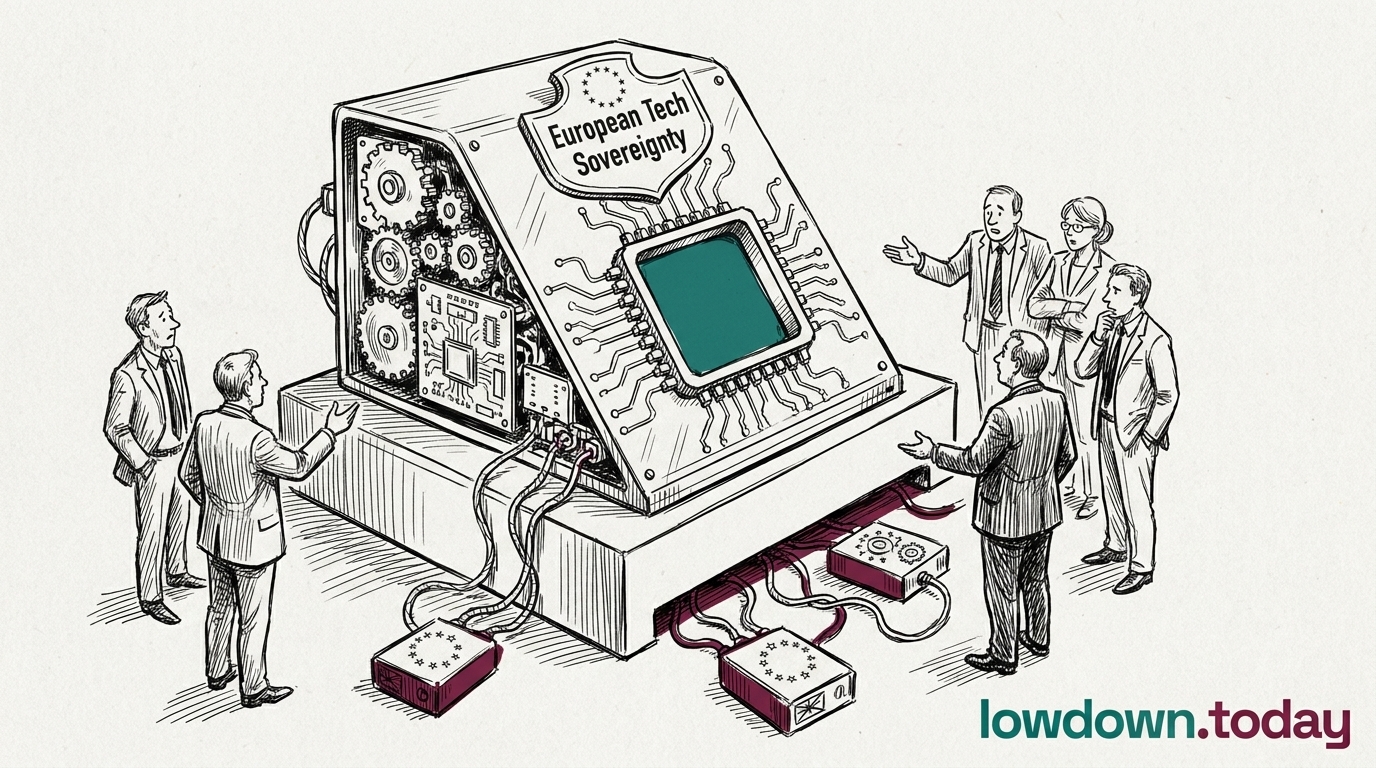
European Tech Sovereignty
23APR

Istanbul Round 2: prisoners, no truce

2 min read
09:21UTC

Russia and Ukraine met for a second time at Istanbul's Ciragan Palace on 2 June and agreed to exchange up to 1,200 prisoners per side, including journalists and political prisoners; Russia pledged to return 6,000 bodies. Ukraine's proposed 30-day ceasefire was rejected; a third round was set for 20-30 June.

TechnologyDeveloping
Key takeaway

Istanbul's second round delivered prisoners but confirmed the ceasefire gap is structural, not procedural.

Russia and Ukraine met at Istanbul's Ciragan Palace on 2 June for a second round of direct talks lasting just over an hour, with near-identical delegations, venue and mediator to Round 1. Rustem Umerov again led Kyiv's 14-member delegation; Vladimir Medinsky again led Russia's. The consistency points to institutionalisation, not improvisation.

The prisoner mechanism works because it sidesteps the territorial geometry that blocks everything else. Both sides can exchange up to 1,200 prisoners each without conceding the other's claim to contested land. The pledge to return 6,000 bodies of fallen Ukrainian service members is not a tactical concession, but it carries domestic political weight in Ukraine.

Ukraine demands all-domain cessation because partial truces historically aid Russian force reconstitution. Russia offers localised pauses, specifically because a full ceasefire at the current front line would freeze its worst territorial position since August 2024. Neither side can move without changing territorial red lines.

Ukraine's submitted peace memorandum, covering EU membership, international guarantees, phased sanctions relief and frozen-asset reparations, is Kyiv's formal opening position. Russia tabled no comparable document. That asymmetry, paper submitted versus paper withheld, will define Round 3's agenda. Round 2 builds directly on the Istanbul Round 1 framework .

Deep Analysis

In plain English

Russia and Ukraine held a second round of direct talks in Istanbul on 2 June, at the same venue and with the same lead negotiators as the first round in May. They agreed to swap more prisoners, up to 1,200 per side this time, and Russia agreed to return the bodies of up to 6,000 fallen Ukrainian soldiers. But they could not agree to stop fighting. Ukraine wanted a full 30-day pause across all military domains. Russia offered only a 2-3 day partial pause in specific areas, which Ukraine rejected. A third round of talks was proposed for 20-30 June. The prisoner swaps are achievable because they do not require either side to give up territorial claims. A ceasefire cannot happen for the same reason: whichever side accepts a front-line freeze would be locking in what it considers an unacceptable loss.

Deep Analysis
Root Causes

The ceasefire gap at Istanbul Round 2 is structural, not procedural. Russia's minimum position requires Ukraine to withdraw from all four annexed regions as a ceasefire precondition; Ukraine's maximum position is a 30-day all-domain halt that freezes the front line at its current coordinates. Those two positions are not adjacent: no procedural compromise can bridge them because they represent incompatible territorial baselines.

The prisoner mechanism succeeds precisely because it does not touch territorial geometry. Both sides hold prisoners the other side wants; exchanging them requires only logistics, not a change in strategic position. Russia agreed to return 6,000 bodies for the same reason: humanitarian concessions carry domestic political weight in Ukraine without conceding anything Moscow values.

What could happen next?
  • Precedent

    Including journalists and political prisoners in the exchange sets a template that could extend future mechanisms beyond military personnel.

  • Risk

    Turkey's mediator consolidation reduces US leverage in any future re-engagement with the peace process.

First Reported In

Update #18 · Oreshnik doubles as Russia's front collapses

PBS NewsHour· 1 Jun 2026
Read original
Causes and effects
This Event
Istanbul Round 2: prisoners, no truce
The Istanbul channel has institutionalised as the war's sole diplomatic format, but its ceiling is visible: prisoner exchanges are achievable precisely because they require no territorial concession, while a ceasefire remains structurally blocked.
Different Perspectives
Trump administration
Washington defends the MATCH Act as closing a loophole that lets ASML's DUV tools reach Chinese fabs indirectly, dismissing the Dutch Cabinet's June complaint of being treated with disregard. Officials expect the bill's progress through Congress to keep the DUV cross-subsidy question live regardless of ASML's Q2 numbers.
Bruegel
Bruegel
Brussels-based economists argue this week's deliverables, specialist fab aid and a digital euro that restricts no US firm, prove Europe's sovereignty agenda advances only where it meets no American resistance. They expect the leading-edge fabrication gap and dependence on US frontier AI models to persist absent a policy that directly confronts a named US interest.
German federal government
Berlin welcomes the €659m tranche funding jobs across North Rhine-Westphalia, Schleswig-Holstein, Hesse and Bavaria, on top of the ESMC Dresden fab already under construction on TSMC-shipped tooling. Officials treat power and analogue capacity as the achievable near-term win while Dresden remains Germany's only bet on leading-edge logic.
House of Commons Science, Innovation and Technology Committee
The committee's 7 July report found the UK has "no coherent strategic framework" for sovereign technology and warns it "risks being cut off at whim", citing the June order that barred foreign access to Anthropic's Fable 5 and Mythos 5 as the trigger case. It expects no domestic hyperscaler or foundry response before the gap widens further.
European Commission
European Commission
The Commission cleared €659m in German state aid on 14 July, taking cumulative Chips Act support to roughly €14.2bn, and let the digital-euro mandate reach trilogue after ECON's floor-vote shortcut was overturned. Brussels presents both as sovereignty delivered, without addressing that neither funds leading-edge logic fabrication.
ASML
ASML
ASML raised FY2026 guidance to €43-45bn on 15 July and, for the first time since Q1, dropped the export-control hedge from its release even with the MATCH Act live in Congress. Fouquet frames the order book, 86 systems against 67 in Q1, as strong enough to outrun the DUV dispute rather than evidence it has cooled.
