Skip to content
You can now search across every topic, entity and event.What's new
European Tech Sovereignty
8SEP

OFAC blocks 28 tankers and Bank Markazi

2 min read
15:06UTC

OFAC blocked roughly 28 vessels and Bank Markazi on 14 July, issuing General Licence Z two days before the Iranian-oil window shuts.

TechnologyAssessed
Key takeaway

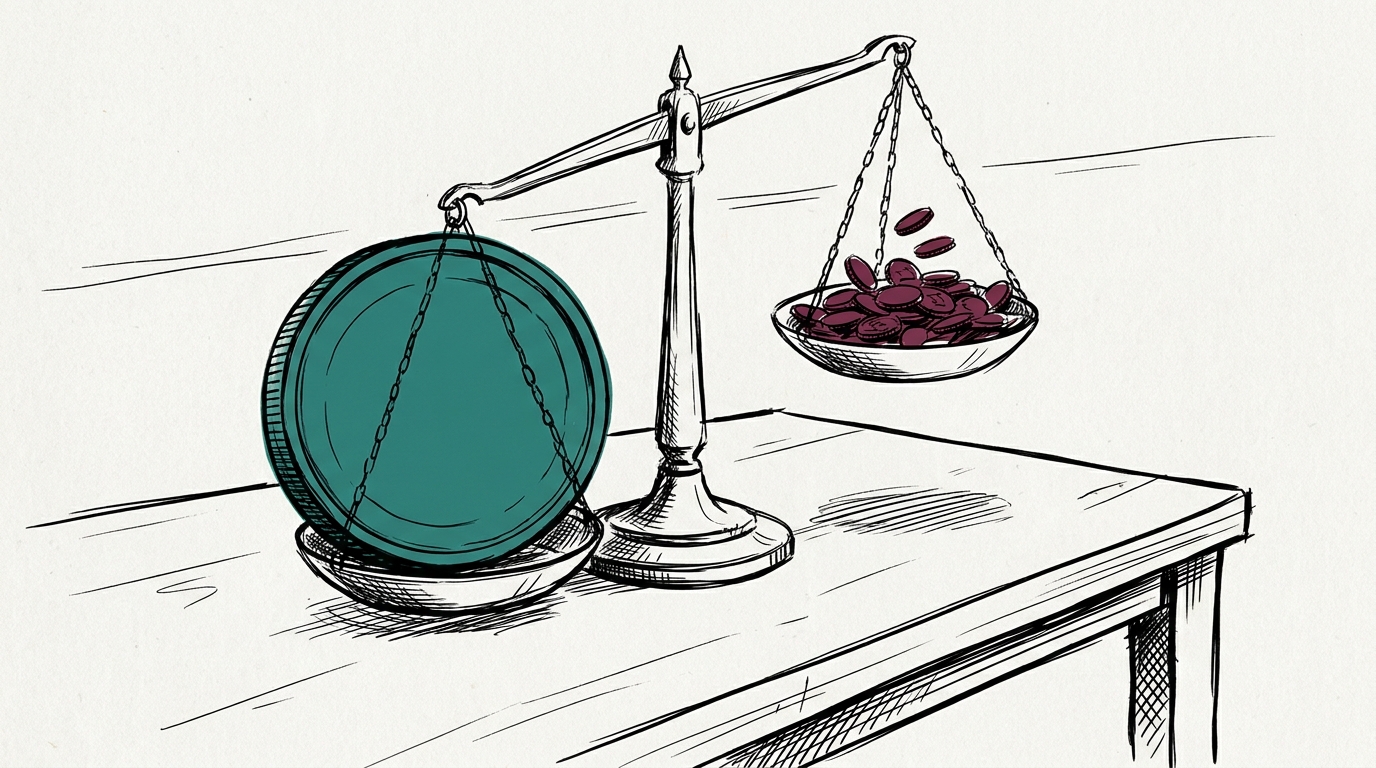
OFAC thinned the compliant tanker pool two days before the 17 July Iranian-oil wind-down cliff.

OFAC blocked roughly 28 vessels on 14 July, among them the Panama-flagged VIRENT and TANJONG PAGAR 1, plus Bank Markazi (the Central Bank of Iran), and issued General Licence Z (GL Z) alongside for wind-down and cargo offloading by the newly blocked persons 1. OFAC, the US Treasury's Office of Foreign Assets Control, maintains the Specially Designated Nationals (SDN) list that walls sanctioned hulls out of compliant charter.

The round landed two days before General Licence X1 (GL X1), the wind-down-only successor to GL X , closes the legal window on Iranian crude on 17 July. Treat GL Z as a grace-period licence for the 14 July blocks alone, separate from the broader GL X1 Iranian-oil wind-down; reading GL Z as blanket Iranian-oil relief overstates what it actually covers.

Thinning the tradeable tanker population two days before that cliff tightens the freight math for anyone still lifting sanctioned crude, the differential this desk owns while Iran-conflict-2026 carries the strike geopolitics. Each hull added to the SDN list is one more vessel priced out of compliant charter, pushing volume onto the shadow fleet, which then charges the risk back as a premium on delivered cost.


Deep Analysis

In plain English

The US Treasury's sanctions arm, OFAC, added roughly 28 ships and Iran's central bank Bank Markazi to its blacklist on 14 July. Banks and companies that keep dealing with a blacklisted entity risk US fines or losing access to the dollar banking system, so most comply immediately. Because some of those ships were carrying cargo or under contract before the blacklisting, OFAC also issued a temporary licence letting people wind down those existing deals and offload cargo without breaking the rules. It is a grace period for finishing old business, not permission to start new business with the blacklisted ships.

Deep Analysis
Root Causes

OFAC's wind-down licence is a legal necessity, not leniency: immediate blocking without a carve-out would strand US persons and correspondent banks holding pre-existing legitimate contracts with the newly designated vessels and Bank Markazi, exposing them to liability for transactions agreed before the designation took effect.

The two-day gap between the 14 July blocks and General License X1's 17 July Iranian-oil cliff is a coincidence of two separate legal authorities, the Russia and shadow-fleet sanctions programme and the Iran sanctions programme, running on independent clocks that happen to converge in the same week, creating compliance whiplash for any trader exposed to both.

What could happen next?
  • Consequence

    Vessels named in the 14 July batch may re-flag under new ownership once the wind-down window closes, a pattern seen in prior sanctions waves

First Reported In

Update #17 · EU freezes the cap a week; Brent-WTI gaps to $5.13

OFAC / US Treasury· 16 Jul 2026
Read original
Causes and effects
This Event
OFAC blocks 28 tankers and Bank Markazi
Fewer compliant hulls before the GL X1 cliff raises the freight cost of moving sanctioned barrels.
Different Perspectives
Poland
Poland
Poland leads a self-announced AI Gigafactory consortium with a EUR 100 million phase-one commitment, matched by Czechia and joined by Hungary at EUR 25 million. EuroHPC has confirmed no consortium for the call closing 12 November, so the bloc exists only in national announcements so far.
UK Government (DCMS)
Secretary of State Lisa Nandy told the Commons on 3 September she has inherited the sovereign AI brief from Liz Kendall, but gave no assessment, figure or date on frontier-model access. It is the first public claim of ownership since DSIT's abolition, without the substance the committee asked for.
ASML
ASML
ASML CEO Christophe Fouquet credited Intel Foundry, not a European fab, with shipping the first high-volume logic product made on High-NA EUV, the tool only ASML builds. Europe holds the chokepoint tool; the company that spent it into volume production first is American.
Luxembourg
Luxembourg
Luxembourg joined Mistral's Series D as a new investor on 8 September, the same government that co-funds EuroHPC's MeluXina-AI supercomputer. One small member state now funds the sovereign compute Mistral may need and holds equity in the company using it.
Samsung Electronics
Samsung Electronics
Samsung led Mistral's Series D on 8 September and the same day expanded its ASML collaboration on next-generation lithography. One Korean company now sits atop Europe's largest AI funding round and inside its most sensitive chip-tooling relationship.
Mistral AI
Mistral AI
Mistral closed a EUR 3 billion Series D above a EUR 21 billion valuation on 8 September, with Samsung leading and Luxembourg joining as a new state investor. The company markets itself as Europe's non-American AI option even as the round's lead capital comes from South Korea and two US private-equity firms.