Skip to content
You can now search across every topic, entity and event.What's new
European Tech Sovereignty
8SEP

House votes to end war, Senate won't

2 min read
15:06UTC

The House ordered Trump to withdraw from hostilities with Iran by 214-208 on 23 July. The Senate killed the binding version of the same demand hours later.

TechnologyAssessed
Key takeaway

Congressional opposition to the war is measurable, repeatable and structurally unable to bind the executive.

The House of Representatives passed H.Con.Res.89 by 214-208 on 23 July, directing Trump to remove US forces from hostilities with Iran under section 5(c) of the War Powers Resolution, the 1973 law that limits a president's ability to wage war without Congressional authorisation 1. Four Republicans, Brian Fitzpatrick, Thomas Massie, Warren Davidson and Tom Barrett, crossed to vote with Democrats. The same day the Senate killed S.J.Res.180 by 47-49, with four senators not voting, Susan Collins voting to advance it and John Fetterman voting against 2.

A concurrent resolution expresses the will of both chambers and cannot compel a president; a joint resolution, once passed by both and either signed or passed over a veto, carries the force of law. The chamber that voted to stop the war chose the instrument that cannot, and the chamber holding the instrument that could declined to use it. Neither vote reached this briefing when it happened, and both predate our last window.

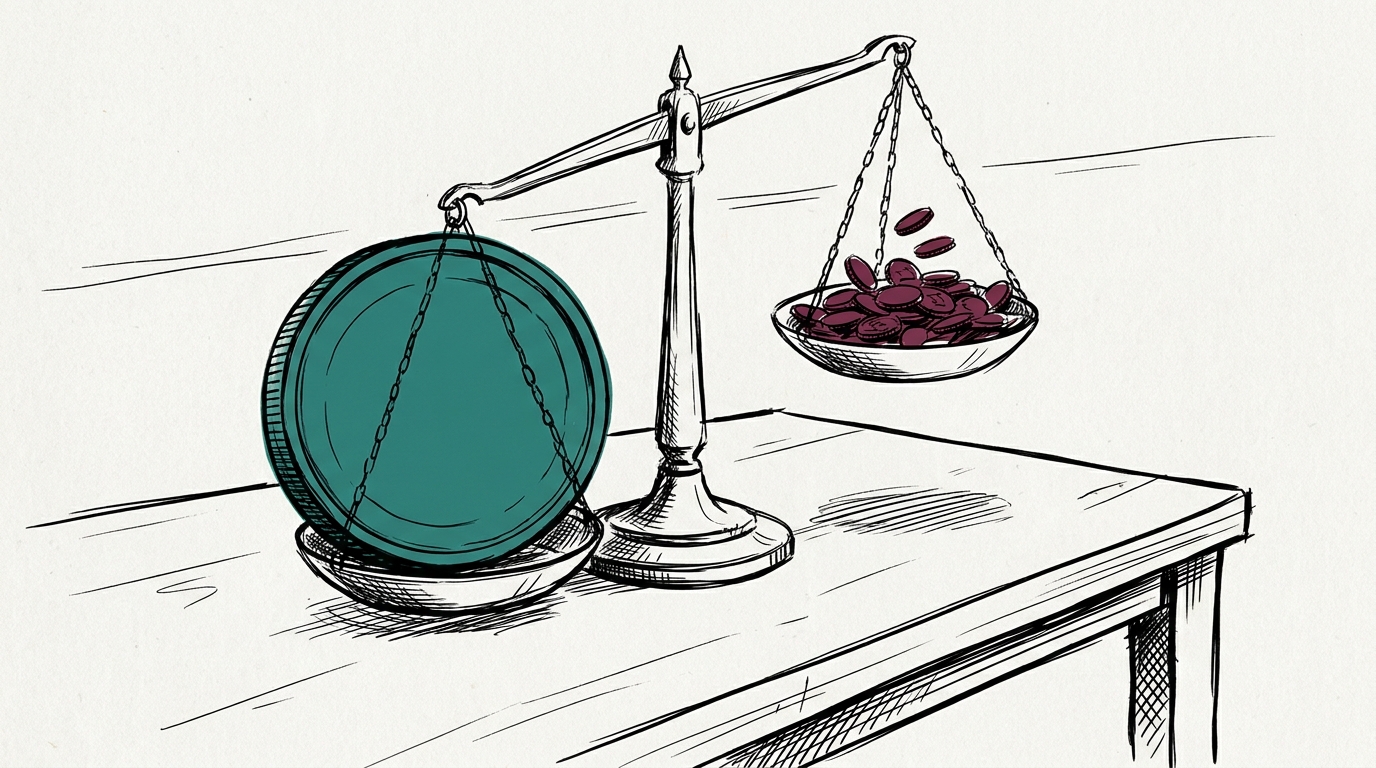
Our most recent war-powers coverage was the Senate's rejection on 23 June and The House's passage by 215-208 on 3 June . Set the two House tallies side by side and the drift across the intervening seven weeks of bombing, casualties, a blockade and the campaign bill Hegseth gave the Senate is a single vote. The Senate needed 51 and found 47.

A president reading those numbers learns something useful: the opposition is real, it is repeatable, and it stops at the point where it would bind him. That is the same institutional gap that leaves General Dan Caine warning the President about munitions stockpiles rather than Congress appropriating to refill them. Sustained air operations without an authorisation never acquire the funding signal a formal authorisation sends to production lines, and the votes on 23 July settled that nothing will change that before the next strike wave.


Deep Analysis

In plain English

Congress voted on the Iran war on 23 July, and most people missed it. The House of Representatives passed a resolution telling Trump to pull US forces out of the conflict, by 214 votes to 208. But this kind of resolution does not actually force the President to do anything; it is a formal statement of opinion. The Senate tried to pass a stronger version that would have had real legal force, but that failed by 47 votes to 49. Congress registered its unease with the war again, but did not actually stop it.

Deep Analysis
Root Causes

The War Powers Resolution's two instruments carry different legal weight: a House concurrent resolution like H.Con.Res.89 needs no presidential signature and creates no binding obligation, while a joint resolution like S.J.Res.180 would have force of law if passed by both chambers, which is why the Senate vote, not the House one, was the real test, and the one that failed.

Four Republicans crossing over in the House, Fitzpatrick, Massie, Davidson and Barrett, and Collins alone doing so in the Senate, shows the structural ceiling: a small, stable bloc of Republican dissenters exists, but it has never approached the numbers needed to override a veto or reach 51 votes in the Senate.

What could happen next?
  • Meaning

    A one-vote drift shows congressional opposition to the war is real but structurally stuck below the threshold needed to bind the executive.

    Immediate · Assessed
  • Precedent

    The Senate's 47-49 failure on a binding resolution gives the White House a clear read that it can proceed without a veto-proof congressional check.

    Short term · Reported
  • Risk

    If casualty or cost figures worsen further, the same four House Republicans plus Collins are the names to watch for whether the dissenting bloc grows.

    Medium term · Suggested
First Reported In

Update #162 · Munitions, not Iran, halted US bombing

Office of the Clerk, US House of Representatives· 26 Jul 2026
Read original
Different Perspectives
Poland
Poland
Poland leads a self-announced AI Gigafactory consortium with a EUR 100 million phase-one commitment, matched by Czechia and joined by Hungary at EUR 25 million. EuroHPC has confirmed no consortium for the call closing 12 November, so the bloc exists only in national announcements so far.
UK Government (DCMS)
Secretary of State Lisa Nandy told the Commons on 3 September she has inherited the sovereign AI brief from Liz Kendall, but gave no assessment, figure or date on frontier-model access. It is the first public claim of ownership since DSIT's abolition, without the substance the committee asked for.
ASML
ASML
ASML CEO Christophe Fouquet credited Intel Foundry, not a European fab, with shipping the first high-volume logic product made on High-NA EUV, the tool only ASML builds. Europe holds the chokepoint tool; the company that spent it into volume production first is American.
Luxembourg
Luxembourg
Luxembourg joined Mistral's Series D as a new investor on 8 September, the same government that co-funds EuroHPC's MeluXina-AI supercomputer. One small member state now funds the sovereign compute Mistral may need and holds equity in the company using it.
Samsung Electronics
Samsung Electronics
Samsung led Mistral's Series D on 8 September and the same day expanded its ASML collaboration on next-generation lithography. One Korean company now sits atop Europe's largest AI funding round and inside its most sensitive chip-tooling relationship.
Mistral AI
Mistral AI
Mistral closed a EUR 3 billion Series D above a EUR 21 billion valuation on 8 September, with Samsung leading and Luxembourg joining as a new state investor. The company markets itself as Europe's non-American AI option even as the round's lead capital comes from South Korea and two US private-equity firms.