Skip to content
You can now search across every topic, entity and event.What's new
European Tech Sovereignty
8SEP

Brent gives back its escalation gain

2 min read
15:06UTC

Crude rose as the strikes resumed and surrendered the move inside two sessions, following the Riyadh announcement rather than anything happening in Hormuz.

TechnologyAssessed
Key takeaway

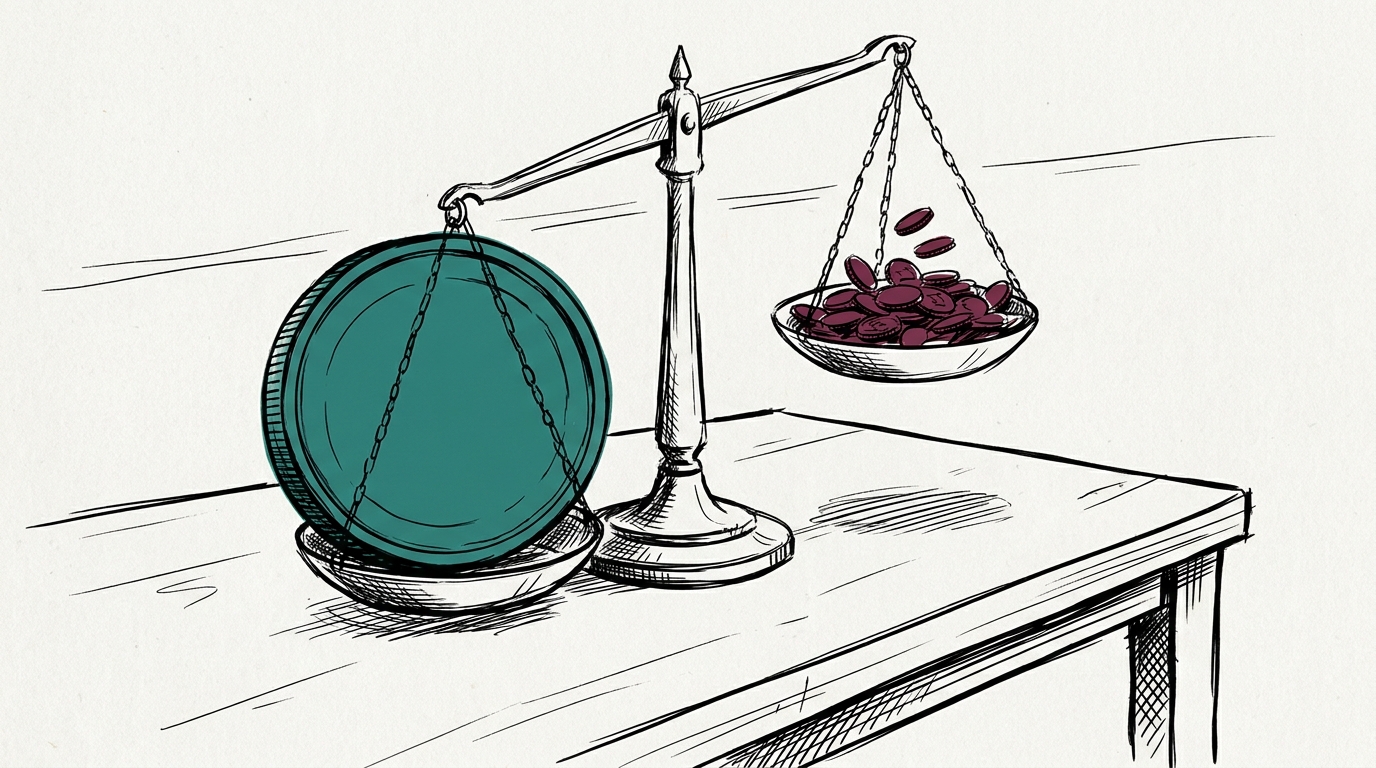
The barrel is pricing the odds of the next shock, not the cost of the present one.

Brent Crude traded around $90 a barrel on Wednesday 29 July as American strikes on Iran resumed, then closed at $89.03 on Thursday 30 July and $85.53 on Friday 31 July 1. West Texas Intermediate, the American benchmark, settled at $83.59 on Thursday and $82.03 on Friday 2.

The fall tracked the Riyadh naval coalition announcement and broader de-escalation signalling 3. It did not track anything in the strait of Hormuz, where transits remain far below normal and the lane's legal status is being argued between two governments with no navy committed behind either position.

Set against the arc, the move looks smaller than it reads. Brent crossed $100 on 23 July for the first time since May , then eased on the first reports of mediation . Traders have now marked the barrel up and down twice in nine days without a single change to the physical picture: the same volumes are stranded, the same chokepoint is shut, the same tankers are waiting.

A price that responds to communiqués rather than cargoes is pricing the probability of the next shock, not the cost of the current one. That works while the shocks stay episodic. It leaves the market carrying a large gap between the paper price and the replacement cost of a barrel that has to travel by pipeline and Suez, and the gap closes violently whenever a physical constraint finally binds.


Deep Analysis

In plain English

Oil prices went up when the fighting between the US and Iran restarted, then came back down within two days. Brent crude, the main international oil price benchmark, traded near $90 a barrel during the strikes on 29 July, then fell to $89.03 the next day and $85.53 the day after that. American oil, known as WTI, followed the same pattern. Traders seem to be betting that this round of strikes will not actually stop oil from flowing, so prices are settling back down rather than staying high.

What could happen next?
  • Meaning

    The price retreat within two days signals traders assess the resumed strikes as unlikely to disrupt actual oil flows through Hormuz.

  • Risk

    A further strike that damages port or tanker infrastructure directly, rather than IRGC military targets, could break this settling pattern and push prices past the late-July peak.

First Reported In

Update #164 · The pause ends, and the map moves west

CNBC· 31 Jul 2026
Read original
Different Perspectives
Poland
Poland
Poland leads a self-announced AI Gigafactory consortium with a EUR 100 million phase-one commitment, matched by Czechia and joined by Hungary at EUR 25 million. EuroHPC has confirmed no consortium for the call closing 12 November, so the bloc exists only in national announcements so far.
UK Government (DCMS)
Secretary of State Lisa Nandy told the Commons on 3 September she has inherited the sovereign AI brief from Liz Kendall, but gave no assessment, figure or date on frontier-model access. It is the first public claim of ownership since DSIT's abolition, without the substance the committee asked for.
ASML
ASML
ASML CEO Christophe Fouquet credited Intel Foundry, not a European fab, with shipping the first high-volume logic product made on High-NA EUV, the tool only ASML builds. Europe holds the chokepoint tool; the company that spent it into volume production first is American.
Luxembourg
Luxembourg
Luxembourg joined Mistral's Series D as a new investor on 8 September, the same government that co-funds EuroHPC's MeluXina-AI supercomputer. One small member state now funds the sovereign compute Mistral may need and holds equity in the company using it.
Samsung Electronics
Samsung Electronics
Samsung led Mistral's Series D on 8 September and the same day expanded its ASML collaboration on next-generation lithography. One Korean company now sits atop Europe's largest AI funding round and inside its most sensitive chip-tooling relationship.
Mistral AI
Mistral AI
Mistral closed a EUR 3 billion Series D above a EUR 21 billion valuation on 8 September, with Samsung leading and Luxembourg joining as a new state investor. The company markets itself as Europe's non-American AI option even as the round's lead capital comes from South Korea and two US private-equity firms.